 Bug FAQ
Adesmia cribripes
Adesmia cribripes
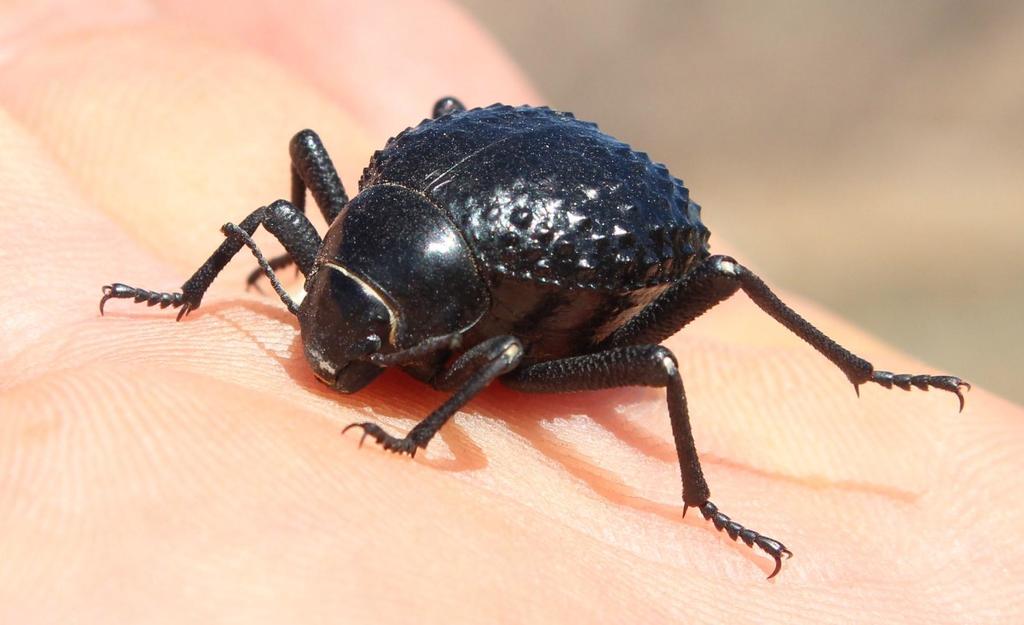
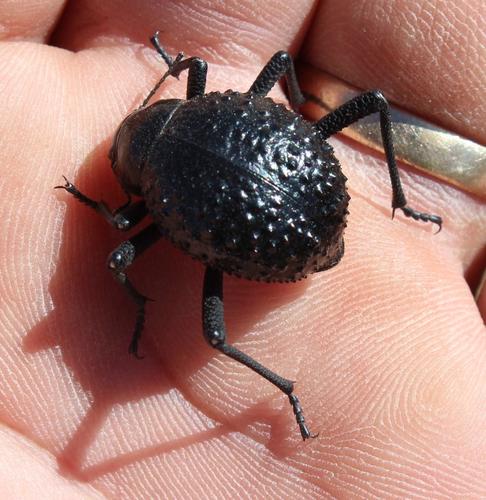
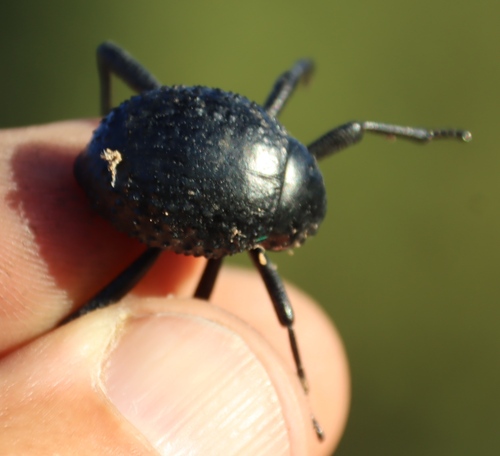
The desert toktokkie is a flightless darkling beetle about 18.4 mm long and weighs roughly 400 mg. It lives on the West coast of Namibia and Angola, favoring washes, gravel plains and rocky spots, and it climbs vegetation to feed. Adults and larvae are omnivorous, eating dead plant material, insects and fungi.
Source: Wikipedia
How to recognize it
Physosterna cribripes is known as the desert toktokkie or woestyntoktokkie and cannot fly.
Source: Wikipedia
Size
Body length is about 18.4 mm (0.72 in) and mass is roughly 402 mg (0.006 kg).
Source: Wikipedia
What it eats
Like most darkling beetles, it is an omnivore that consumes decaying plant matter, dead insects and fungi.
Source: Wikipedia
Life cycle
Larvae are active at night, live underground and have heavy armor.
Source: Wikipedia
When you see it
It is diurnal, most active from 9-10 am and again 4-6 pm in summer, seeking shade during extreme heat.
Source: Wikipedia
Where it comes from
The species occurs along the western coast of Namibia and Angola.
Source: Wikipedia
More photos
Questions people ask
When is the desert toktokkie active during the day?
It is most active from 9-10 am and again from 4-6 pm in summer, moving to shaded spots when it gets too hot.
Source: Wikipedia
What does the desert toktokkie eat?
It feeds on detritus from fresh and decaying plants, dead insects and fungi.
Source: Wikipedia
Which beetles look similar to the desert toktokkie?
Other Namibian Tenebrionids like Onymacris unguicularis and Onymacris bicolor have similar appearances.
Source: Wikipedia
Sources
- Wikipedia: https://en.wikipedia.org/wiki/Physosterna_cribripes
Look it up elsewhere: iNaturalist · BugGuide · Wikipedia
Text written 2026-10-24 from the sources above and checked sentence by sentence against them. Data fetched 2026-10-24.