 Bug FAQ
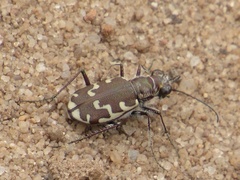
American Round Sand Beetle
Omophron americanum · Order: Coleoptera · Family: Carabidae
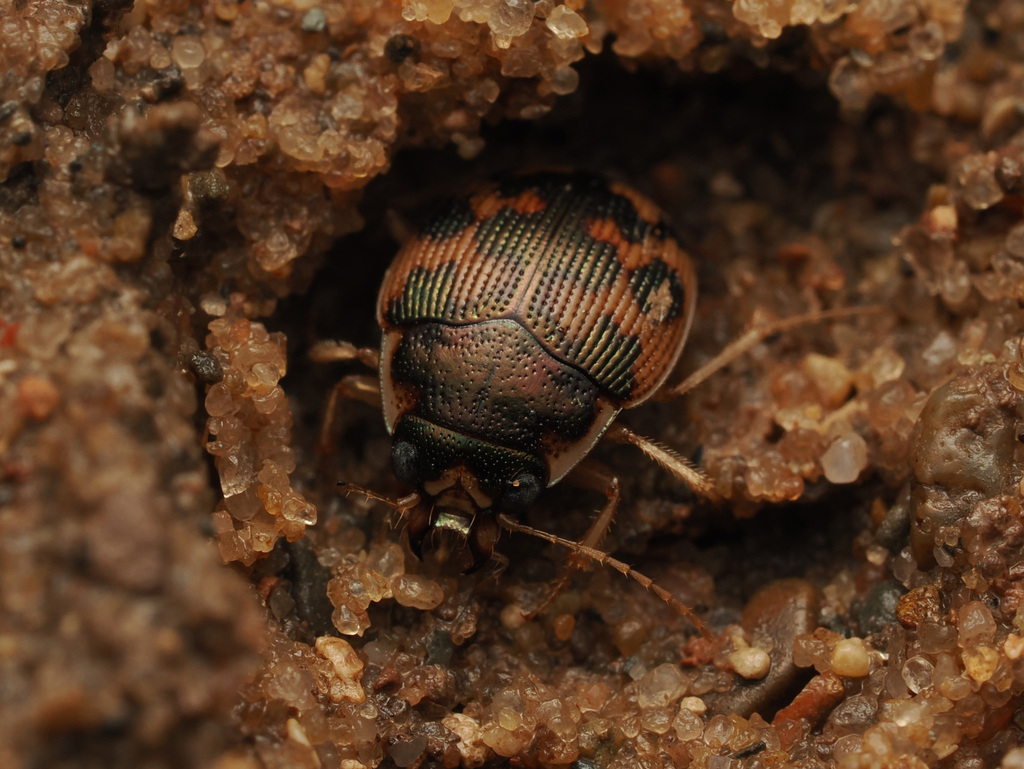
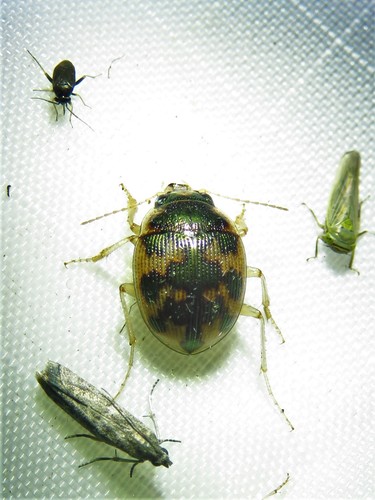
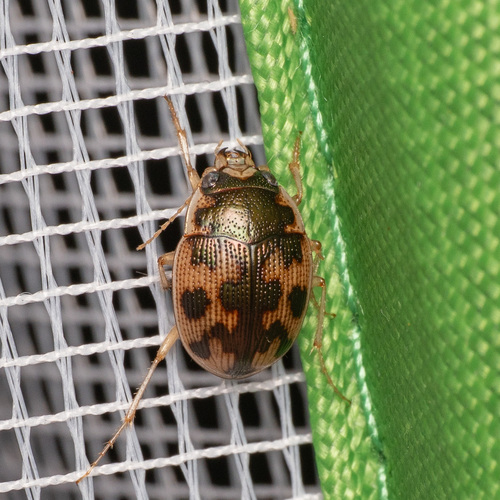
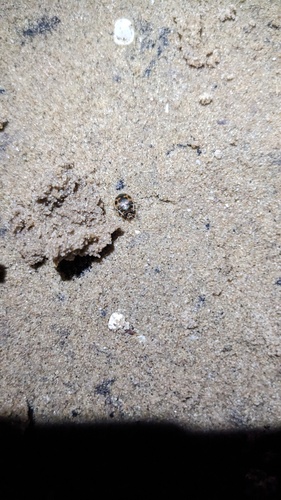
The American round sand beetle is a flat beetle about 5 to 7 mm long. It is reddish-yellow with variable dark markings on the back, a darker underside, striated wing covers, a pale V on the front of the head, a punctured metasternum, and two setae on each middle leg base.
Source: Wikipedia
Size
Length ranges from about 5.1 mm to 7.0 mm.
Source: Wikipedia
Where it lives
Occurs at altitudes between 260 m and 2 200 m.
Source: Wikipedia
Life cycle
Mating takes place in April and May, females are gravid in May-June, the beetles molt and become teneral from July to September, and adults overwinter.
Source: Wikipedia
When you see it
Copulation occurs in April-May, females are gravid in May-June, and they molt to become teneral between July and September.
Source: Wikipedia
Where it is found in the US
Recorded in 38 of 51 states and DC. Most records: Ohio, Utah, Kansas, Texas, Vermont, New Hampshire, Oklahoma, Colorado.
Darker = more records. Counts are museum and citizen-science records, not population size.
Source: GBIF
Status: native in North America; native in Canada. Source: iNaturalist
Months it is reported in the US
Source: GBIF
More photos
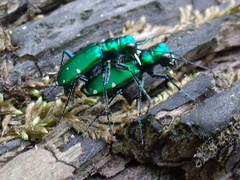
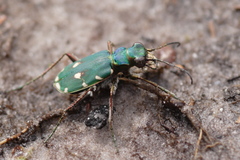
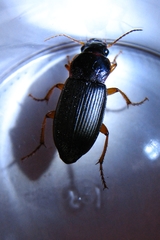
Same family (Carabidae)


Sources
- Wikipedia: https://en.wikipedia.org/wiki/Omophron_americanum
Look it up elsewhere: GBIF · iNaturalist · BugGuide · ITIS · Wikipedia
Text written 2026-10-24 from the sources above and checked sentence by sentence against them. Data fetched 2026-10-24.