 Bug FAQ
Ant bug
Alydus calcaratus · Order: Hemiptera · Family: Alydidae
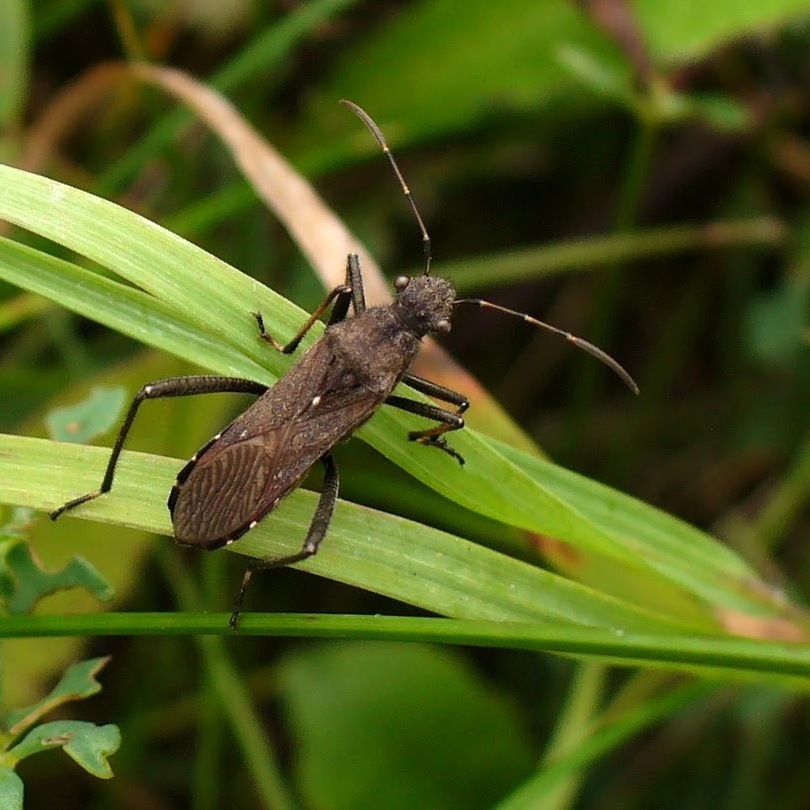
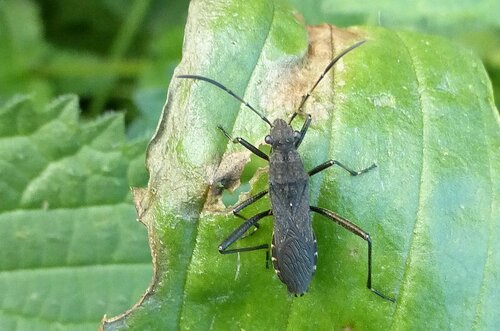
Alydus calcaratus is a large, 10 to 12 mm, oblong blackish bug with a bright orange abdominal patch visible in flight and spiny male hind femora. It lives on dry heaths and sand dunes across a Holarctic range from the British Isles through Europe to Siberia, China, and northern North America from Alaska to Wyoming. Adults appear from June to October, mating in summer, while nymphs are found May-August; they feed on fallen legume seeds and occasionally on carrion or faeces.
Source: Wikipedia
How to recognize it
The bug is mainly blackish, shows a bright orange patch on the abdomen that can be seen only while flying, and males have thickened hind femora with strong underside spines.
Source: Wikipedia
Size
It measures about 10 to 12 mm in length and has an oblong shape.
Source: Wikipedia
Where it lives
It prefers heaths, dry grasslands, light soils and sand dunes.
Source: Wikipedia
What it eats
Both adults and nymphs feed mainly on fallen seeds of legume plants such as Sarothamnus, Cytisus, Genista and Ulex. They have also been observed feeding on vertebrate carrion and faeces.
Source: Wikipedia
Life cycle
Mating takes place from July to September, nymphs are present May to August, and adults are seen from mid-June to October.
Source: Wikipedia
When you see it
In Germany adults appear from mid-June, peak in early August to mid-September, and disappear by October.
Source: Wikipedia
Where it comes from
It also ranges across the British Isles, most of Europe, eastern Siberia and China.
Source: Wikipedia
Where it is found in the US
Recorded in 7 of 51 states and DC. Most records: Colorado, Alaska, Washington, Idaho, Montana, New Mexico, Pennsylvania.
Darker = more records. Counts are museum and citizen-science records, not population size.
Source: GBIF
Status: native in North America; native in Canada. Source: iNaturalist
Months it is reported in the US
Source: GBIF
More photos
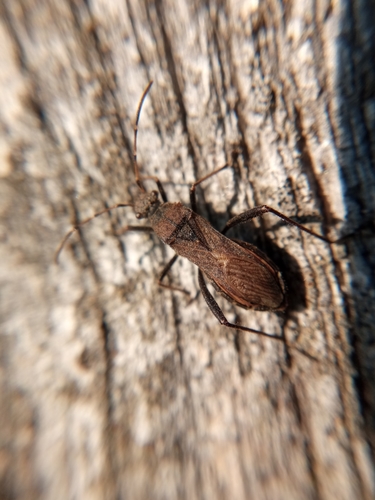
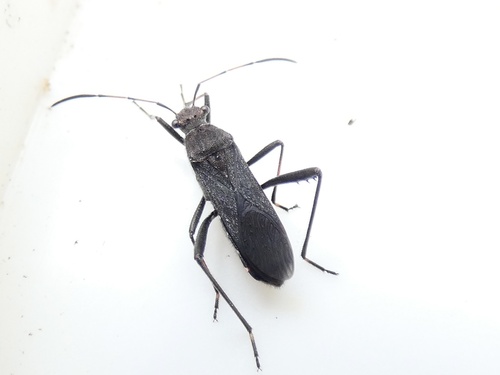
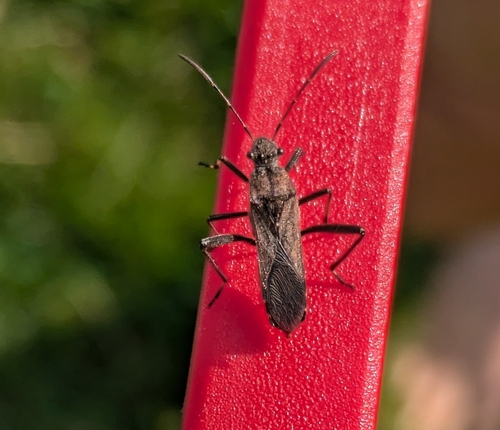
Questions people ask
When can I see these bugs?
Adults are visible from mid-June through October, with most sightings in early August to mid-September.
Source: Wikipedia
What do they look like?
They are large, blackish bugs with a bright orange abdominal patch visible in flight and males have spiny, thickened hind femora.
Source: Wikipedia
Where are they found?
They live on dry heaths and sand dunes across Europe, Siberia, China and northern North America from Alaska to Wyoming.
Source: Wikipedia
What do they eat?
They feed mainly on fallen legume seeds and sometimes on carrion or faeces.
Source: Wikipedia
Same family (Alydidae)

Sources
- Wikipedia: https://en.wikipedia.org/wiki/Alydus_calcaratus
Look it up elsewhere: GBIF · iNaturalist · BugGuide · ITIS · Wikipedia
Text written 2026-10-24 from the sources above and checked sentence by sentence against them. Data fetched 2026-10-22.