 Bug FAQ
Arizona Bark Scorpion
Centruroides sculpturatus · Order: Scorpiones · Family: Buthidae
Also called: Bark scorpion
Source: Wikipedia
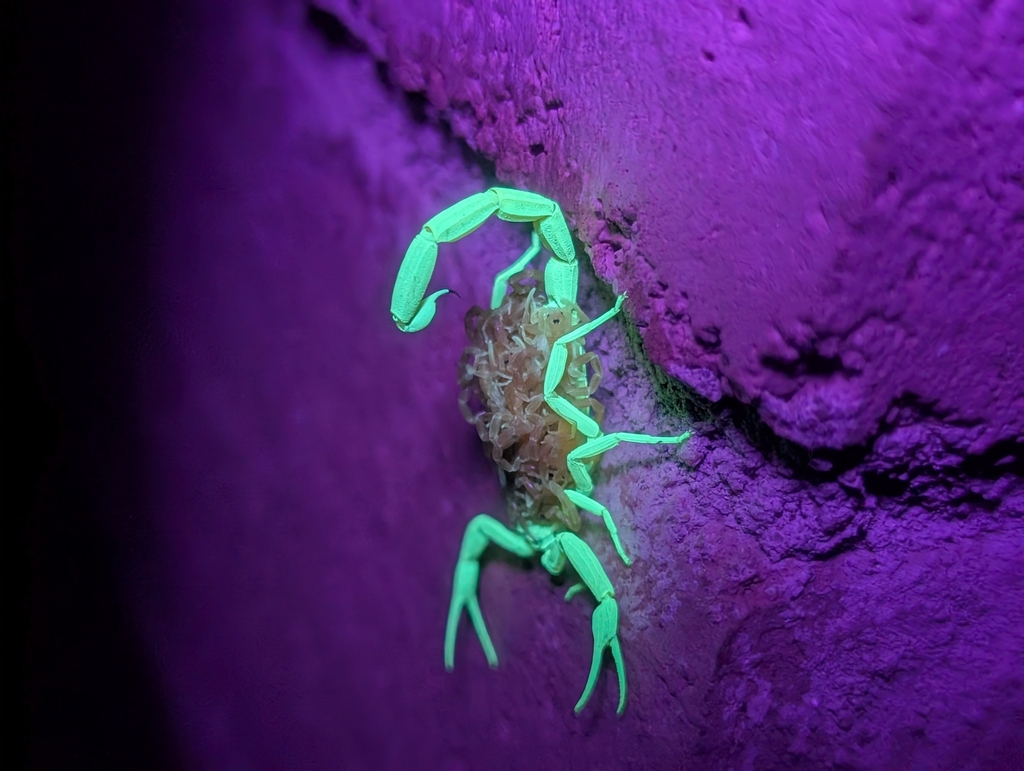
Adult males grow to about 8 cm and females to about 7 cm; they are tan-beige, thin-segmented and glow green-blue under a black light. They hide under rocks, bark or inside homes, are active at night, and their venom can cause intense pain and, in rare cases, death.
Source: Wikipedia, Utah State Extension
How to recognize it
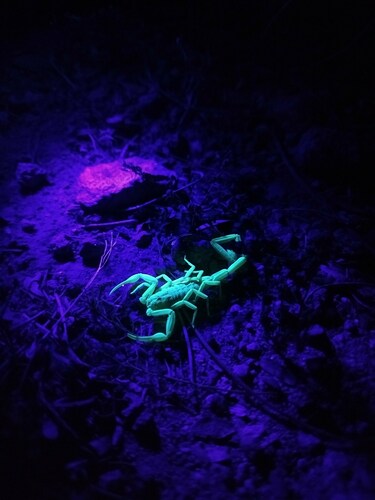
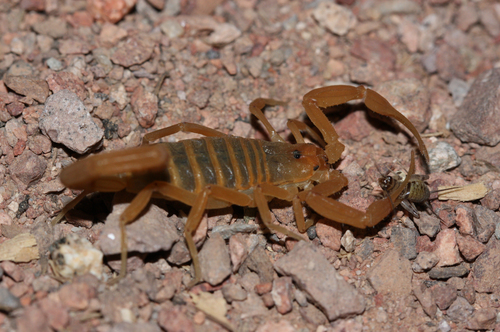
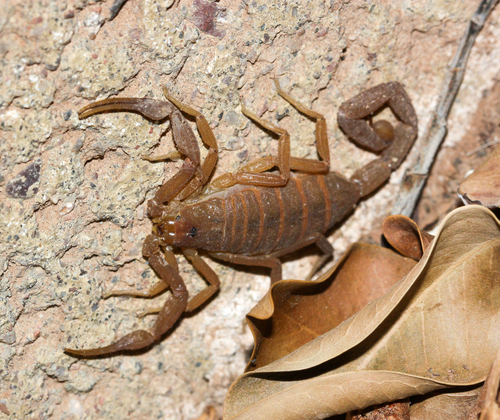
They are tan or light beige and very small, making them hard to spot on rocky or vegetated ground. Their long, thin, segmented bodies glow a fluorescent green-blue when illuminated with a black light.
Source: Wikipedia, Utah State Extension
Size
Males can reach 8 cm in length, while females are slightly smaller at up to 7 cm.
Source: Wikipedia
Is it a pest in the house?
Inside homes they seek dark, protected places such as cracks and debris piles. They do not actively hunt humans and will only sting if provoked or defending young. Removing leaf litter, mulch, and other debris around buildings reduces indoor harborage.
Source: Wikipedia, Utah State Extension
Does it bite or sting?
Its venom causes severe pain, numbness, tingling, vomiting and swelling that can last from one to three days. Stings are medically serious; two fatalities have been recorded in Arizona since 1968, and thousands are stung each year.
Source: Wikipedia, Utah State Extension
How to get rid of it
Inspect suspected areas at night with a black light to locate them. Seal cracks and crevices in exterior walls to block entry. Physical barriers, pesticides, glue boards, and removing harborage around structures help control populations.
Source: Utah State Extension, Wikipedia
Where it lives
During the day they shelter under rocks, wood piles, or tree bark and will burrow into homes through gaps as small as 1/16 in.
Source: Wikipedia
What it eats
It preys on small insects such as beetles, spiders, crickets, cockroaches and even other scorpions.
Source: Wikipedia
Life cycle
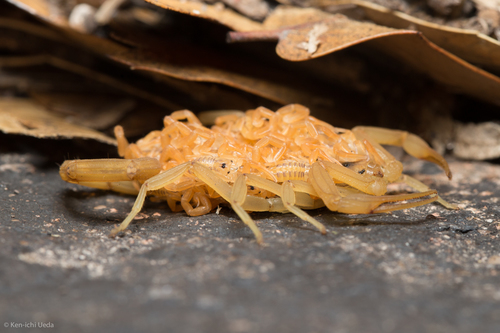
Females give birth to live young after several months of gestation and place the newborns on their backs. They can live for about six years.
Source: Wikipedia
When you see it
The species is nocturnal, being active at night.
Source: Wikipedia
Where it comes from
It is native to the Sonoran Desert of the southwestern United States, including southern California, Arizona, Nevada, Utah and New Mexico. It also occurs in Baja California, Sonora and Chihuahua in Mexico.
Source: Wikipedia
Lookalikes
It can be confused with the common striped scorpion. It can also be mistaken for the giant desert hairy scorpion.
Source: Utah State Extension
Where it is found in the US
Recorded in 8 of 51 states and DC. Most records: Arizona, Nevada, Utah, New Mexico, California, Texas, Colorado, Nebraska.
Darker = more records. Counts are museum and citizen-science records, not population size.
Source: GBIF
Status: native in North America; native in United States. Source: iNaturalist
Months it is reported in the US
Source: GBIF
More photos
Questions people ask
How can I identify an Arizona bark scorpion?
Look for a tan-beige, thin-segmented scorpion about 7 to 8 cm long that glows green-blue under a black light.
Source: Wikipedia, Utah State Extension
Are Arizona bark scorpions dangerous to people?
Yes; their sting can cause severe pain, numbness, vomiting and, in rare cases, death.
Source: Wikipedia
How do I keep them out of my house?
Seal exterior cracks, remove leaf litter and debris around the building, and consider physical barriers or glue boards.
Source: Utah State Extension, Wikipedia
Same family (Buthidae)
 Striped Bark ScorpionCentruroides vittatusCan sting
 Slender Brown ScorpionCentruroides gracilisVenomous
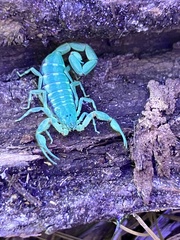 Hentz Striped ScorpionCentruroides hentziCan sting
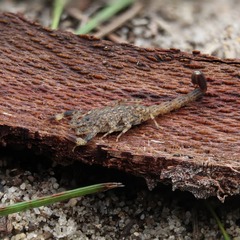 Little Marbled ScorpionLychas marmoreus
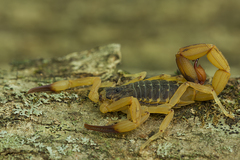 Brazilian Yellow ScorpionTityus serrulatusCan sting
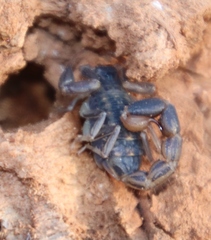 Striped Lesser-Thicktail ScorpionUroplectes lineatusCan sting
Sources
- Wikipedia: https://en.wikipedia.org/wiki/Arizona_bark_scorpion
- Utah State Extension: https://extension.usu.edu/planthealth/ipm/notes_nuisance/scorpions
Look it up elsewhere: GBIF · iNaturalist · BugGuide · Wikipedia
Text written 2026-10-23 from the sources above and checked sentence by sentence against them. Data fetched 2026-10-23.