 Bug FAQ
Attican Stick Insect
Bacillus atticus · Order: Phasmida · Family: Bacillidae
Also called: Greek Stick-insect
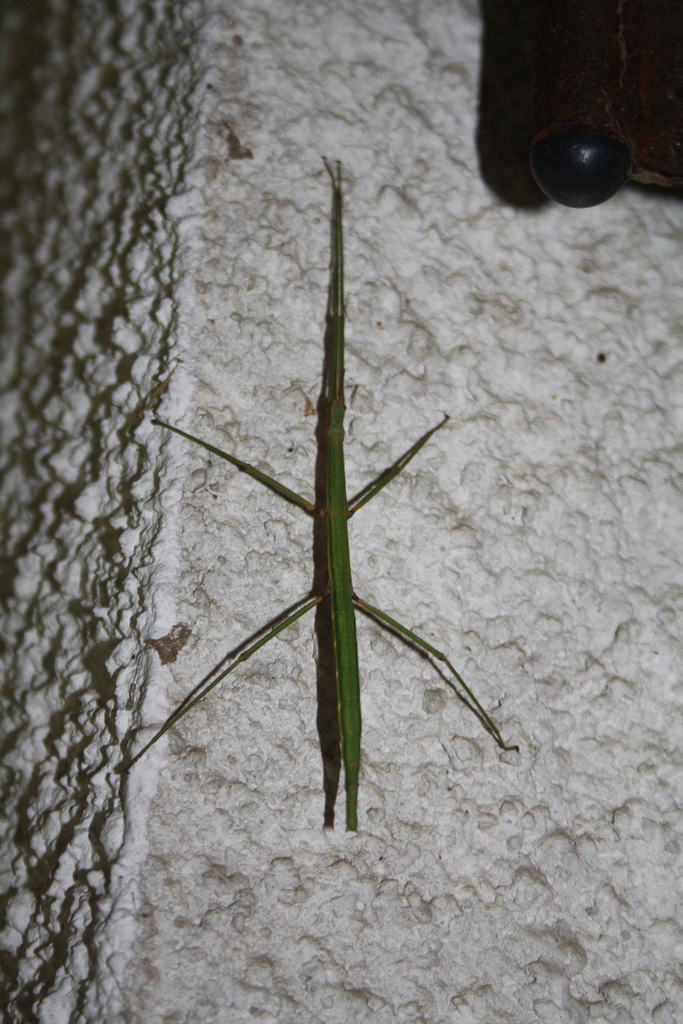
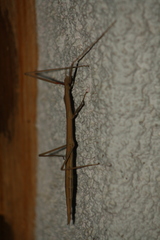
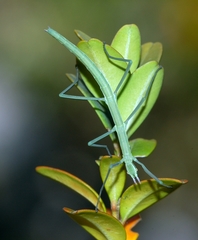
Adults are about 80 mm long, slim, with a stripe on each side, red short antennae and strong forelegs that are red at the base. They live on plants in Greece, Italy, Croatia and Israel, eat ivy and lettuce, and reproduce without males by laying ovoid eggs with distinctive markings.
Source: Wikipedia
How to recognize it
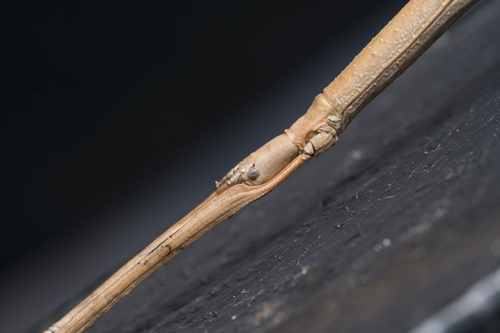
Each side of the body has a stripe. The antennae are short and red. Forelegs are strong, about 50 mm long, with red at the base.
Source: Wikipedia
Where it lives
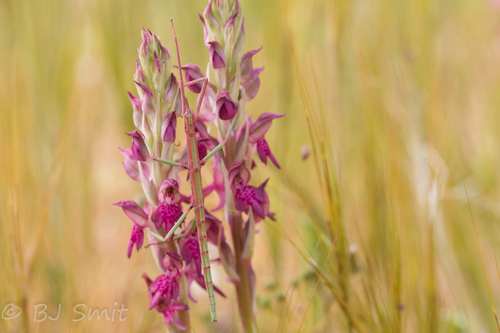
They are often found climbing on plants.
Source: Wikipedia
What it eats
They feed on plants such as ivy and lettuce.
Source: Wikipedia
Life cycle
The species reproduces by parthenogenesis, laying eggs without needing males. Eggs are ovoid with glyphic markings and a sponge-like top.
Source: Wikipedia
Where it comes from
Recorded specimens come from Greece, Italy, Croatia and Israel.
Source: Wikipedia
More photos

Questions people ask
What do Attican stick insects look like?
They have a slim 80 mm body with a stripe on each side, short red antennae, and strong forelegs that are red at the base.
Source: Wikipedia
How do they reproduce?
They reproduce without males by laying eggs (parthenogenesis).
Source: Wikipedia
Same family (Bacillidae)


Sources
- Wikipedia: https://en.wikipedia.org/wiki/Bacillus_atticus_atticus
Look it up elsewhere: GBIF · iNaturalist · BugGuide · Wikipedia
Text written 2026-10-24 from the sources above and checked sentence by sentence against them. Data fetched 2026-10-23.