 Bug FAQ
Banyutus lethalis
Banyutus lethalis · Order: Neuroptera · Family: Myrmeleontidae
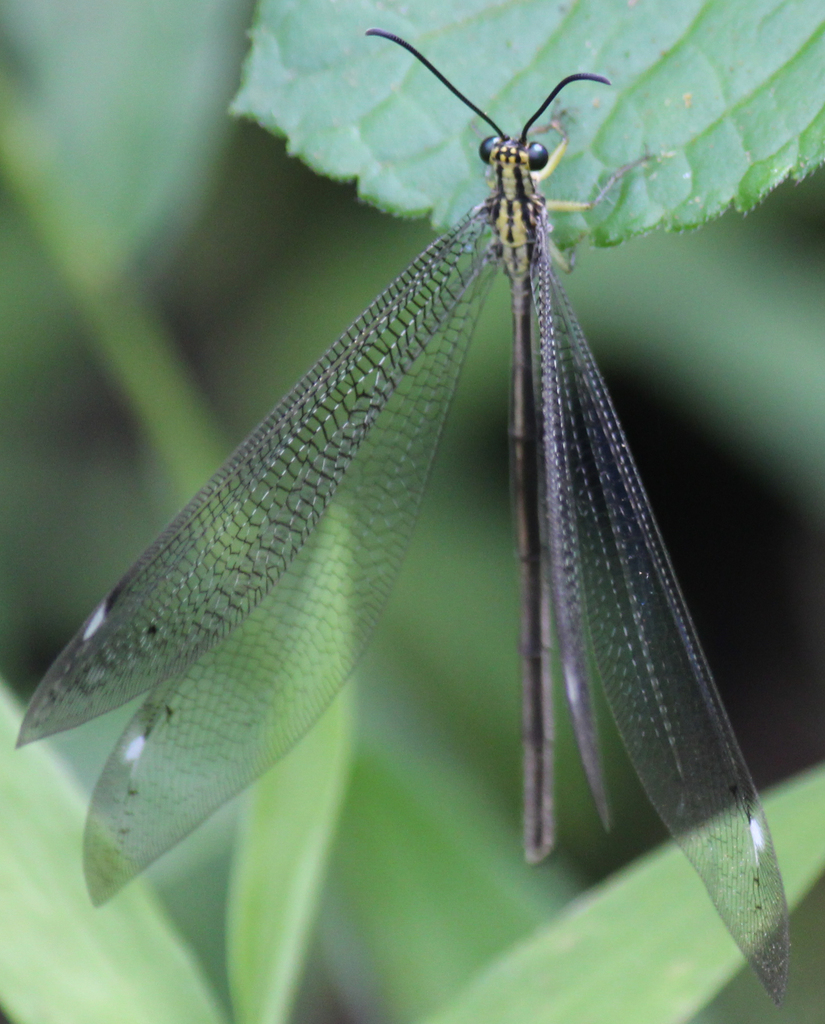
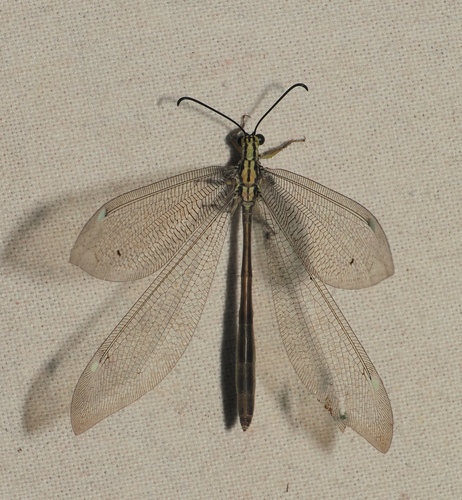
Banyutus lethalis was first described in 1853. It can be recognized by its longer antennae and a bicoloured pterostigma. The insects fly together in long grass and are thought to mimic the African antlion Hagenomyia tristis.
Source: Wikipedia
How to recognize it
Longer antennae and a bicoloured pterostigma distinguish it.
Source: Wikipedia
Size
It was first described by Francis Walker in 1853.
Source: Wikipedia
Where it lives
It flies gregariously through long grass.
Source: Wikipedia
More photos
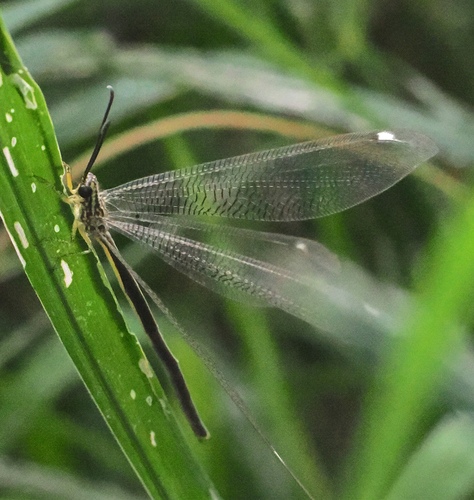
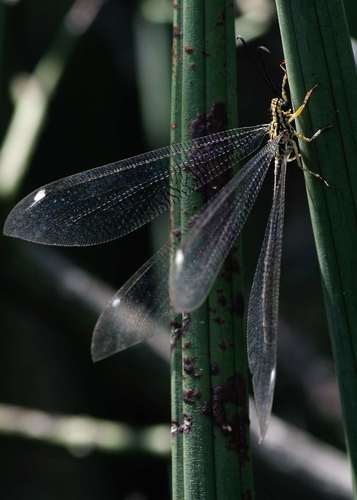
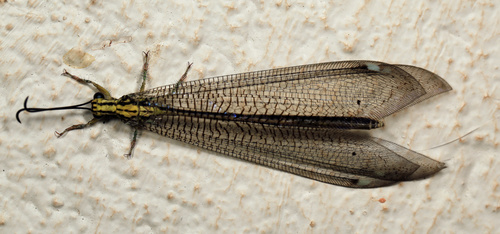
Questions people ask
How can I identify Banyutus lethalis?
Look for longer antennae and a bicoloured pterostigma.
Source: Wikipedia
Same family (Myrmeleontidae)



Sources
- Wikipedia: https://en.wikipedia.org/wiki/Banyutus_lethalis
Look it up elsewhere: GBIF · iNaturalist · BugGuide · ITIS · Wikipedia
Text written 2026-10-24 from the sources above and checked sentence by sentence against them. Data fetched 2026-10-23.