 Bug FAQ
Beaked Spindle Gall Wasp
Heteroecus pacificus · Order: Hymenoptera · Family: Cynipidae
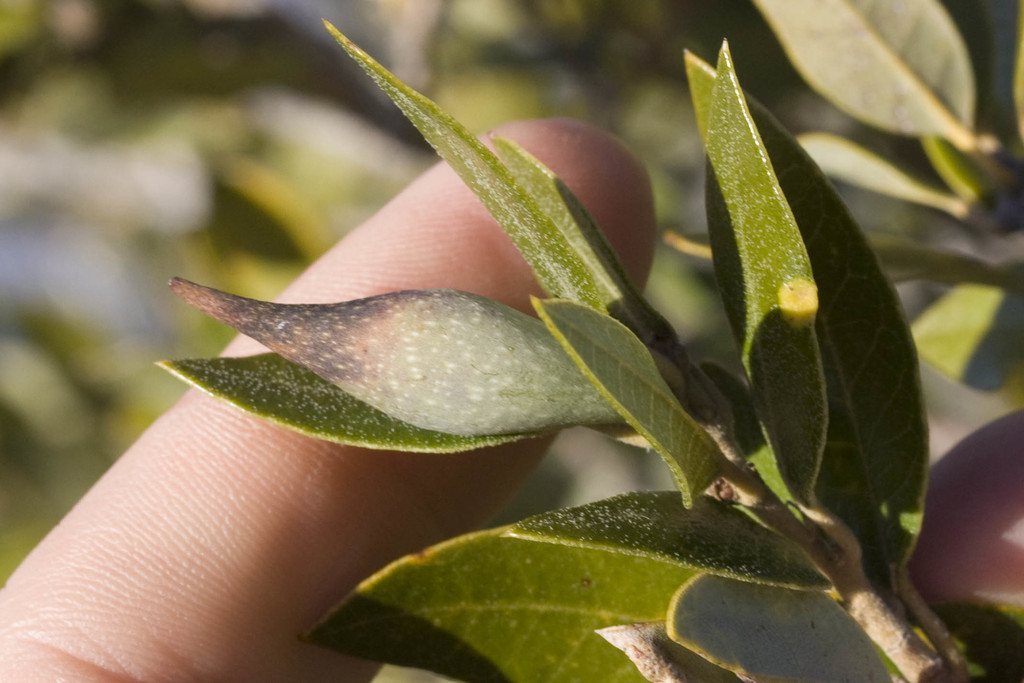
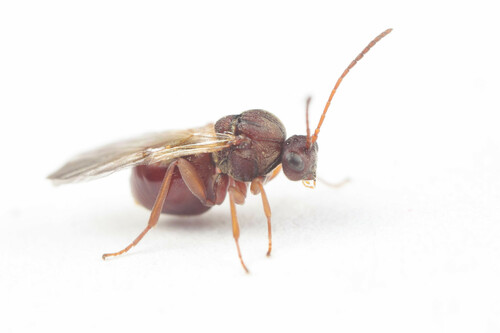
Parthenogenetic females are about 2.8 to 3.7 mm long, while sexual females are a bit smaller at 2.2 to 2.8 mm. It lives in western North America. The species has two yearly generations: one with males and females that reproduce sexually, and another made only of parthenogenetic females.
Source: Wikipedia
Size
Parthenogenetic females measure roughly 2.8 to 3.7 mm, and sexual females 2.2 to 2.8 mm in length.
Source: Wikipedia
Where it lives
It occurs in western North America.
Source: Wikipedia
Life cycle
There are two generations each year: one sexually reproducing with males and females, and one consisting only of parthenogenetic females.
Source: Wikipedia
Where it comes from
Its native range is western North America.
Source: Wikipedia
Where it is found in the US
Recorded in 4 of 51 states and DC. Most records: California, Oregon, Nevada, Arizona.
Darker = more records. Counts are museum and citizen-science records, not population size.
Source: GBIF
Status: native in North America; native in United States. Source: iNaturalist
Months it is reported in the US
Source: GBIF
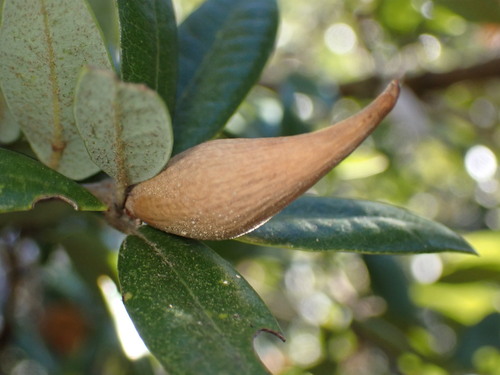
More photos
Questions people ask
How big are beaked spindle gall wasps?
Parthenogenetic females are about 2.8 to 3.7 mm long, while sexual females are 2.2 to 2.8 mm.
Source: Wikipedia
What is their life cycle?
They have two generations per year: one sexual with males and females, and one made only of parthenogenetic females.
Source: Wikipedia
Same family (Cynipidae)


Sources
- Wikipedia: https://en.wikipedia.org/wiki/Heteroecus_pacificus
Look it up elsewhere: GBIF · iNaturalist · BugGuide · ITIS · Wikipedia
Text written 2026-10-24 from the sources above and checked sentence by sentence against them. Data fetched 2026-10-24.