 Bug FAQ
Bearded Weevil
Rhinostomus barbirostris · Order: Coleoptera · Family: Dryophthoridae
Also called: Bottlebrush Weevil
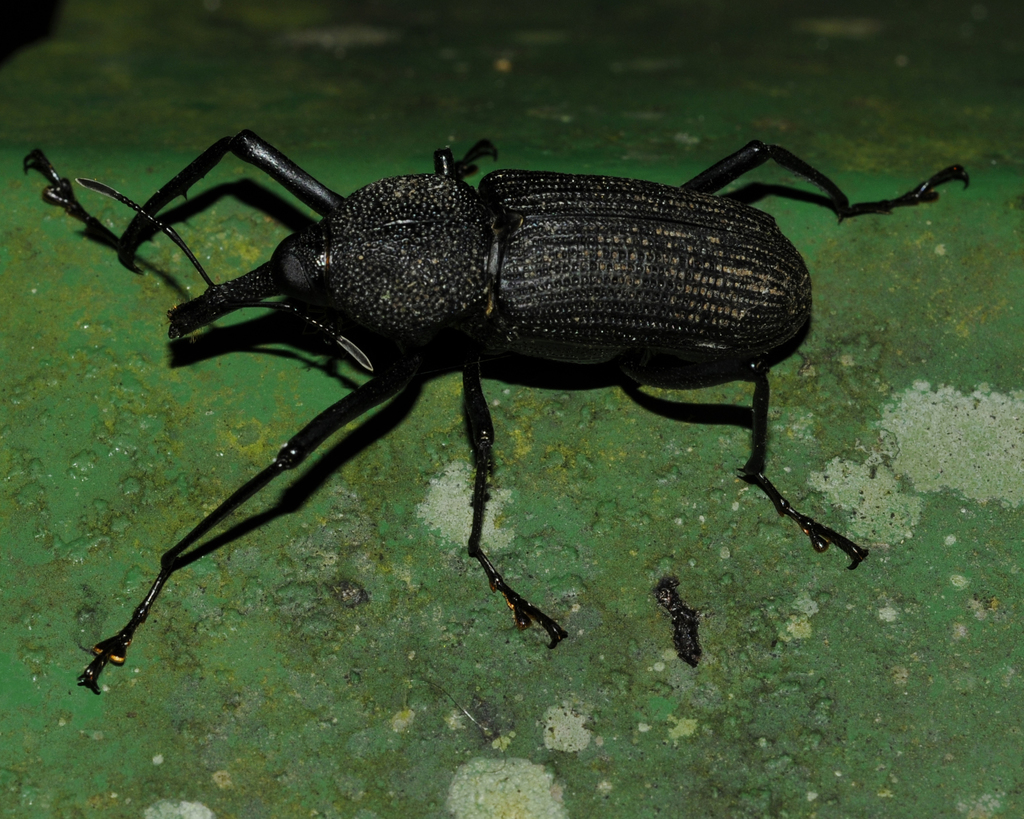
The bearded weevil can grow up to about 40 mm long, making it one of the largest weevils worldwide. It is black with a densely punctate pronotum, striated elytra, and males have long reddish-gold hairs on the tip of a straight, dentate rostrum. This common species lives throughout Central and South America, and related species are found on several other continents.
Source: Wikipedia
How to recognize it
The basic color is black. The pronotum is as long as it is wide and densely covered with punctures. The wing covers have distinct grooves and deep punctures. Males have long reddish-gold hairs on the tip of a straight, dentate rostrum.
Source: Wikipedia
Size
It can reach a length of 11 to 40 mm, not counting the beak.
Source: Wikipedia
Where it lives
It is a common and widespread species in Central and South America.
Source: Wikipedia
More photos
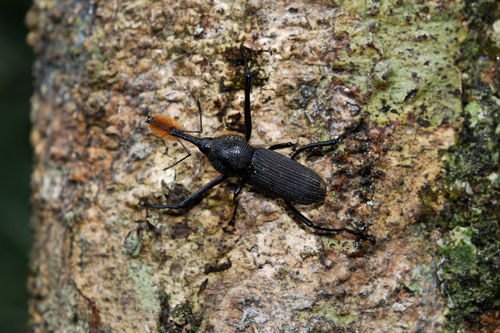
Same family (Dryophthoridae)
 Rice WeevilSitophilus oryzaeCan damage your home
 Wheat WeevilSitophilus granariusDamages trees, gardens or crops
 Red Palm WeevilRhynchophorus ferrugineusDamages trees, gardens or crops
 Hunting BillbugSphenophorus venatus
 Cocklebur WeevilRhodobaenus quinquepunctatus
 South American Palm WeevilRhynchophorus palmarumDamages trees, gardens or crops
Sources
- Wikipedia: https://en.wikipedia.org/wiki/Rhinostomus_barbirostris
Look it up elsewhere: GBIF · iNaturalist · BugGuide · Wikipedia
Text written 2026-10-23 from the sources above and checked sentence by sentence against them. Data fetched 2026-10-22.