 Bug FAQ
Black Deer Fly
Chrysops niger · Order: Diptera · Family: Tabanidae
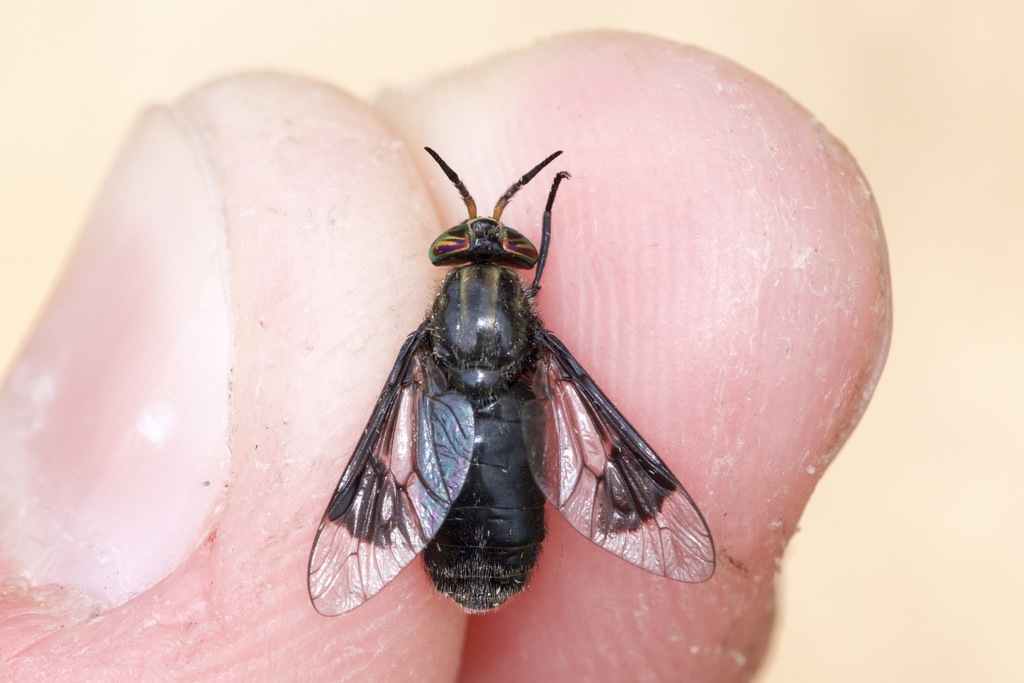
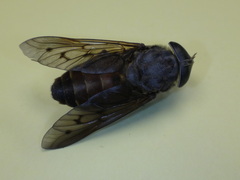
The black deer fly is about 8 to 10.5 mm long and has a mostly black body with white hairs and barred wings. It lives in the eastern United States and Canada, active from May to September near marshes, while its larvae develop in moist soil feeding on organic matter.
Source: Wikipedia
Size
Adults measure about 8 to 10.5 mm in length.
Source: Wikipedia
Where it lives
The larvae live in damp, water-rich soil and feed on organic matter.
Source: Wikipedia
What it eats
Larvae feed on organic matter in moist soil.
Source: Wikipedia
Life cycle
The larval stage occurs in damp soil where they consume organic material.
Source: Wikipedia
When you see it
Adults are present from May through September.
Source: Wikipedia
Where it comes from
They are native to the eastern United States and Canada.
Source: Wikipedia
Where it is found in the US
Recorded in 28 of 51 states and DC. Most records: Ohio, Wisconsin, New Hampshire, Maryland, Michigan, Pennsylvania, South Carolina, Vermont.
Darker = more records. Counts are museum and citizen-science records, not population size.
Source: GBIF
Status: native in North America; native in Canada. Source: iNaturalist
Months it is reported in the US
Source: GBIF
More photos
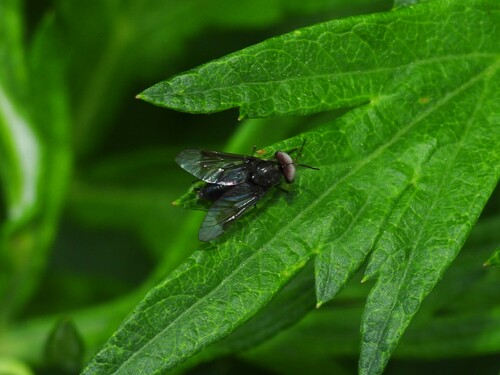
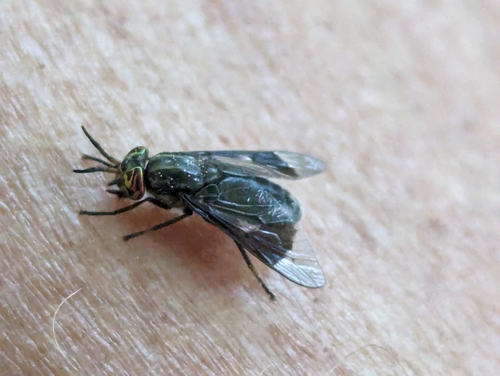
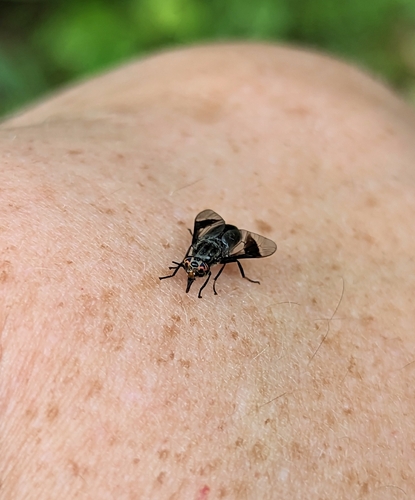
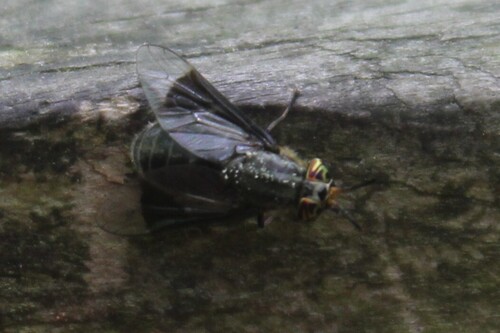
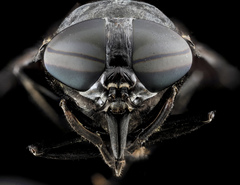
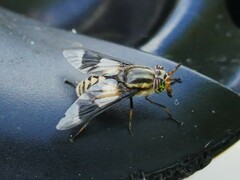
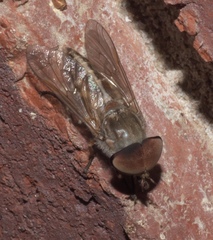
Same family (Tabanidae)


Sources
- Wikipedia: https://en.wikipedia.org/wiki/Chrysops_niger
Look it up elsewhere: GBIF · iNaturalist · BugGuide · ITIS · Wikipedia
Text written 2026-10-24 from the sources above and checked sentence by sentence against them. Data fetched 2026-10-24.