 Bug FAQ
Blue Bush Dart
Copera vittata · Order: Odonata · Family: Platycnemididae
Also called: Variable Featherlegs

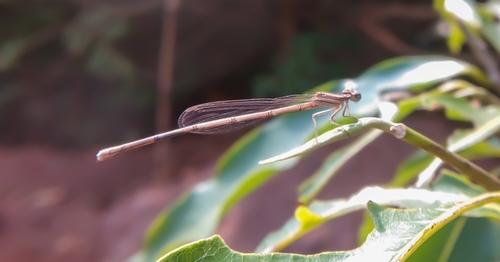
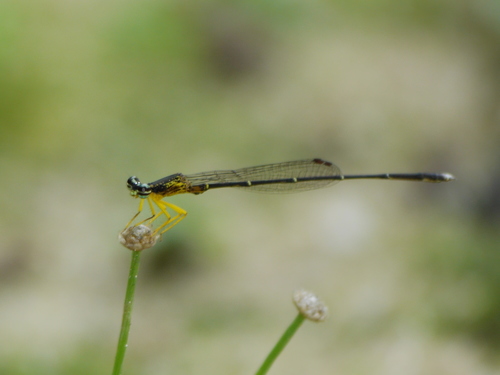
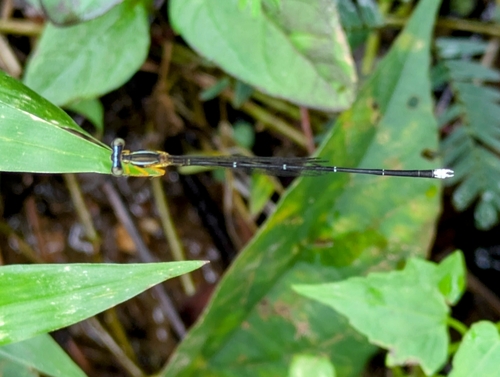
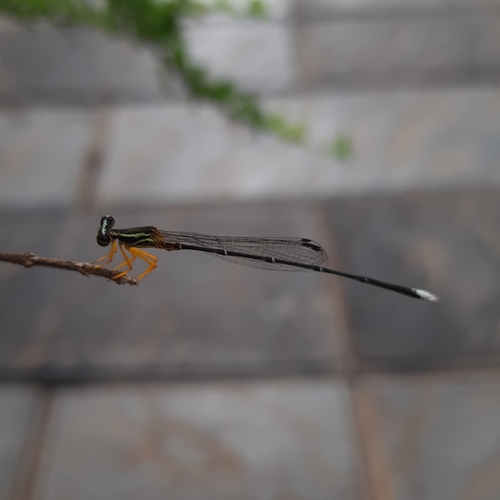
The Blue Bush Dart is a medium-sized damselfly with a black dorsal thorax marked by a split bluish-yellow stripe and yellow sides with irregular black lines.
Source: Wikipedia
How to recognize it
Thorax: black on top with a narrow bluish-yellow humeral stripe that is split and overlapping; sides are yellow with irregular black stripes on the postero-lateral suture and middle metepimeron.
Source: Wikipedia
Size
It is a medium-sized damselfly.
Source: Wikipedia
Where it lives
It is commonly found among undergrowth along river and stream banks, especially in hilly areas.
Source: Wikipedia
Where it comes from
It is native to Asia, ranging widely from India to Indonesia.
Source: Wikipedia
More photos
Questions people ask
How can I tell the Blue Bush Dart apart from similar species?
Look for the split bluish-yellow humeral stripe on a black dorsal thorax and the specific pattern of black stripes on the yellow sides; also note the pale blue or creamy white anal appendages.
Source: Wikipedia
Where is the Blue Bush Dart found?
It lives in Asian countries from India down through Indonesia, usually near rivers and streams in hilly terrain.
Source: Wikipedia
Same family (Platycnemididae)



Sources
- Wikipedia: https://en.wikipedia.org/wiki/Copera_vittata
Look it up elsewhere: GBIF · iNaturalist · BugGuide · Wikipedia
Text written 2026-10-24 from the sources above and checked sentence by sentence against them. Data fetched 2026-10-23.