 Bug FAQ
Bordered click beetle
Denticollis linearis · Order: Coleoptera · Family: Elateridae
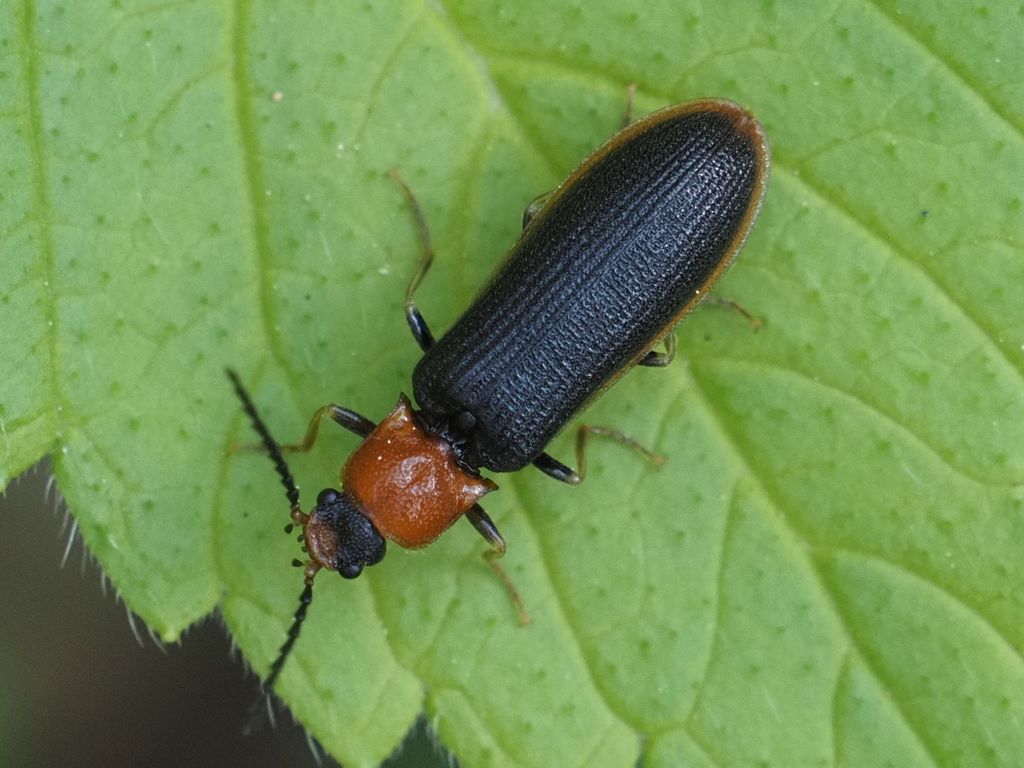
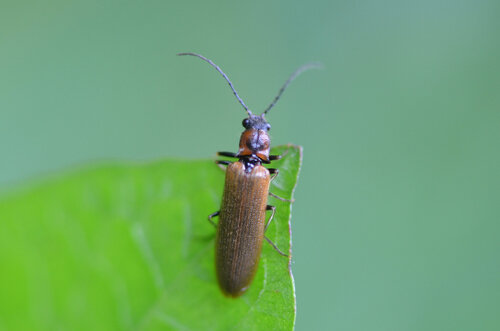
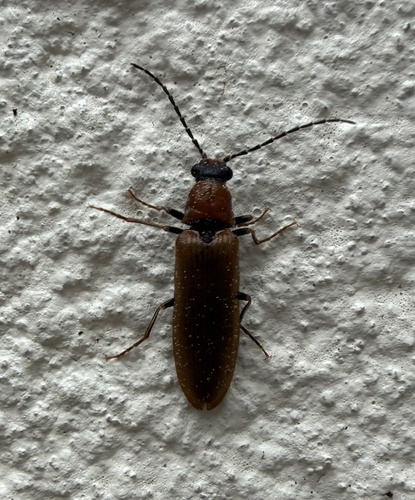
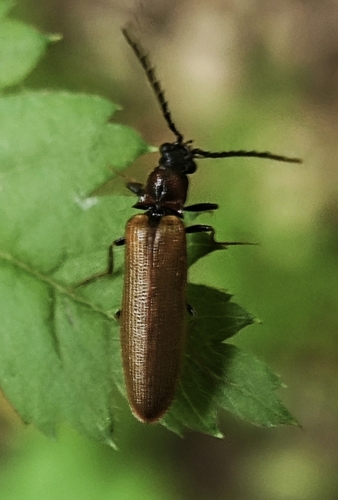
Adult bordered click beetles are 9 to 13 mm long and show orange-red to brownish pronotum, dark-brown to yellowish elytra, with blackish head and femora and orange-yellow tarsi and tibiae. They appear from May through July on broad-leaved and coniferous trees across most of Europe, the East Palearctic, the Nearctic, and the Near East.
Source: Wikipedia
Size
Adults grow to 9 to 13 mm (0.35 to 0.51 in) in length.
Source: Wikipedia
Where it lives
They are mostly found from May to July on both broad-leaved and coniferous host trees.
Source: Wikipedia
Life cycle
Adults are 9 to 13 mm long and are mainly seen from May through July on broad-leaved and coniferous trees; larvae are omnivorous, feeding on various plants and other larvae.
Source: Wikipedia
Lookalikes
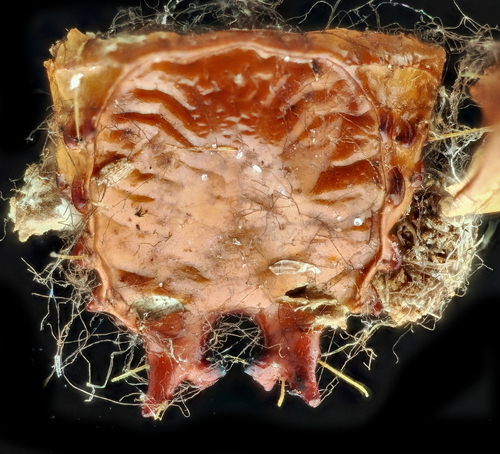
They resemble soldier beetles but can be told apart by the two very protruding basal angles on the pronotum and deep longitudinal rows of pits.
Source: Wikipedia
More photos
Questions people ask
When are bordered click beetles active?
You’ll most often see them from May through July on trees.
Source: Wikipedia
What do the larvae eat?
The larvae feed on many different plants and on other insect larvae.
Source: Wikipedia
How can I tell them apart from soldier beetles?
Look for two very protruding basal angles on the pronotum and deep longitudinal rows of pits.
Source: Wikipedia
Same family (Elateridae)


Sources
- Wikipedia: https://en.wikipedia.org/wiki/Denticollis_linearis
Look it up elsewhere: GBIF · iNaturalist · BugGuide · Wikipedia
Text written 2026-10-24 from the sources above and checked sentence by sentence against them. Data fetched 2026-10-22.