 Bug FAQ
Box Tree Moth
Cydalima perspectalis · Order: Lepidoptera · Family: Crambidae
Source: Wikipedia
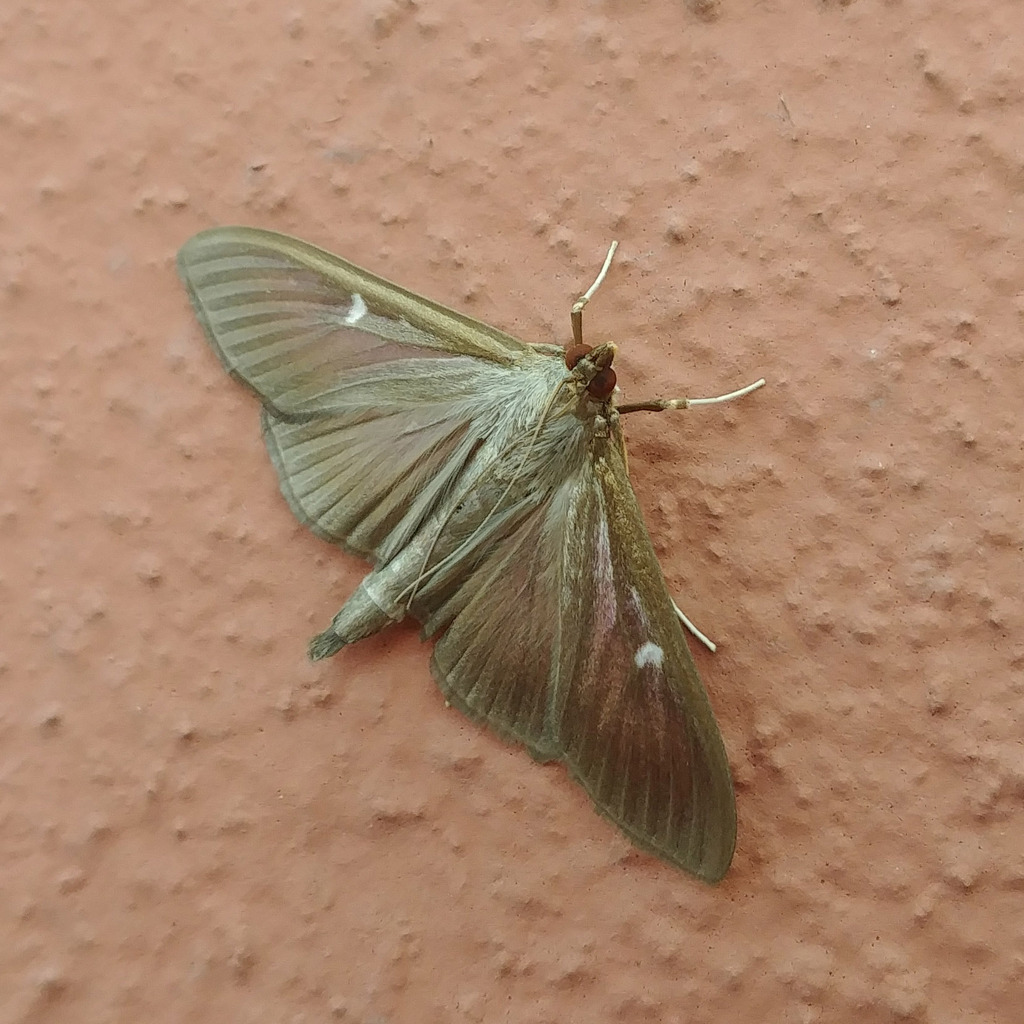
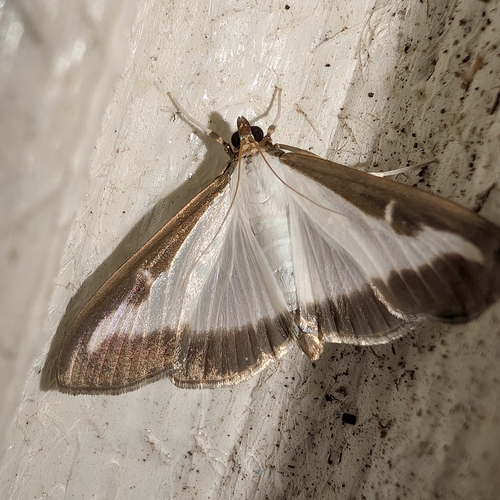
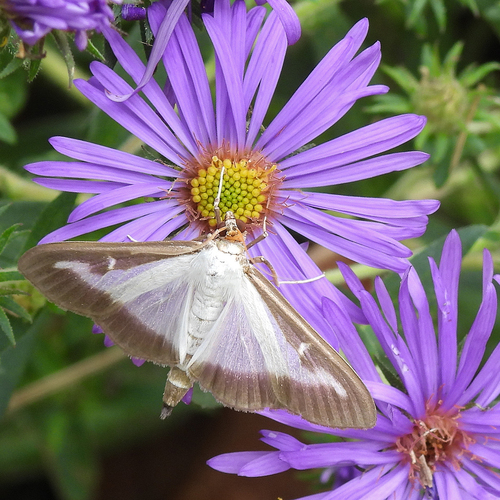
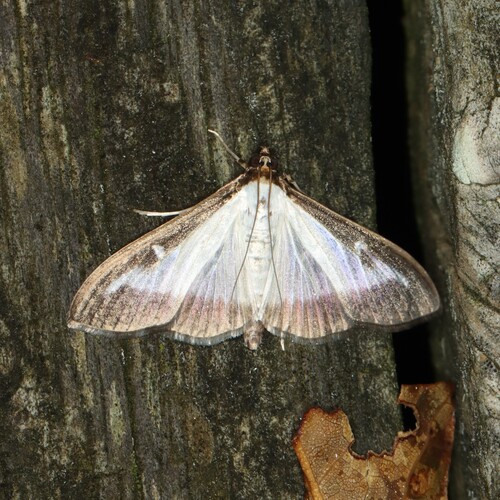
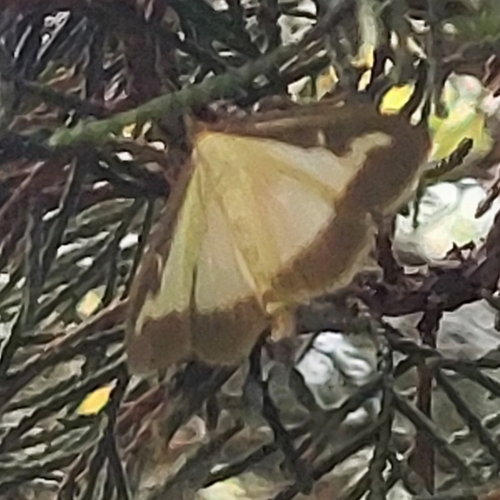
Adults have a wingspan of about 4 to 4.5 cm. Two colour forms exist: a mostly white moth with a light brown edge, and a darker brown form with a small white spot on the forewing.
Source: Wikipedia
Size
The adult moth’s wingspan ranges from 40 to 45 mm.
Source: Wikipedia
How to get rid of it
Pheromone traps that attract male moths can reduce mating and limit damage. Traps should be set from March to April through October to November to be effective.
Source: Wikipedia
Life cycle
The species overwinters as a small (5 to 10 mm) larva inside a cocoon made from two Buxus leaves bound together with silk.
Source: Wikipedia
When you see it
Adults are active from June to early August and from September to November in Britain; three generations may occur in parts of Germany.
Source: Wikipedia
Where it is found in the US
Recorded in 12 of 51 states and DC. Most records: Ohio, Michigan, Massachusetts, New York, West Virginia, Delaware, Maryland, Virginia.
Darker = more records. Counts are museum and citizen-science records, not population size.
Source: GBIF
Status: introduced in North America; introduced in United States; introduced in Canada. Source: iNaturalist
Months it is reported in the US
Source: GBIF
More photos
Questions people ask
Do Box Tree Moth larvae damage my garden plants?
Yes, the larvae feed on box (Buxus) leaves and shoots, which can defoliate and weaken the shrubs.
Source: Wikipedia
How can I control a Box Tree Moth infestation?
Use pheromone traps for males from early spring until late autumn to lower the number of fertilised females and reduce damage.
Source: Wikipedia
Same family (Crambidae)
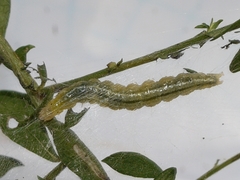 Celery Leaftier MothUdea rubigalisDamages trees, gardens or crops
 Elegant Grass-veneerMicrocrambus elegans
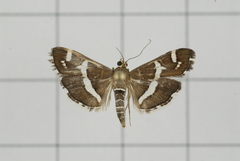 Hawaiian Beet Webworm MothSpoladea recurvalisDamages trees, gardens or crops
 Garden Grass-veneerChrysoteuchia culmellaDamages trees, gardens or crops
 Bluegrass Webworm MothParapediasia teterrellusDamages trees, gardens or crops
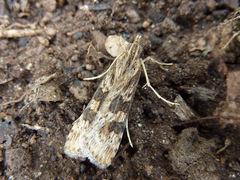 Lucerne MothNomophila nearcticaDamages trees, gardens or crops
Sources
- Wikipedia: https://en.wikipedia.org/wiki/Cydalima_perspectalis
Look it up elsewhere: GBIF · iNaturalist · BugGuide · Wikipedia
Text written 2026-10-22 from the sources above and checked sentence by sentence against them. Data fetched 2026-10-22.