 Bug FAQ
Brown Recluse
Loxosceles reclusa · Order: Araneae · Family: Sicariidae
Also called: Brown recluse spider
Source: Wikipedia, Penn State Extension
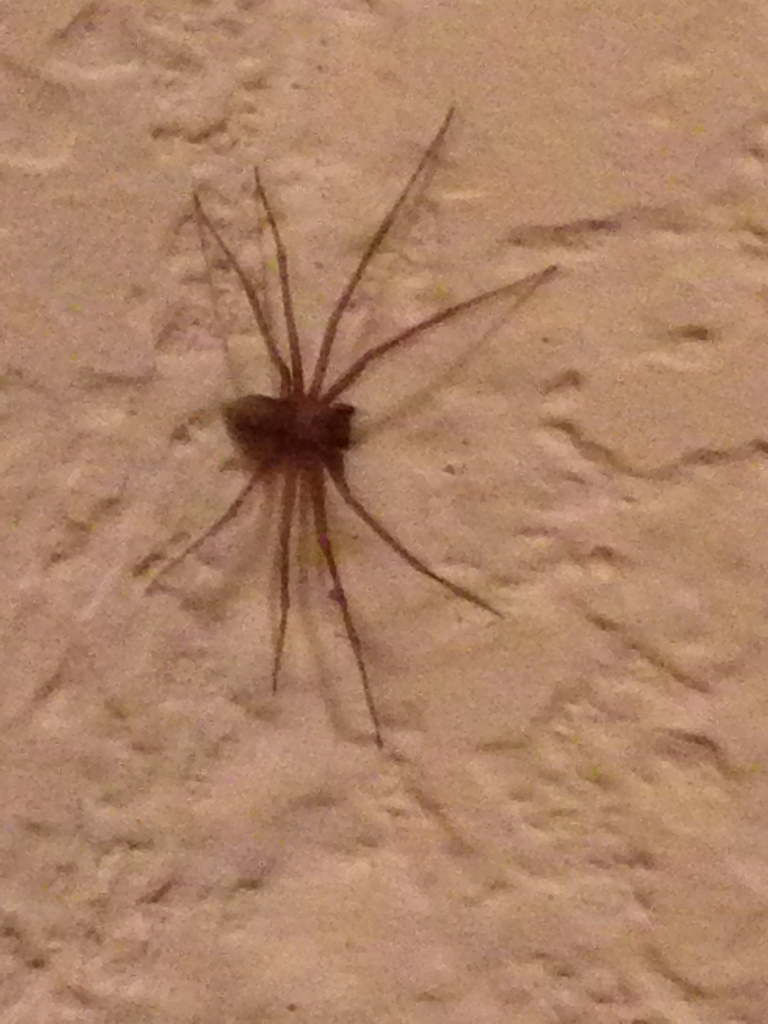
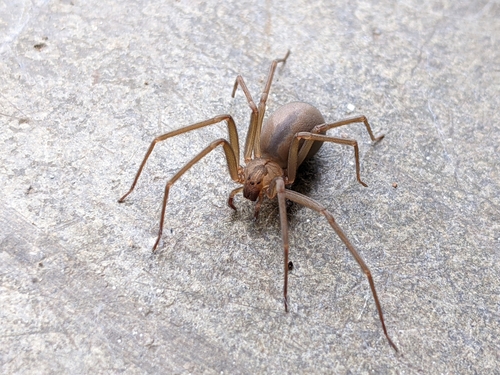
Brown recluse spiders are 6 to 20 mm long, usually light to dark brown, and have a distinctive dark violin-shaped mark on the front of their body. Their bite delivers a tissue-destroying venom that can kill skin around the bite and, in a small percentage of cases, cause hemolytic anemia or kidney injury.
Source: Wikipedia, entomology.ca.uky.edu, Penn State Extension
How to recognize it
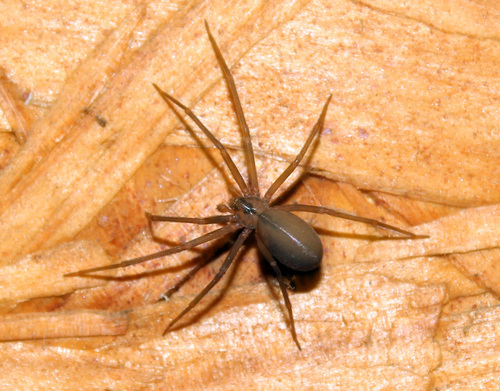
They have a dark violin-shaped marking on the cephalothorax with the neck pointing toward the rear. The abdomen and legs are uniformly colored without stripes or mottling.
Size
Adults range from about 6 mm to 20 mm in length, though some may grow larger.
Source: Wikipedia
Is it a pest in the house?
They are established in sixteen states, including Alabama, Texas, and Ohio, and often hide in stored clothes, shoes, and other items.
Source: Penn State Extension
Does it bite or sting?
Their venom contains sphingomyelinase D, which can destroy tissue around the bite. Most bites are minor, but about 37 % cause skin necrosis and 14 % cause systemic illness; less than 1 % lead to severe symptoms like hemolytic anemia or kidney injury.
Source: Wikipedia, Penn State Extension
How to get rid of it
Because they are secretive, eradication is difficult and professional pest control is recommended.
Source: entomology.ca.uky.edu
Where it lives
They hide in cracks, under stored items, and in clothing, shoes, or bedding, biting only when pressed against skin.
Source: Wikipedia, Penn State Extension
What it eats
At night they hunt insects, catching live or dead prey.
Source: entomology.ca.uky.edu
Life cycle
Females lay several egg sacs from May to July, each with about 50 eggs; spiderlings hatch in a month and reach adulthood in about a year. Adults typically live one to two years.
Source: Wikipedia
Lookalikes
Other spiders, such as cellar and pirate spiders, can have similar violin markings, so identification should be confirmed by an expert. In California, many specimens thought to be brown recluse were actually harmless Titiotus species.
Source: Wikipedia, entomology.ca.uky.edu
Where it is found in the US
Recorded in 32 of 51 states and DC. Most records: Texas, Missouri, Oklahoma, Kansas, Tennessee, Arkansas, Illinois, Alabama.
Darker = more records. Counts are museum and citizen-science records, not population size.
Source: GBIF
Status: endemic in United States. Source: iNaturalist
Months it is reported in the US
Source: GBIF
More photos
Questions people ask
How can I identify a brown recluse?
Look for a dark violin-shaped mark on the front of the spider with the neck pointing toward the rear, and note its uniform brown color without stripes.
Source: entomology.ca.uky.edu
What should I do if I think I was bitten?
Apply ice, keep the area elevated, and seek medical attention right away.
Source: entomology.ca.uky.edu
Where are brown recluse spiders found in the US?
They are native to the central and southern United States, from southeastern Nebraska eastward to southwestern Ohio and from central Texas up to western Georgia and Kentucky.
Source: Wikipedia
Can other spiders be mistaken for brown recluse?
Yes, some cellar and pirate spiders have similar markings, so have a professional confirm the species.
Source: Wikipedia, entomology.ca.uky.edu
Sources
- Wikipedia: https://en.wikipedia.org/wiki/Brown_recluse_spider
- Penn State Extension: https://extension.psu.edu/brown-recluse-spiders
- entomology.ca.uky.edu: https://entomology.ca.uky.edu/ef631
Look it up elsewhere: GBIF · iNaturalist · BugGuide · ITIS · Wikipedia
Text written 2026-10-23 from the sources above and checked sentence by sentence against them. Data fetched 2026-10-23.