 Bug FAQ
Brown Waterscorpion
Ranatra fusca · Order: Hemiptera · Family: Nepidae
Also called: Brown Water Scorpion
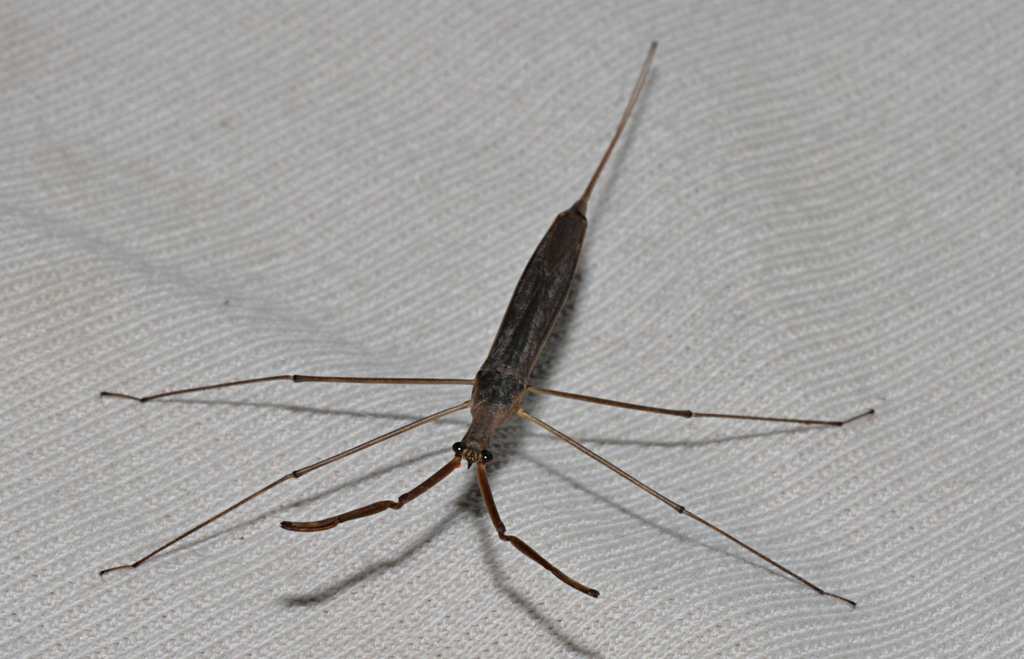
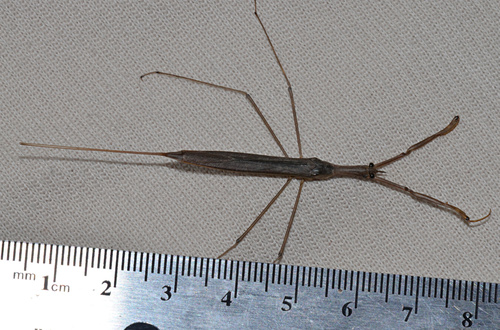
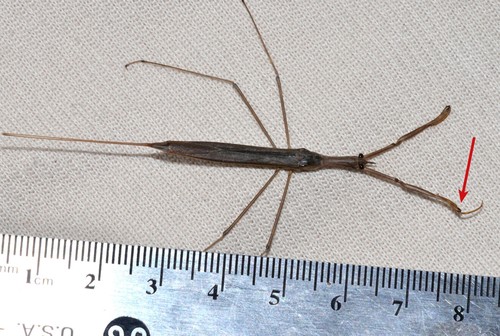
The brown waterscorpion is a water stick-insect about 3.2 to 4.2 cm long. It lives in North America, is carnivorous and eats other insects and crustaceans, and is most often seen from spring through autumn.
Source: Wikipedia
How to recognize it
Ranatra fusca belongs to the water-stick-insect family Nepidae and is native to North America.
Source: Wikipedia
What it eats
It is carnivorous, feeding on other insects and crustaceans.
Source: Wikipedia
Where it comes from
It is native to North America.
Source: Wikipedia
Where it is found in the US
Recorded in 37 of 51 states and DC. Most records: Vermont, Minnesota, Washington, Michigan, New York, Illinois, Oregon, Kentucky.
Darker = more records. Counts are museum and citizen-science records, not population size.
Source: GBIF
Status: native in North America; native in Canada; native in United States. Source: iNaturalist
Months it is reported in the US
Source: GBIF
More photos
Questions people ask
When are brown waterscorpions most likely to be seen?
They are most common from spring through autumn.
Source: Wikipedia
Same family (Nepidae)
Sources
- Wikipedia: https://en.wikipedia.org/wiki/Ranatra_fusca
Look it up elsewhere: GBIF · iNaturalist · BugGuide · ITIS · Wikipedia
Text written 2026-10-24 from the sources above and checked sentence by sentence against them. Data fetched 2026-10-24.