 Bug FAQ
Burdock Seedhead Moth
Metzneria lappella · Order: Lepidoptera · Family: Gelechiidae
Also called: Burdock seed moth, Burdock Neb
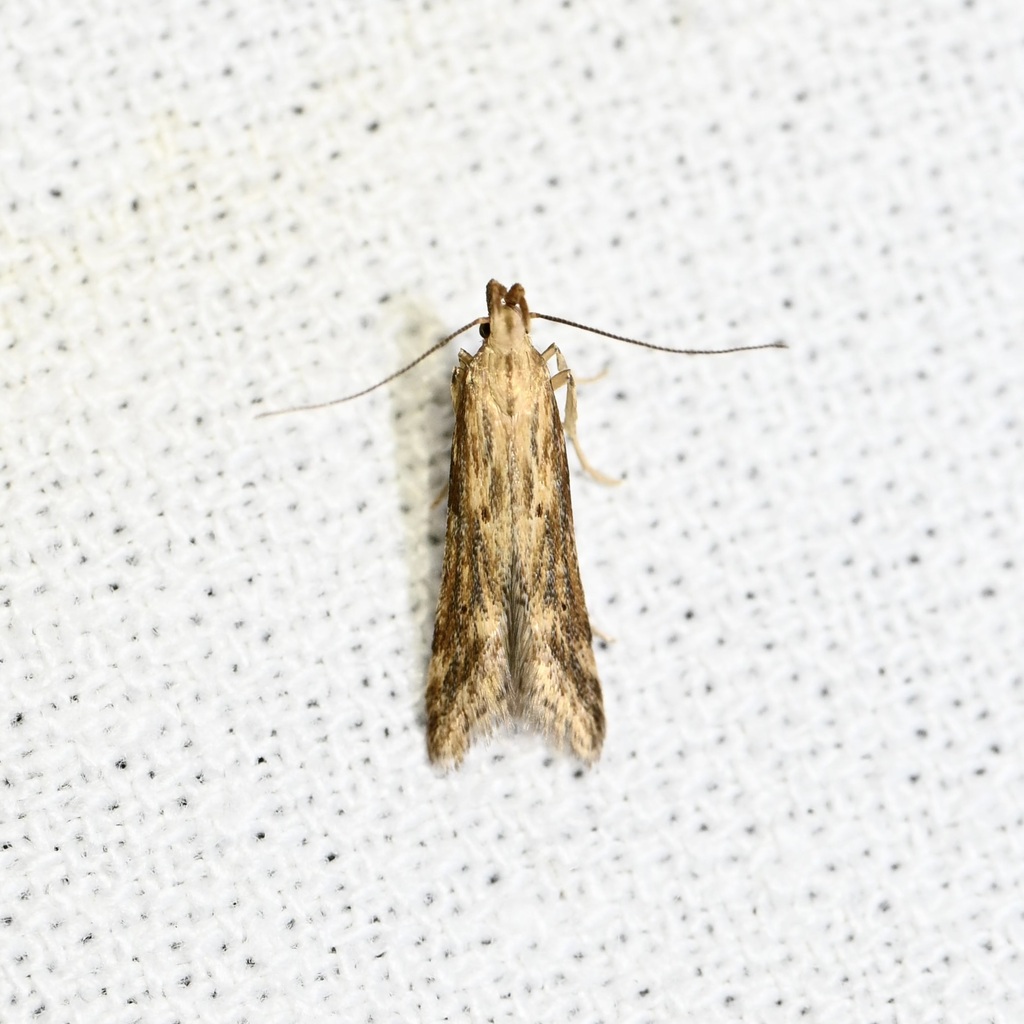
The burdock seedhead moth has a wingspan of about 13 to 19 mm and belongs to the Gelechiidae family. It lives in fields, roadsides and waste places across most of Europe and the Palaearctic region, reaching as far north as the Arctic Circle. One generation emerges each year, with adults flying from April to August in southern areas and in June-July farther north.
Source: Wikipedia
How to recognize it
Metzneria lappella is a moth of the family Gelechiidae.
Source: Wikipedia
Size
Its wingspan ranges from 13 to 19 mm.
Source: Wikipedia
Where it lives
It is typically found in fields, along roadsides and in waste places.
Source: Wikipedia
What it eats
The larvae feed on developing seeds of burdock plants such as Arctium lappa and Arctium minus.
Source: Wikipedia
Life cycle
It produces one generation per year (univoltine).
Source: Wikipedia
When you see it
Adults are on the wing from April to August in the south and in June-July in northern regions, including England.
Source: Wikipedia
Where it comes from
The species occurs throughout most of Europe and the broader Palaearctic region, extending north to the Arctic Circle.
Source: Wikipedia
Where it is found in the US
Recorded in 26 of 51 states and DC. Most records: Michigan, Pennsylvania, New York, Vermont, Ohio, Indiana, Illinois, Massachusetts.
Darker = more records. Counts are museum and citizen-science records, not population size.
Source: GBIF
Status: introduced in North America; introduced in United States. Source: iNaturalist
Months it is reported in the US
Source: GBIF
More photos
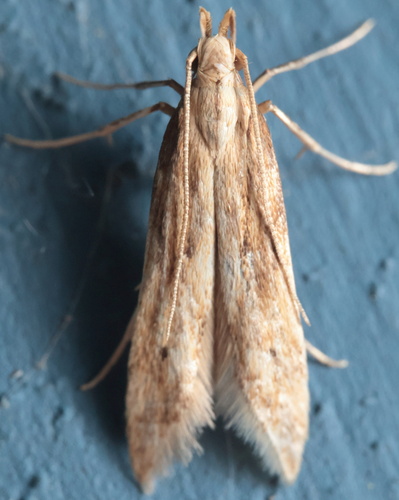
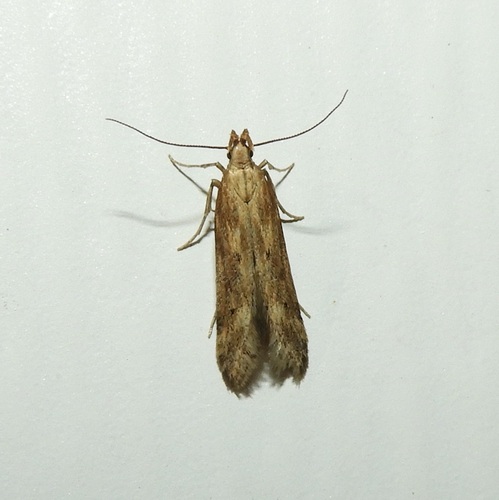
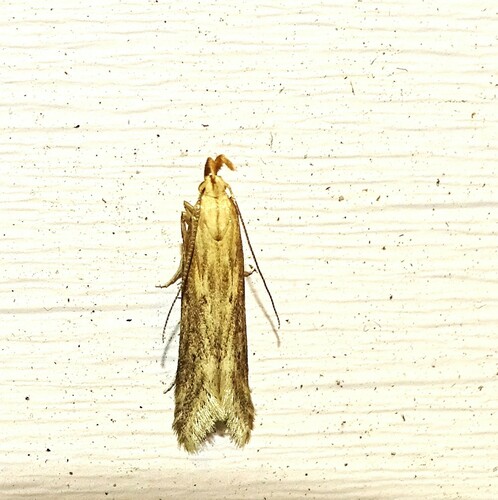
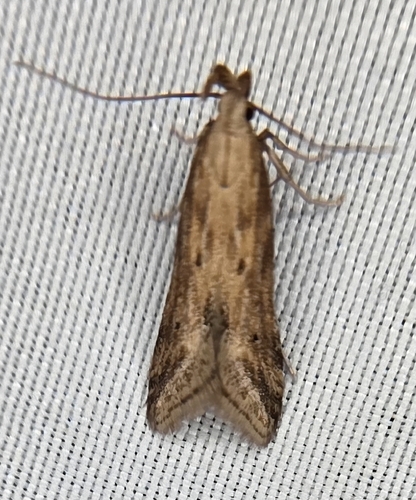
Questions people ask
When can I expect to see adult burdock seedhead moths?
Adults fly from April through August in southern areas and in June-July farther north.
Source: Wikipedia
What do the larvae eat?
The caterpillars feed on the developing seeds of burdock species like Arctium lappa and Arctium minus.
Source: Wikipedia
Same family (Gelechiidae)
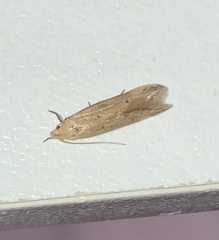 Angoumois Grain MothSitotroga cerealellaDamages trees, gardens or crops
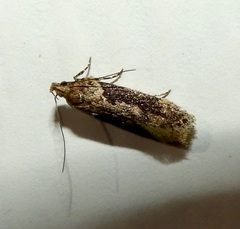 Black-smudged Chionodes MothChionodes mediofuscella
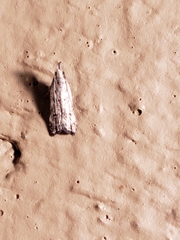 Inverse and Kimball's Dichomeris MothsDichomeris inversella
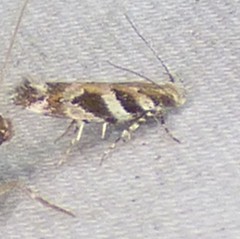 Pink-washed Aristotelia MothAristotelia roseosuffusella
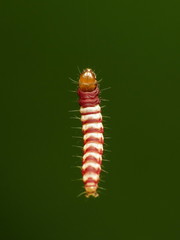 White Stripe-backed MothArogalea cristifasciella
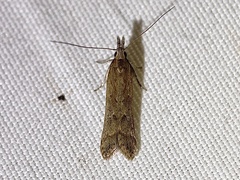 Palmerworm Moth and AlliesDichomeris ligulella
Sources
- Wikipedia: https://en.wikipedia.org/wiki/Metzneria_lappella
Look it up elsewhere: GBIF · iNaturalist · BugGuide · Wikipedia
Text written 2026-10-24 from the sources above and checked sentence by sentence against them. Data fetched 2026-10-24.