 Bug FAQ
Clover Mite
Bryobia praetiosa · Order: Trombidiformes · Family: Tetranychidae
Source: Wikipedia
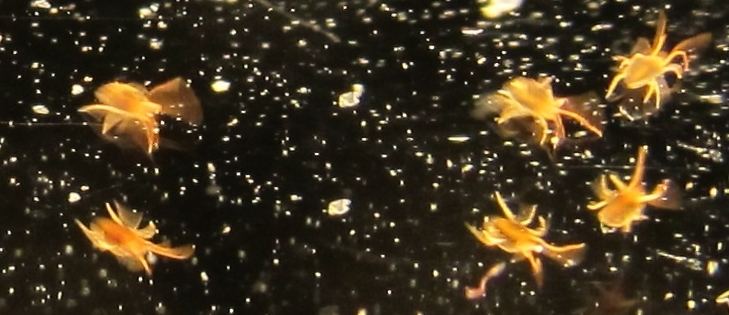
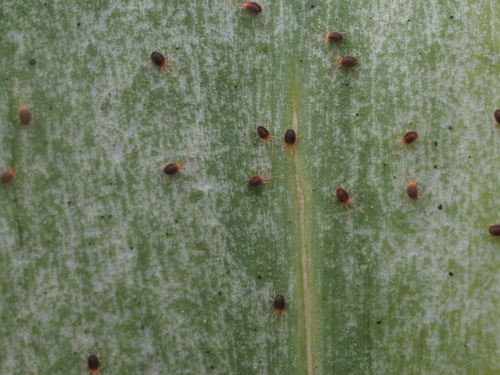
These tiny, oval arachnids are about three-hundredths of an inch long and are reddish-brown, with the youngest looking bright red. They live on plants and in sunny spots, can wander indoors through cracks, and may become a nuisance when they arrive in large numbers.
Source: Wikipedia
How to recognize it
Adults are reddish brown, while juveniles and eggs appear bright red.
Source: Wikipedia
Size
They measure roughly 0.75 to 0.85 mm in length.
Source: Wikipedia
Is it a pest in the house?
They often enter homes near dense vegetation through small gaps around windows and doors, sometimes in huge numbers. They do not damage humans, pets, or furnishings.
Source: Wikipedia
Does it bite or sting?
They do not bite or sting people or animals.
Source: Wikipedia
How to get rid of it
Seal cracks and remove nearby dense vegetation to keep them out of the house. If crushed, they leave a red stain from their pigment.
Source: Wikipedia
Where it lives
They are found on vegetation, rocks and other surfaces where they feed on nearby plants. Sunny locations attract them more than shady ones.
Source: Wikipedia
What it eats
They pierce plant tissue to suck sap and will eat many kinds of plants, from lawn grasses to ornamental flowers.
Source: Wikipedia
Life cycle
Females lay unfertilized eggs, producing only female offspring. Their development includes a six-legged larval stage followed by two eight-legged nymph stages before adulthood.
Source: Wikipedia
When you see it
They are especially abundant in late spring in North America.
Source: Wikipedia
Where it comes from
Clover mites occur on every continent except Antarctica.
Source: Wikipedia
Lookalikes
They can be mistaken for insects because of their forward-pointing legs that look like antennae.
Source: Wikipedia
Where it is found in the US
Recorded in 19 of 51 states and DC. Most records: California, Utah, Virginia, Alaska, New York, Ohio, Illinois, Maryland.
Darker = more records. Counts are museum and citizen-science records, not population size.
Source: GBIF
Status: native in North America; native in Canada. Source: iNaturalist
Months it is reported in the US
Source: GBIF
More photos
Questions people ask
Why do I see red spots on my floor after squishing them?
Crushed clover mites release a red pigment that stains surfaces.
Source: Wikipedia
How can I keep clover mites out of my house?
Close gaps around windows and doors and trim back dense vegetation near the home.
Source: Wikipedia
Same family (Tetranychidae)

Sources
- Wikipedia: https://en.wikipedia.org/wiki/Clover_mite
Look it up elsewhere: GBIF · iNaturalist · BugGuide · Wikipedia
Text written 2026-10-22 from the sources above and checked sentence by sentence against them. Data fetched 2026-10-22.