 Bug FAQ
Common Pill Woodlouse
Armadillidium vulgare · Order: Isopoda · Family: Armadillidiidae
Also called: Common Woodlouse, Pill Woodlouse
Source: Wikipedia
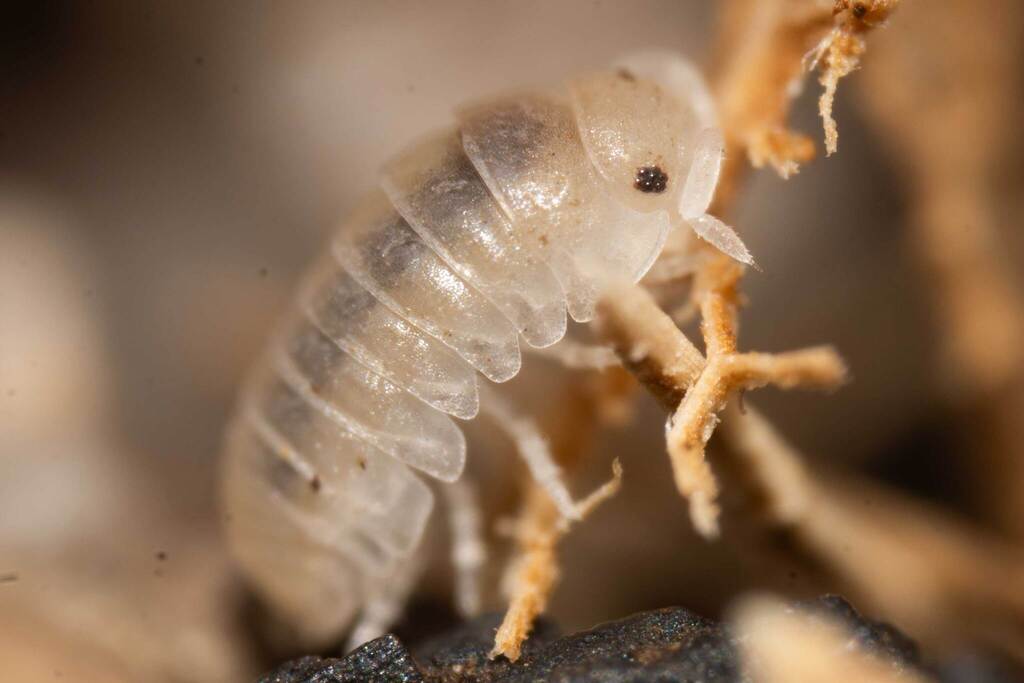
Common pill woodlice are small, oval crustaceans that can roll into a ball when disturbed, reaching up to about 18 mm in length. They like damp, humid places and are often found inside homes, where they are considered harmless household pests.
Source: Wikipedia
How to recognize it
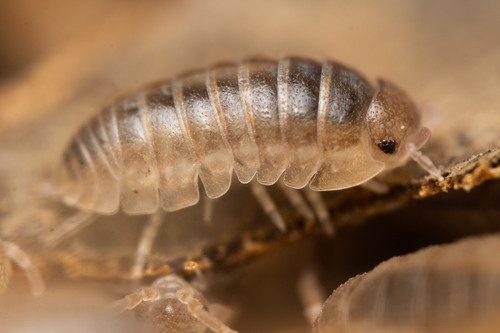
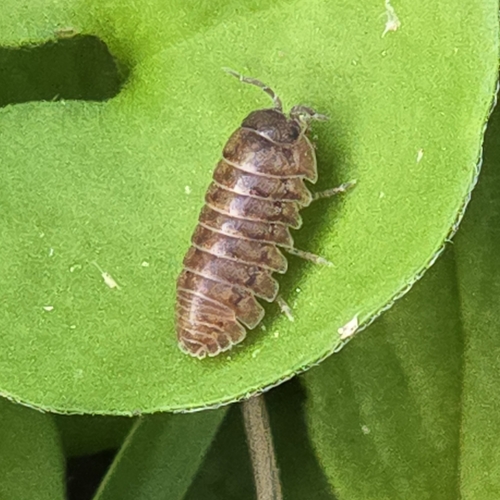
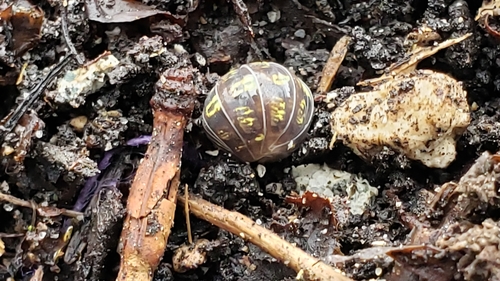
Their backs are made of dark grey or brown plates with faint cream or yellow spots, colored by black ommochrome and yellow pteridine pigments.
Source: Wikipedia
Size
Adults measure between 8.5 and 18 mm and can curl into a perfect sphere.
Source: Wikipedia
Is it a pest in the house?
People often label them as domestic pests, although they cause no real harm.
Source: Wikipedia
Does it bite or sting?
They are non-venomous, do not bite or sting, and are not known to carry human pathogens.
Source: Wikipedia
Where it lives
They prefer moist, humid environments with moderate temperatures to avoid drying out.
Source: Wikipedia
What it eats
They mainly eat decaying plant material but will also consume seeds, live plant parts, dead animals, fungi and dung.
Source: Wikipedia
Life cycle
After hatching, juveniles stay in the mother’s brood pouch for three to four days before emerging, and they can live up to three years.
Source: Wikipedia
Where it comes from
Originally from Mediterranean Europe, they have spread and become naturalized in many suitable habitats worldwide.
Source: Wikipedia
Lookalikes
They can be mistaken for pill millipedes like Glomeris marginata, but unlike A. nasatum and A. depressum they leave no gap when rolled up.
Source: Wikipedia
Where it is found in the US
Recorded in 50 of 51 states and DC. Most records: California, Texas, New York, Washington, North Carolina, Colorado, Oregon, Illinois.
Darker = more records. Counts are museum and citizen-science records, not population size.
Source: GBIF
Status: introduced in North America; introduced in Canada; introduced in United States. Source: iNaturalist
Months it is reported in the US
Source: GBIF
More photos
Questions people ask
Do pill woodlice bite or sting?
No, they are harmless and do not bite, sting, or transmit disease.
Source: Wikipedia
Are they a household pest?
Yes, they are often found indoors and are considered a nuisance pest, though they cause no damage.
Source: Wikipedia
Can they be confused with other bugs?
They may look like pill millipedes, but unlike some related woodlice they do not leave a gap when they roll into a ball.
Source: Wikipedia
Same family (Armadillidiidae)

Sources
- Wikipedia: https://en.wikipedia.org/wiki/Armadillidium_vulgare
Look it up elsewhere: GBIF · iNaturalist · BugGuide · ITIS · Wikipedia
Text written 2026-10-22 from the sources above and checked sentence by sentence against them. Data fetched 2026-10-22.