 Bug FAQ
Dotted Paropsine Leaf Beetle
Paropsis atomaria
Source: Wikipedia
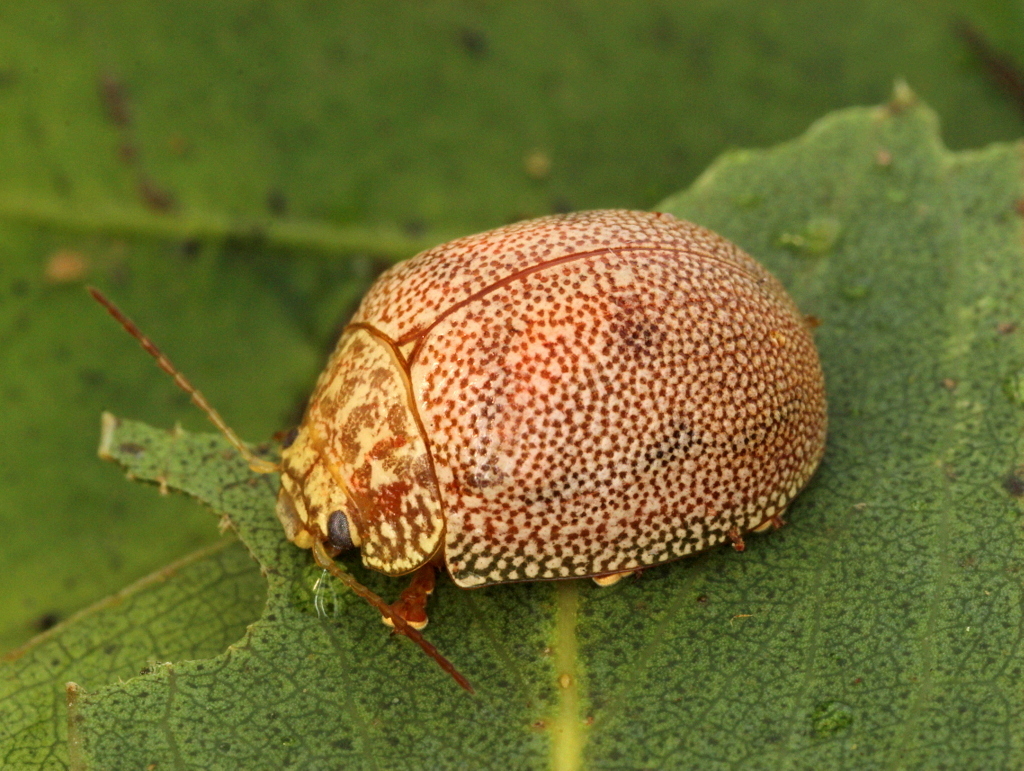
It can produce two generations each summer, with females laying up to 600 eggs on leaf tips, and it may become a pest of plantation trees.
Source: Wikipedia
How to recognize it
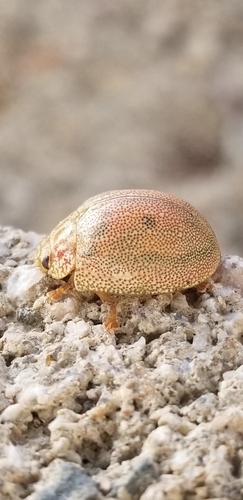
Its species name, atomaria, means speckled or freckled.
Source: Wikipedia
Is it a pest in the house?
It may become a pest of plantation trees.
Source: Wikipedia
Where it lives
It occurs across eastern Australia from Adelaide to Brisbane.
Source: Wikipedia
What it eats
It can become a pest of plantation trees.
Source: Wikipedia
Life cycle
It typically produces two generations during the summer.
Source: Wikipedia
When you see it
Two generations are produced each summer across most of its range.
Source: Wikipedia
Where it comes from
Its native range is eastern Australia, spanning from Adelaide to Brisbane.
Source: Wikipedia
Where it is found in the US
Recorded in 10 of 51 states and DC. Most records: California, Texas, Florida, Georgia, Illinois, Alabama, Maryland, Oregon.
Darker = more records. Counts are museum and citizen-science records, not population size.
Source: GBIF
Status: introduced in North America; introduced in United States. Source: iNaturalist
Months it is reported in the US
Source: GBIF
More photos
Questions people ask
How many generations does it have each year?
It usually has two generations during the summer.
Source: Wikipedia
Sources
- Wikipedia: https://en.wikipedia.org/wiki/Paropsis_atomaria
Look it up elsewhere: iNaturalist · BugGuide · Wikipedia
Text written 2026-10-23 from the sources above and checked sentence by sentence against them. Data fetched 2026-10-23.