 Bug FAQ
European Tortoise Bug
Eurygaster maura · Order: Hemiptera · Family: Scutelleridae
Source: Wikipedia
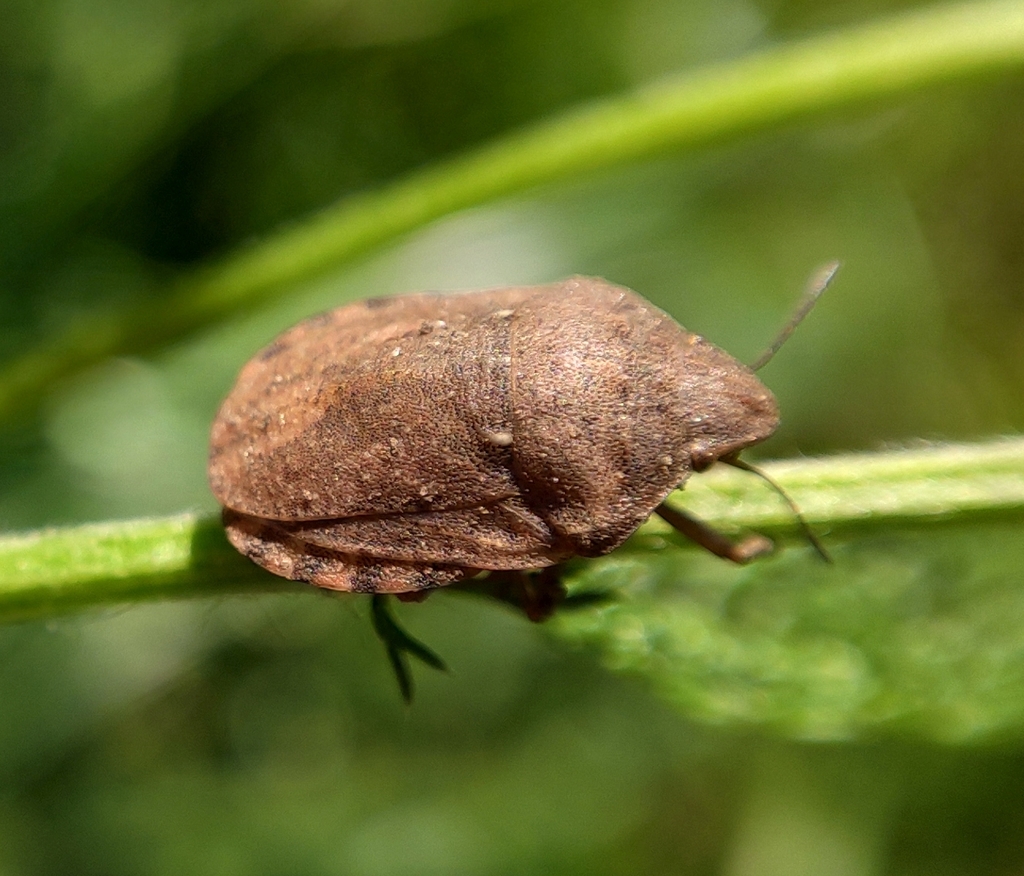
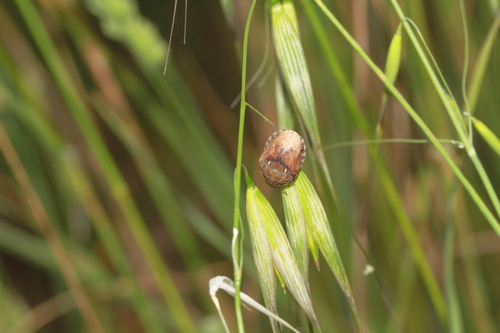
The European tortoise bug is an oval, slightly convex shield bug about 8 to 11 mm long. It lives on calcareous grasslands where wild grasses grow.
Source: Wikipedia
How to recognize it
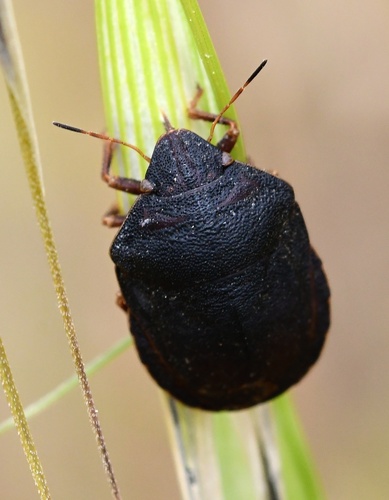
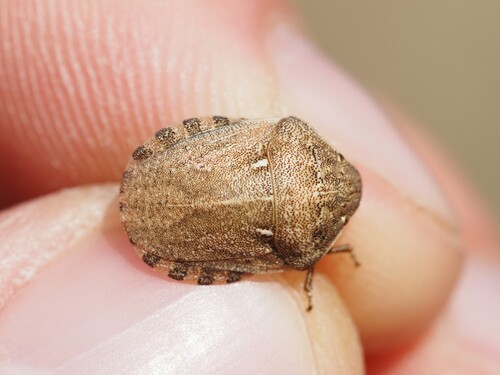
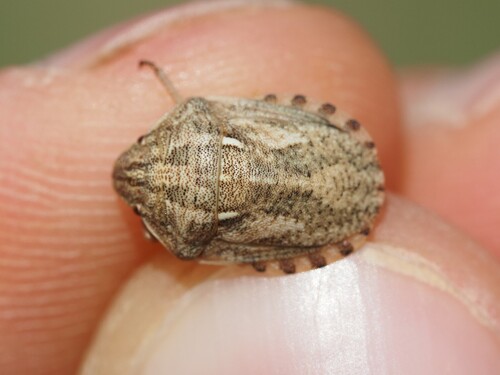
Its ground colour is usually brown, but can also be light gray or black.
Source: Wikipedia
Size
It reaches a length of about 8 to 11 mm (0.31 to 0.43 in).
Source: Wikipedia
Is it a pest in the house?
It is a sunn pest; both adults and larvae are very harmful to crops.
Source: Wikipedia
Where it lives
It prefers calcareous grasslands that have wild grasses.
Source: Wikipedia
Life cycle
The species has one generation per year (univoltine). After five molts the bugs are fully developed and spend the winter in leaf litter.
Source: Wikipedia
Lookalikes
It resembles Eurygaster testudinaria but is slightly smaller, has a smoothly rounded shape and less protruding hind corners.
Source: Wikipedia
More photos
Questions people ask
When are these bugs most likely to be seen?
They are present from May through August, with adults appearing from July onward.
Source: Wikipedia
What habitats should I check for them?
Look for them in calcareous grasslands that have wild grasses.
Source: Wikipedia
How can I tell this bug apart from similar species?
It is slightly smaller than Eurygaster testudinaria, has a smoothly rounded shape and less protruding hind corners.
Source: Wikipedia
Same family (Scutelleridae)



Sources
- Wikipedia: https://en.wikipedia.org/wiki/Eurygaster_maura
Look it up elsewhere: GBIF · iNaturalist · BugGuide · Wikipedia
Text written 2026-10-24 from the sources above and checked sentence by sentence against them. Data fetched 2026-10-22.