 Bug FAQ
Feather-legged Scoliid Wasp
Dielis plumipes · Order: Hymenoptera · Family: Scoliidae
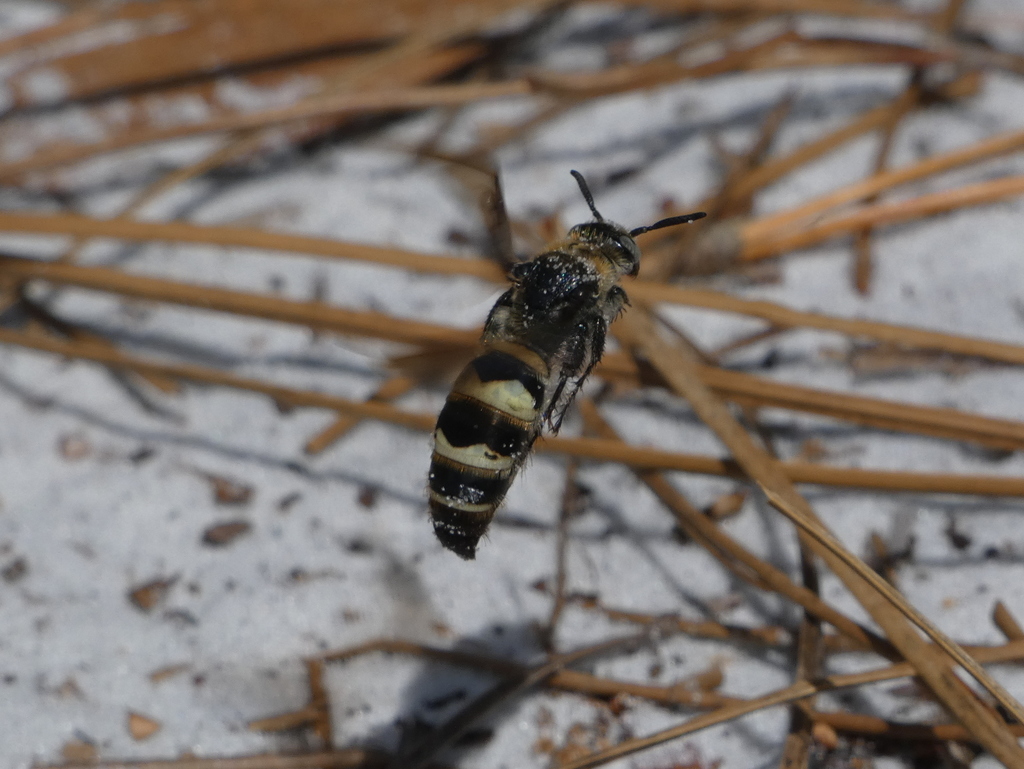
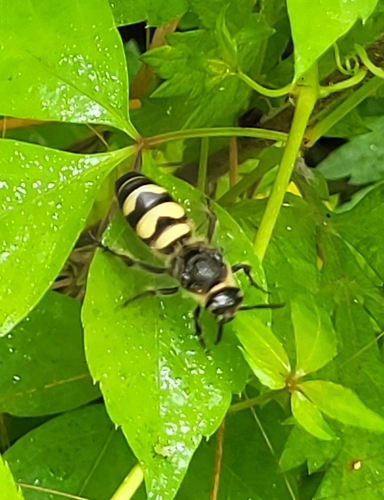
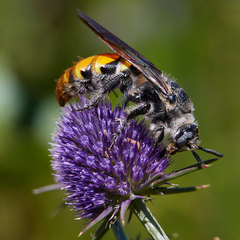
This wasp lives in the eastern and central United States. It can be told apart from similar species by its almost entirely black pronotum, black clypeus, and black middle and hind legs.
Source: Wikipedia
Where it comes from
Its range includes the eastern and central United States.
Source: Wikipedia
Lookalikes
It has an almost completely black pronotum, a fully black clypeus, and black middle and hind legs, which separate it from related species.
Source: Wikipedia
Where it is found in the US
Recorded in 23 of 51 states and DC. Most records: South Carolina, Florida, Illinois, Ohio, Nebraska, New Jersey, Texas, Georgia.
Darker = more records. Counts are museum and citizen-science records, not population size.
Source: GBIF
Months it is reported in the US
Source: GBIF
More photos
Questions people ask
How can I tell this wasp apart from similar species?
Look for an almost entirely black pronotum, a completely black clypeus, and black middle and hind legs.
Source: Wikipedia
Same family (Scoliidae)

Sources
- Wikipedia: https://en.wikipedia.org/wiki/Dielis_plumipes
Look it up elsewhere: GBIF · iNaturalist · BugGuide · Wikipedia
Text written 2026-10-23 from the sources above and checked sentence by sentence against them. Data fetched 2026-10-23.