 Bug FAQ
Fine-backed Red Paper Wasp
Polistes carolina · Order: Hymenoptera · Family: Eumenidae
Also called: Fine-backed Mahogany Paper Wasp, Fine-backed Orange Paper Wasp
Source: Wikipedia
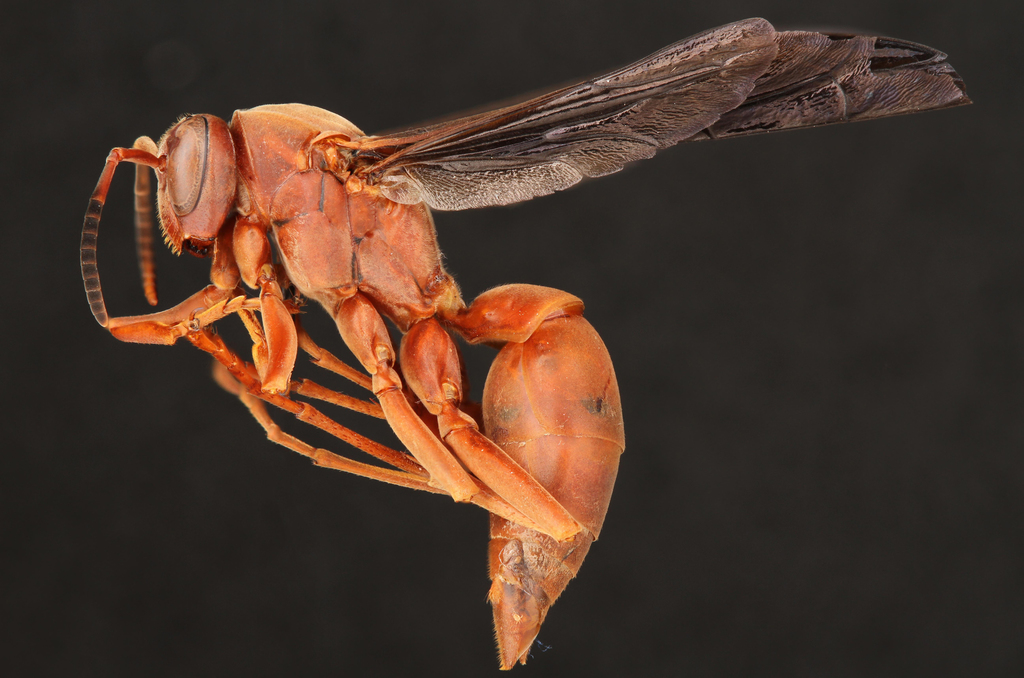
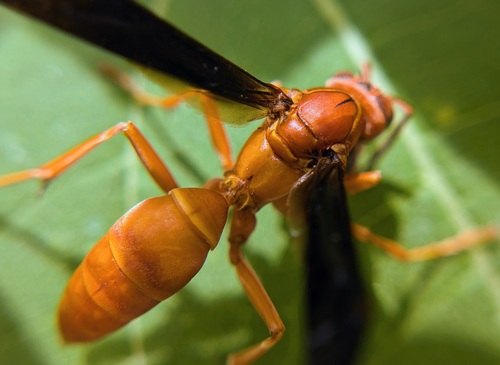
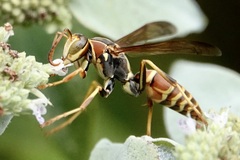
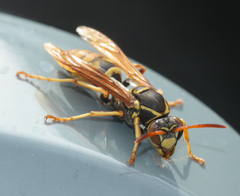
Fine-backed red paper wasps are 25 to 32 mm long with black wings and a reddish-brown body. They build paper nests in protected spots such as hollow trees, woodlands, or under roofs near humans. Adults feed on nectar while larvae eat caterpillars and other insects.
Source: Wikipedia
How to recognize it
Females have bare cheek areas (genae) unlike the silvery hairs on the same part of the similar P. rubiginosus.
Source: Wikipedia
Size
Both males and females measure about 25 to 32 mm in length, with wings 15 to 25 mm long.
Source: Wikipedia
Is it a pest in the house?
Because they nest in sheltered spots, they are often found under roofs close to human dwellings. They are not aggressive and will only attack if their nest or themselves are threatened.
Source: Wikipedia
Does it bite or sting?
Only females can sting, and they can sting repeatedly because their stingers are not barbed. When disturbed near a nest they turn toward the threat, lift their wings and adopt an intimidating posture before stinging.
Source: Wikipedia
How to get rid of it
If a nest is near a home, approach it calmly; if disturbed the wasps will face you, lift their wings and warn before stinging.
Source: Wikipedia
Where it lives
They prefer sheltered sites such as hollow trees and woodlands, but will also nest under roofs when given the chance.
Source: Wikipedia
What it eats
Adults sip nectar, while larvae are fed mainly caterpillars and they also prey on leaf beetle larvae and cicadas.
Source: Wikipedia
Life cycle
The colony goes through four overlapping phases: founding, worker, reproductive, and intermediate. The reproductive phase runs from the first adult reproductives emerging until the colony declines and new reproductives leave to start new nests.
Source: Wikipedia
When you see it
Founding of new nests starts in spring. During the worker phase, P. carolina lacks early males, unlike many other Polistes species.
Source: Wikipedia
Lookalikes
They are often mistaken for P. rubiginosus, which has a similar reddish-brown color. P. rubiginosus shows coarser transverse ridges on the propodeum compared with P. carolina.
Source: Wikipedia
Where it is found in the US
Recorded in 26 of 51 states and DC. Most records: Texas, Georgia, Tennessee, Alabama, Oklahoma, Florida, Missouri, Arkansas.
Darker = more records. Counts are museum and citizen-science records, not population size.
Source: GBIF
Status: native in North America. Source: iNaturalist
Months it is reported in the US
Source: GBIF
More photos
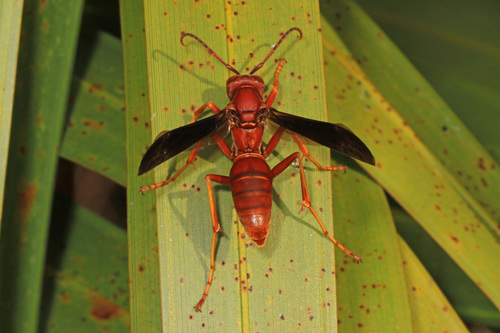
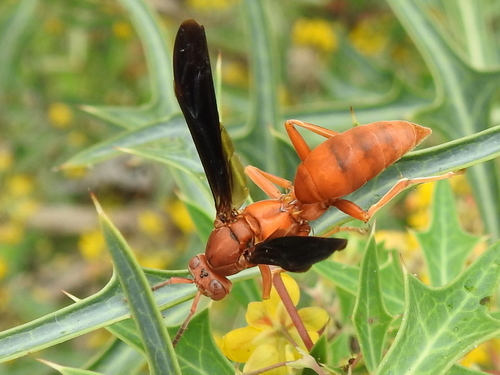
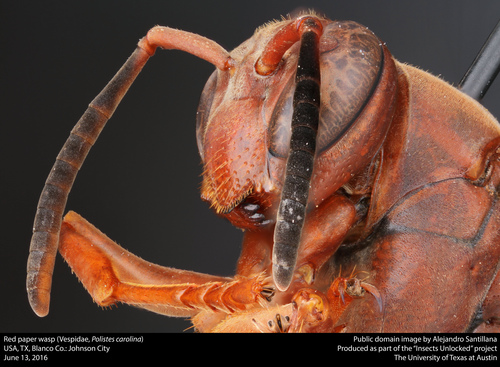
Questions people ask
Are they dangerous to people?
They can sting repeatedly if their nest is threatened, but they are not aggressive otherwise.
Source: Wikipedia
Where do they build their nests?
In protected places like hollow trees, woodlands, or under roofs near houses.
Source: Wikipedia
What do the larvae eat?
Primarily caterpillars, and they also prey on leaf beetle larvae and cicadas.
Source: Wikipedia
Same family (Eumenidae)

Sources
- Wikipedia: https://en.wikipedia.org/wiki/Polistes_carolina
Look it up elsewhere: GBIF · iNaturalist · BugGuide · Wikipedia
Text written 2026-10-22 from the sources above and checked sentence by sentence against them. Data fetched 2026-10-22.