 Bug FAQ
Goldenrod Bunch Gall Midge
Rhopalomyia solidaginis · Order: Diptera · Family: Cecidomyiidae
Also called: Goldenrod Bunch Gall, Goldenrod Rosette Gall
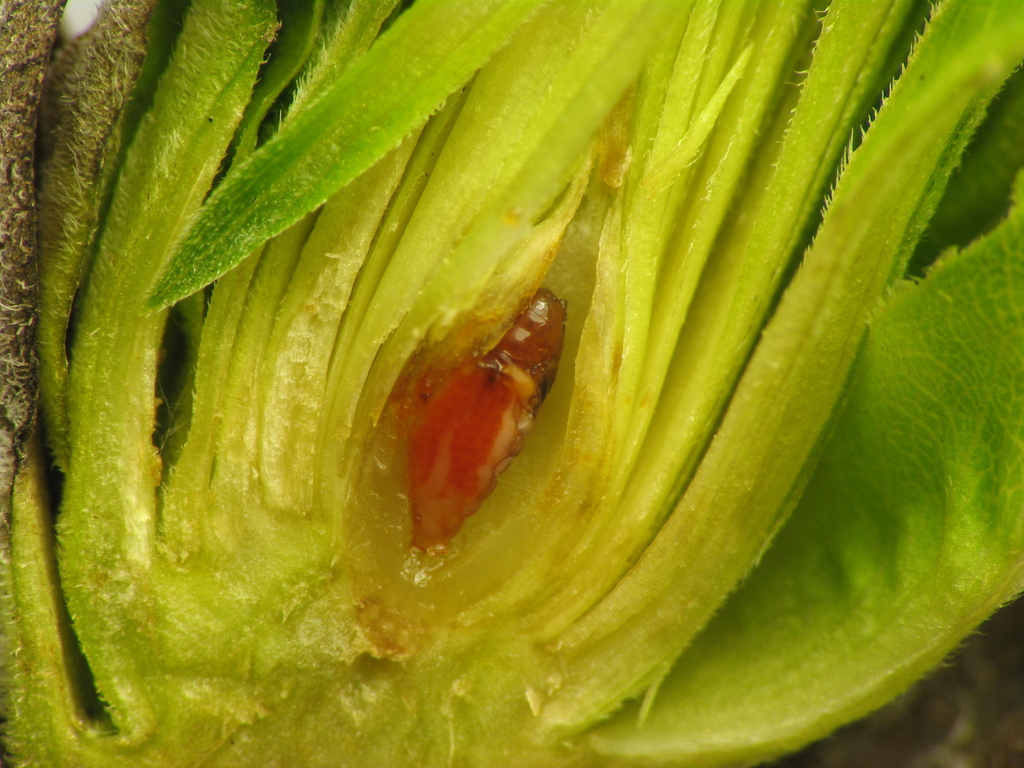
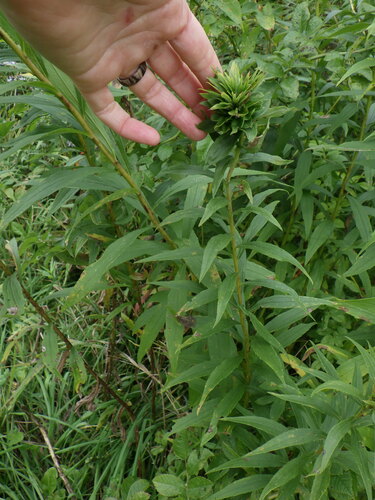
Goldenrod bunch gall midge is the second-largest Rhopalomyia species on goldenrods and has two generations per year, one in spring and one in summer, each making a single-chambered bud gall on Solidago species. Adults of the spring generation are a bit smaller and have fewer antennal segments than summer adults, while males have a large gonocoxite and females have short ovipositors and a distinctive eighth abdominal tergite.
Source: Wikipedia
How to recognize it
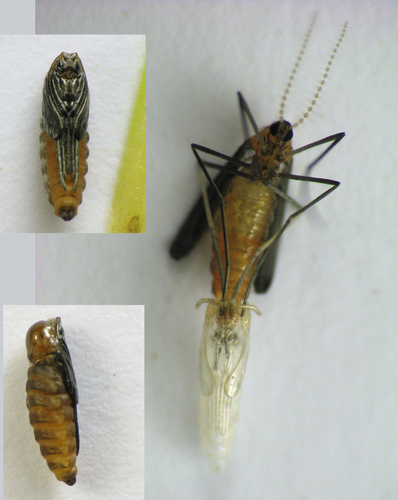
Males can be told apart by a large gonocoxite on the gonopods; females have short ovipositors and a uniquely shaped eighth abdominal tergite.
Source: Wikipedia
Size
It is the second largest Rhopalomyia species that attacks goldenrods.
Source: Wikipedia
What it eats
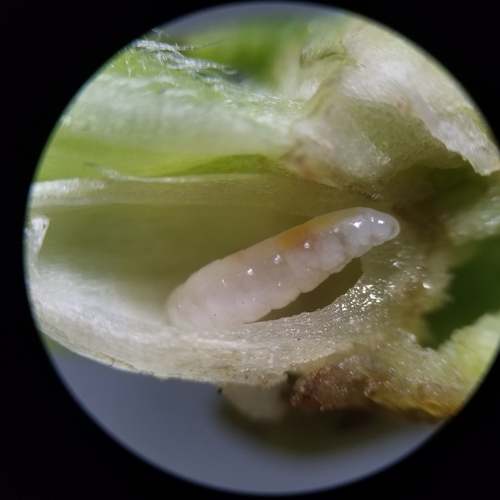
Each gall contains a single larva that lives in a solitary chamber at the tip of the bud.
Source: Wikipedia
Life cycle
The species has two generations per year, each forming bud galls on three goldenrod hosts. Adults and pupae of the spring and summer generations look alike.
Source: Wikipedia
When you see it
Spring galls are small and hard to spot. White chambers similar to spring galls appear in mid-July.
Source: Wikipedia
Where it comes from
Its range covers eastern North America.
Source: Wikipedia
Where it is found in the US
Recorded in 35 of 51 states and DC. Most records: Ohio, Pennsylvania, Illinois, Wisconsin, New York, Minnesota, Michigan, New Jersey.
Darker = more records. Counts are museum and citizen-science records, not population size.
Source: GBIF
Status: native in North America; native in Canada; native in United States. Source: iNaturalist
Months it is reported in the US
Source: GBIF
More photos
Questions people ask
How can I tell this midge apart from similar species?
Look for the large gonocoxite in males and the shape of the eighth abdominal tergite in females.
Source: Wikipedia
Same family (Cecidomyiidae)



Sources
- Wikipedia: https://en.wikipedia.org/wiki/Rhopalomyia_solidaginis
Look it up elsewhere: GBIF · iNaturalist · BugGuide · ITIS · Wikipedia
Text written 2026-10-22 from the sources above and checked sentence by sentence against them. Data fetched 2026-10-22.