 Bug FAQ
Granulated Ground Beetle
Carabus granulatus · Order: Coleoptera · Family: Carabidae
Also called: Granulate ground beetle
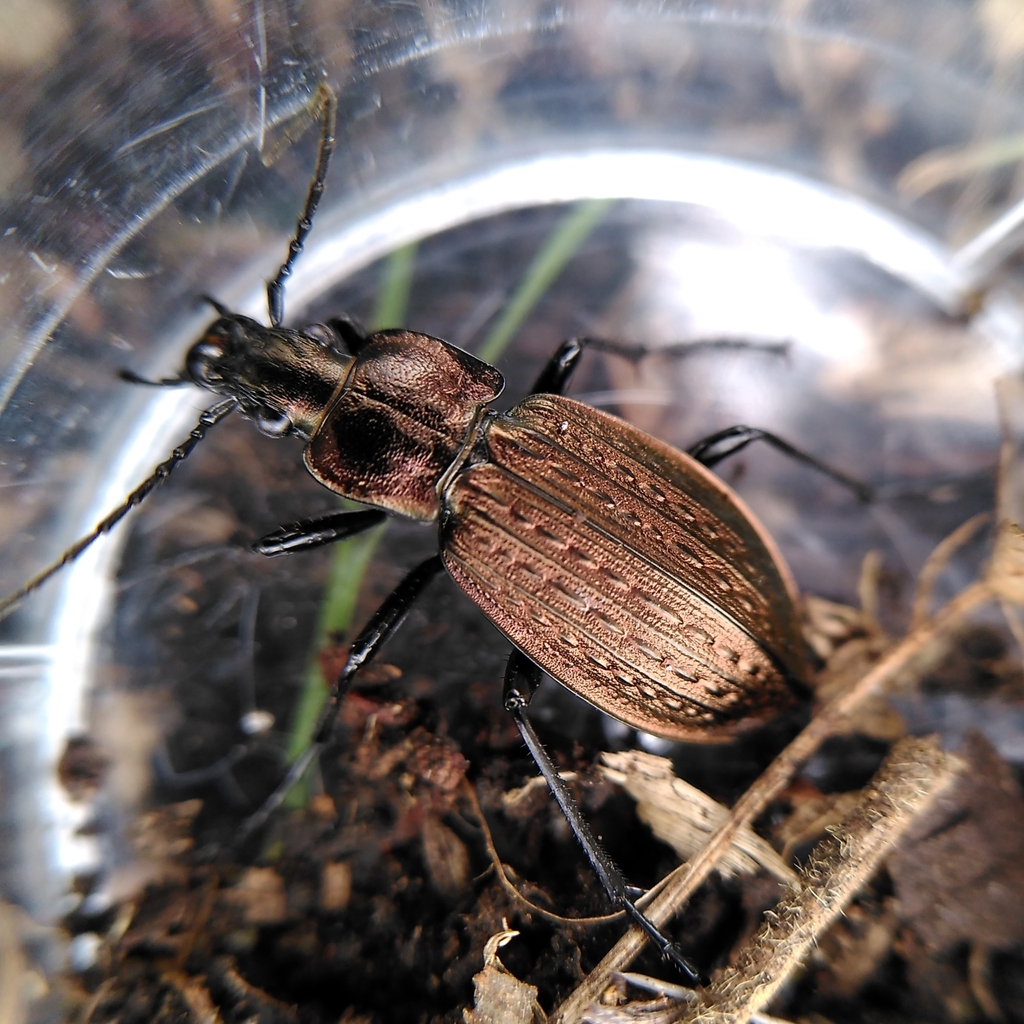
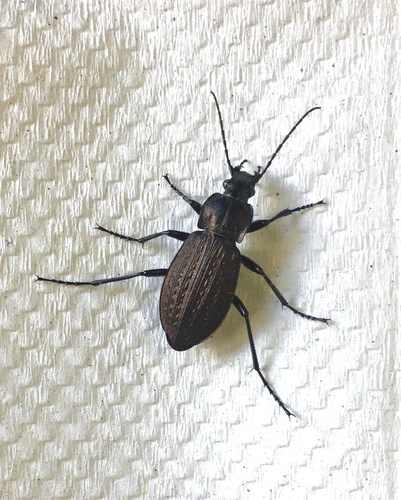
The Granulated Ground Beetle is a small beetle 14 to 20 mm long with black antennae and legs and a shiny upper surface that is usually greenish-bronze, green, or sometimes black. Its wing covers are parallel and show longitudinal grooves filled with granules, giving a “chain-link” texture.
Source: Wikipedia
How to recognize it
Antennae and legs are black; the upper body is shiny and typically greenish-bronze, green, or occasionally black. Elytra are subparallel with longitudinal grooves that contain granules, creating a chain-link pattern.
Source: Wikipedia
Size
Adults measure between 14 and 20 mm in length.
Source: Wikipedia
Where it lives
Found along river margins, in fens, on lakeshores, and in upland peat areas.
Source: Wikipedia
What it eats
Nocturnal ground hunters that prey on insects, worms, and snails.
Source: Wikipedia
Life cycle
Females lay around forty eggs; larvae molt three times before pupating in the soil.
Source: Wikipedia
When you see it
Adult beetles emerge in autumn.
Source: Wikipedia
Where it comes from
Distributed across the Palearctic region, from Ireland to the Russian Far East.
Source: Wikipedia
Where it is found in the US
Recorded in 13 of 51 states and DC. Most records: Washington, California, Minnesota, Idaho, Maine, Michigan, Oregon, Vermont.
Darker = more records. Counts are museum and citizen-science records, not population size.
Source: GBIF
Status: introduced in Canada; introduced in United States. Source: iNaturalist
Months it is reported in the US
Source: GBIF
More photos
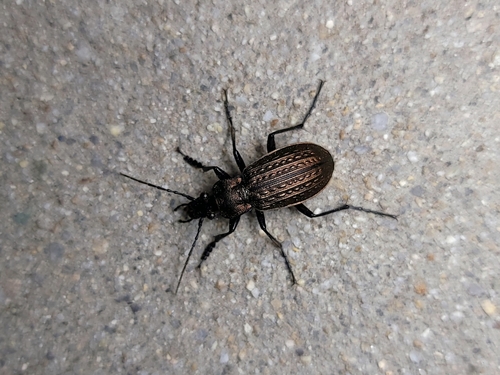
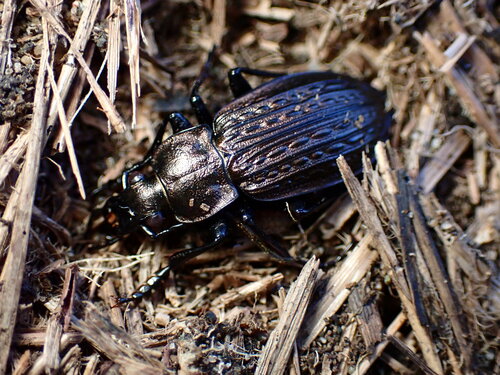
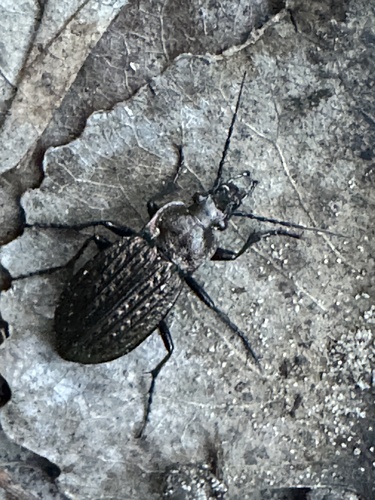
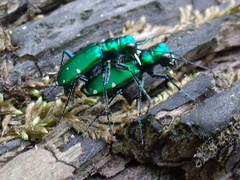
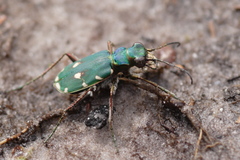
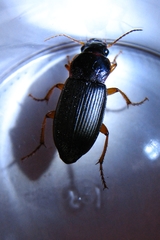
Same family (Carabidae)


Sources
- Wikipedia: https://en.wikipedia.org/wiki/Carabus_granulatus
Look it up elsewhere: GBIF · iNaturalist · BugGuide · ITIS · Wikipedia
Text written 2026-10-22 from the sources above and checked sentence by sentence against them. Data fetched 2026-10-22.