 Bug FAQ
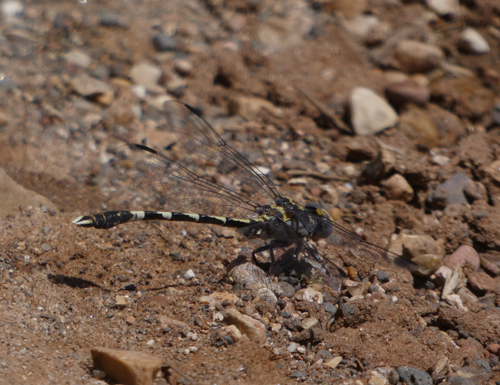
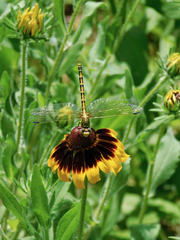
Gray Sanddragon
Progomphus borealis · Order: Odonata · Family: Gomphidae
Also called: Grey Sanddragon
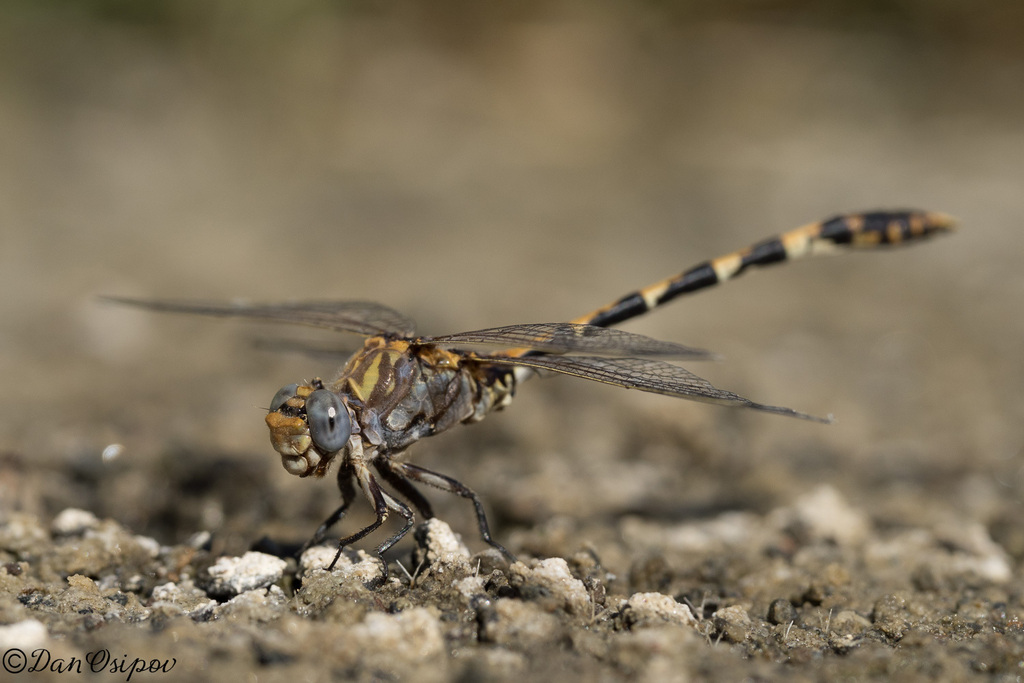
It lives along sandy streams, rivers and lakes in desert areas, and the nymphs burrow in sand and can swim upstream to avoid drought. Adults eat many soft-bodied flying insects, while nymphs feed on aquatic insects and freshwater shrimp.
Source: Wikipedia
Size
Adults reach 57 to 62 mm (2.25 to 2.44 in) in length. Nymphs grow to about 25 mm (1 in) long.
Source: Wikipedia
Where it lives
Found along sandy streams, rivers and lakes in desert regions. Nymphs burrow in sandy sediment and can swim upstream when water dries.
Source: Wikipedia
What it eats
Nymphs eat aquatic insects like mosquito larvae, other fly larvae, mayfly larvae, and freshwater shrimp.
Source: Wikipedia
Life cycle
Nymphs emerge as adults during daylight, unlike most dragonflies. After mating, females lay eggs by dipping the abdomen tip into shallow water while hovering.
Source: Wikipedia
When you see it
Adults are on the wing from early June through September. They may also be seen from April to October.
Source: Wikipedia
Where it comes from
Native to many western U.S. states and parts of Mexico, including Arizona, California, Idaho, New Mexico, Oregon, Texas, Washington, and also the U.S. Virgin Islands. In Idaho it occurs at desert streams in the state's southwest corner.
Source: Wikipedia
Where it is found in the US
Recorded in 8 of 51 states and DC. Most records: Arizona, California, Texas, New Mexico, Nevada, Utah, Florida, Idaho.
Darker = more records. Counts are museum and citizen-science records, not population size.
Source: GBIF
Months it is reported in the US
Source: GBIF
More photos
Questions people ask
When are gray sanddragons active?
Adults typically fly from early June to September, though they can be seen as early as April and as late as October.
Source: Wikipedia
What do gray sanddragon nymphs look like?
Nymphs are about 1 inch long and live buried in sandy stream bottoms, where they can swim upstream during drought.
Source: Wikipedia
How can I tell a gray sanddragon apart from a common sanddragon?
Gray sanddragons are larger and lack the two dark lateral thoracic stripes that the smaller common sanddragon has, and their wings are less brown at the bases.
Source: Wikipedia
What do gray sanddragons eat?
Adults eat soft-bodied flying insects like mosquitoes and flies, while the aquatic nymphs feed on mosquito larvae, other fly larvae, mayfly larvae, and freshwater shrimp.
Source: Wikipedia
Same family (Gomphidae)


Sources
- Wikipedia: https://en.wikipedia.org/wiki/Gray_sanddragon
Look it up elsewhere: GBIF · iNaturalist · BugGuide · ITIS · Wikipedia
Text written 2026-10-23 from the sources above and checked sentence by sentence against them. Data fetched 2026-10-23.