 Bug FAQ
Hen Flea
Echidnophaga gallinacea · Order: Siphonaptera · Family: Pulicidae
Also called: Fowl Flea, Sticktight flea, Tropical Bird Flea, a stick-tight flea
Source: veterinaryentomology.org
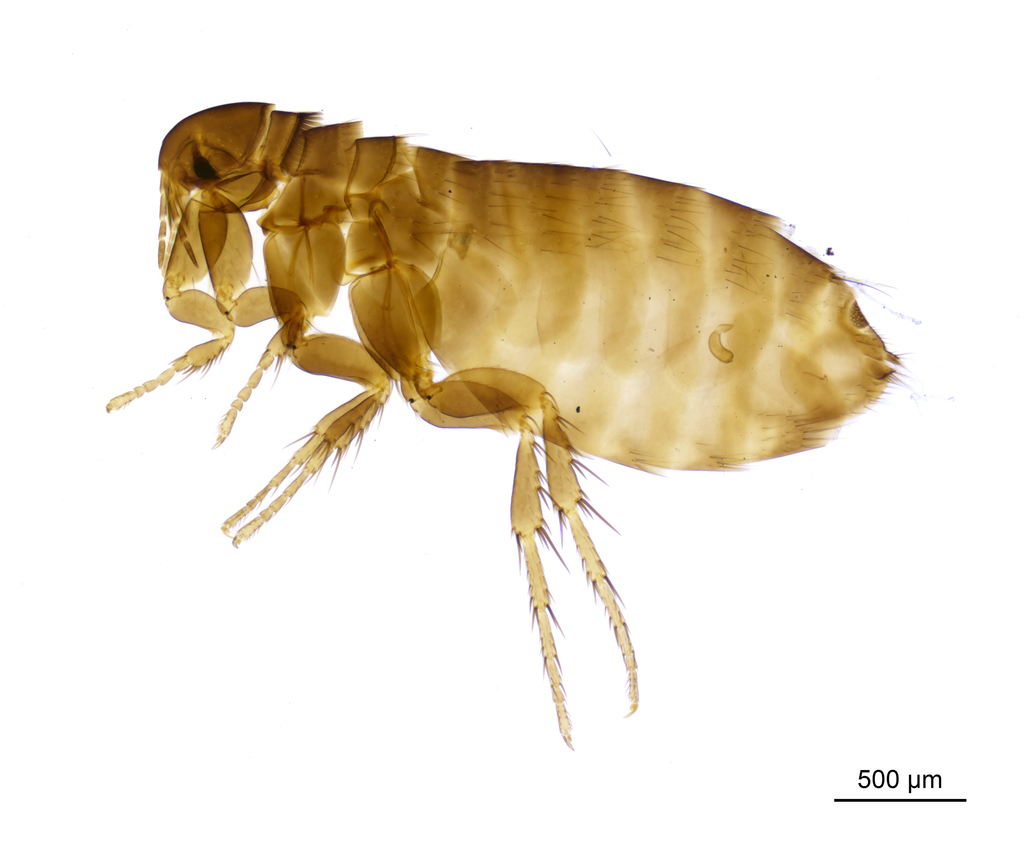
Hen fleas are small dark-brown fleas about 2 mm long that embed in bare skin on heads of poultry and can also attach to people, dogs and other animals. Their feeding can irritate the host and cause enough blood loss to produce anemia, severe dermatitis, and even death in heavily infested birds.
Source: Wikipedia, veterinaryentomology.org
How to recognize it
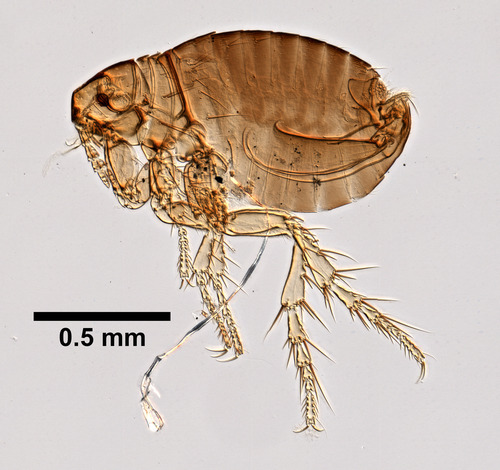
They lack the genal and pronotal combs (ctenidia) that cat fleas have.
Source: Wikipedia
Size
Hen fleas measure about 2 mm, roughly half the size of a common cat flea.
Source: Wikipedia
Is it a pest in the house?
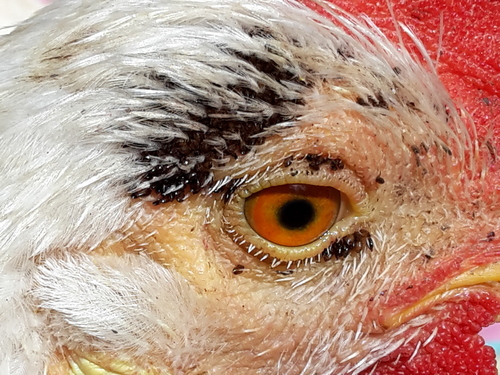
They prefer hair-free areas like the eyes, comb, and wattle of chickens. Feeding can irritate the host, and heavy infestations increase irritation and blood loss. They are not considered important disease vectors.
Source: Wikipedia, veterinaryentomology.org
Does it bite or sting?
Feeding irritates the host. In heavily infested poultry it can cause severe blood loss, anemia and death.
Source: Wikipedia, veterinaryentomology.org
How to get rid of it
Providing a solid concrete floor for nesting removes organic material needed for their life cycle. Sprays and poultry dust insecticides can eliminate them on a large scale. Directly applying insecticide or petroleum jelly to adults with a cotton swab works as well.
Source: Wikipedia, veterinaryentomology.org
Where it lives
They are found worldwide in tropical, subtropical, and temperate zones, from Canada to Australia. Infestations are most common on free-range, rural or backyard farms.
Source: Wikipedia
What it eats
Hen fleas feed on a wide range of hosts such as chickens, dogs, and occasionally humans. Females must find a host to feed and reproduce.
Source: Wikipedia
Life cycle
Their life cycle follows the typical flea pattern: eggs, larvae that feed, pupae in cocoons, then adults. They have one of the shortest lifespans among fleas.
Source: Wikipedia
Where it comes from
They occur across many continents, including North America. Their range also extends to Australia and other regions.
Source: Wikipedia
Lookalikes
Unlike cat or dog fleas, hen fleas embed in bare skin on poultry heads using elongated mouthparts. They can also be found on squirrels, dogs, cats, foxes, and rarely on people.
Source: veterinaryentomology.org
Where it is found in the US
Recorded in 21 of 51 states and DC. Most records: Texas, New Mexico, California, Georgia, Arizona, Oklahoma, Florida, Utah.
Darker = more records. Counts are museum and citizen-science records, not population size.
Source: GBIF
Months it is reported in the US
Source: GBIF
More photos
Questions people ask
How do I get rid of hen fleas?
Use concrete flooring for nesting, apply spray or dust insecticides, and treat adults directly with insecticide or petroleum jelly.
Source: Wikipedia, veterinaryentomology.org
Can hen fleas bite people?
Yes, but it is uncommon. They can attach to people and irritate the skin. The blood loss, anemia and deaths are seen in heavily infested birds.
Source: veterinaryentomology.org, Wikipedia
What parts of chickens do hen fleas infest?
They attach to hair-free areas such as the eyes, comb, and wattle.
Source: Wikipedia
Same family (Pulicidae)



Sources
- veterinaryentomology.org: https://veterinaryentomology.org/sticktight-flea
- Wikipedia: https://en.wikipedia.org/wiki/Echidnophaga_gallinacea
Look it up elsewhere: GBIF · iNaturalist · BugGuide · ITIS · Wikipedia
Text written 2026-10-23 from the sources above and checked sentence by sentence against them. Data fetched 2026-10-23.