 Bug FAQ
Horehound Bug
Agonoscelis rutila · Order: Hemiptera · Family: Pentatomidae
Source: Wikipedia


The horehound bug feeds on the sap of horehound, causing new shoots to wilt. It mainly attacks horehound but can also swarm on other trees and shrubs. Its development includes five distinct nymphal stages.
Source: Wikipedia
How to recognize it
It goes through five separate nymphal stages as it grows.
Source: Wikipedia
What it eats
It sucks the sap of the horehound plant, which leads to wilting of new shoots.
Source: Wikipedia
Life cycle
Its development includes five nymphal stages.
Source: Wikipedia
Where it is found in the US
Recorded in 1 of 51 states and DC. Most records: Maryland.
Darker = more records. Counts are museum and citizen-science records, not population size.
Source: GBIF
More photos
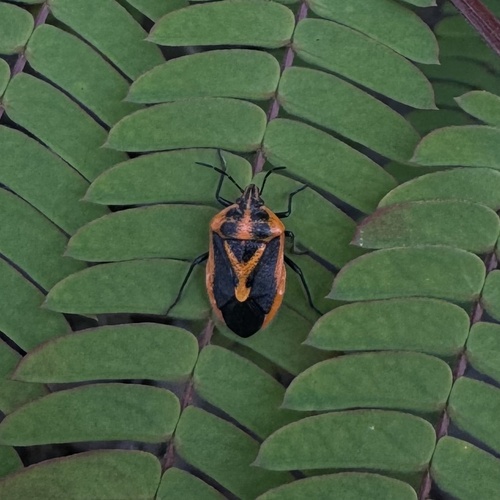
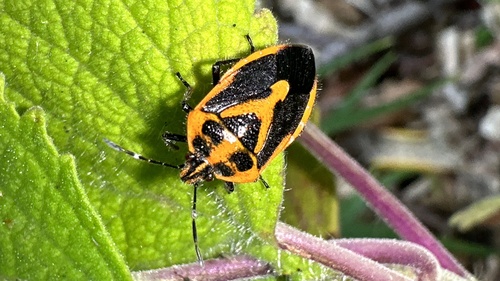
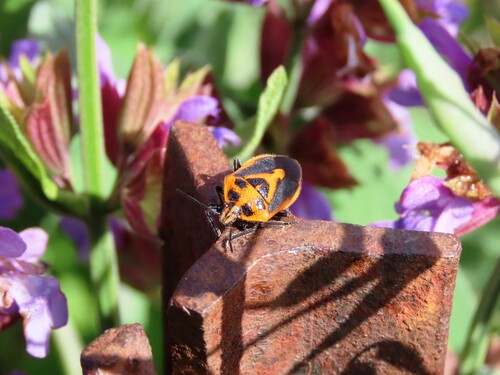
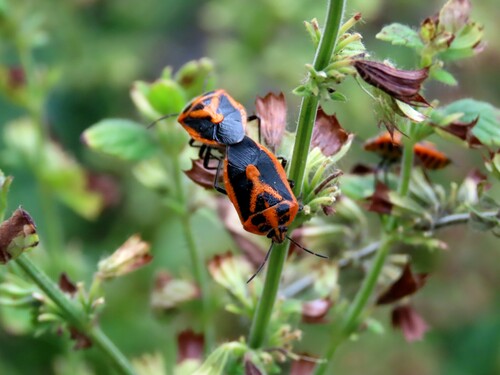
Questions people ask
How does the horehound bug damage plants?
It feeds on plant sap, causing wilting of new shoots.
Source: Wikipedia
What plants does the horehound bug attack?
It primarily attacks horehound but can also swarm on other trees and shrubs.
Source: Wikipedia
How many growth stages does the horehound bug have?
It has five distinct nymphal stages before becoming an adult.
Source: Wikipedia
Same family (Pentatomidae)
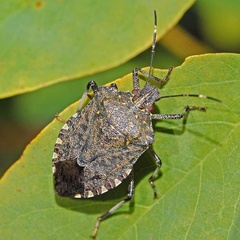 Brown Marmorated Stink BugHalyomorpha halysDamages trees, gardens or crops
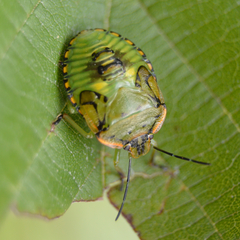 Green Stink BugChinavia hilarisDamages trees, gardens or crops
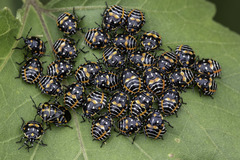 Harlequin BugMurgantia histrionicaDamages trees, gardens or crops
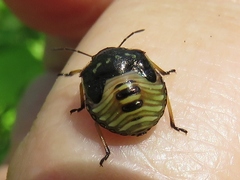 Brown Stink BugEuschistus servusDamages trees, gardens or crops
 Green Shield BugPalomena prasina
 European Striped Shield BugGraphosoma italicum
Sources
- Wikipedia: https://en.wikipedia.org/wiki/Horehound_bug
Look it up elsewhere: GBIF · iNaturalist · BugGuide · Wikipedia
Text written 2026-10-24 from the sources above and checked sentence by sentence against them. Data fetched 2026-10-22.