 Bug FAQ
House Borer
Anobium punctatum · Order: Coleoptera · Family: Anobiidae
Also called: Common Furniture-beetle, Furniture Beetle, death-watch beetle
Source: Wikipedia
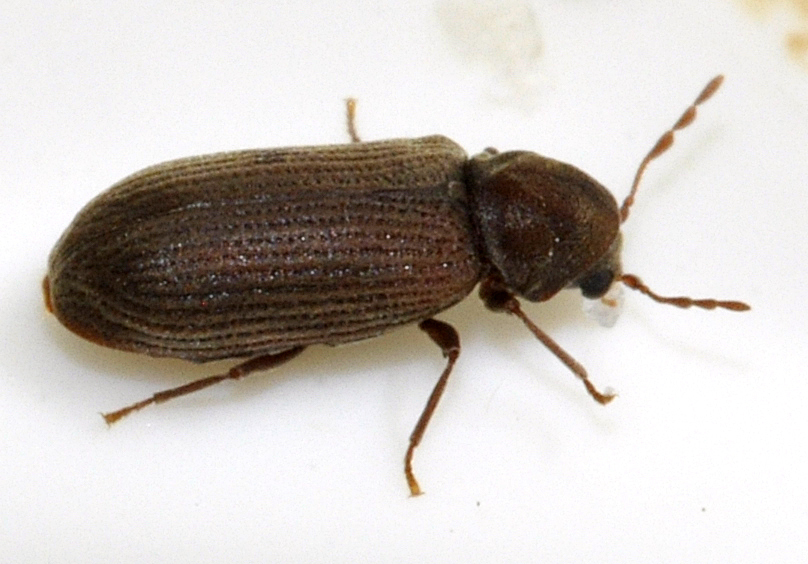
Adults are small brown beetles about 3-4 mm long with a hood-shaped prothorax. Females lay eggs in wood cracks; larvae hatch and spend three to four years tunnelling and feeding inside the timber.
Source: Wikipedia
How to recognize it
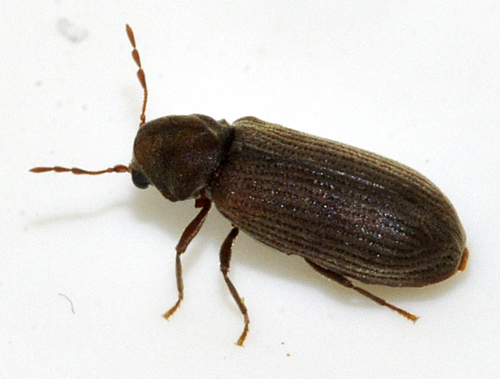
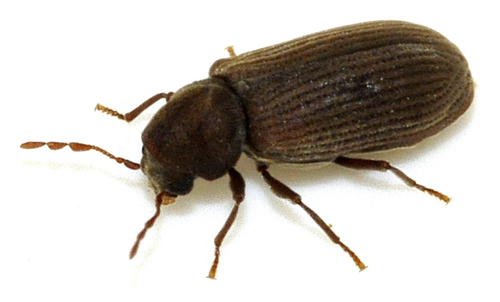
They have brown ellipsoidal bodies and a prothorax that looks like a monk’s cowl.
Source: Wikipedia
Size
Adults measure roughly 2.7 to 4.5 mm (0.11 to 0.18 in) in length.
Source: Wikipedia
Is it a pest in the house?
The species is a wood-boring pest of homes, especially those with untreated timber.
Source: Wikipedia
How to get rid of it
Keep timber dry (below 16 % moisture) to prevent infestations. Treat affected wood with residual insecticides like permethrin, use professional fumigation, or replace the damaged timber; sprays only kill adult beetles, not larvae.
Source: Wikipedia
Where it lives
The larvae bore into and feed on wood. Infestations are common in old houses built with untreated timber.
Source: Wikipedia
What it eats
Larvae eat the starchy part of wood grain as they tunnel.
Source: Wikipedia
Life cycle
Females deposit eggs in wood cracks or old exit holes; eggs hatch in about three weeks into creamy-white C-shaped larvae about 1 mm long. Larvae grow up to 7 mm while boring through timber for three to four years before pupating.
Source: Wikipedia
Where it comes from
Originally from Europe, the common house borer is now found worldwide.
Source: Wikipedia
Lookalikes
It is often confused with drugstore beetles and cigarette beetles because of similar appearance.
Source: Wikipedia
Where it is found in the US
Recorded in 4 of 51 states and DC. Most records: Illinois, Kentucky, New York, California.
Darker = more records. Counts are museum and citizen-science records, not population size.
Source: GBIF
Status: introduced in Canada. Source: iNaturalist
Months it is reported in the US
Source: GBIF
More photos

Questions people ask
How can I prevent house borer damage?
Maintain wood moisture below 16 % and treat or replace any infested timber.
Source: Wikipedia
What does the house borer look like?
It is a small brown beetle about 3 mm long with a hood-shaped prothorax.
Source: Wikipedia
How long do the larvae live inside wood?
Larvae remain inside wood for three to four years, feeding and tunnelling before becoming adults.
Source: Wikipedia
Can I control an infestation with aerosol sprays?
Aerosol sprays only kill adult beetles on the wing; they do not affect larvae hidden inside wood.
Source: Wikipedia
Same family (Anobiidae)


Sources
- Wikipedia: https://en.wikipedia.org/wiki/Common_furniture_beetle
Look it up elsewhere: GBIF · iNaturalist · BugGuide · ITIS · Wikipedia
Text written 2026-10-23 from the sources above and checked sentence by sentence against them. Data fetched 2026-10-23.