 Bug FAQ
Large Skipper
Ochlodes sylvanus · Order: Lepidoptera · Family: Hesperiidae
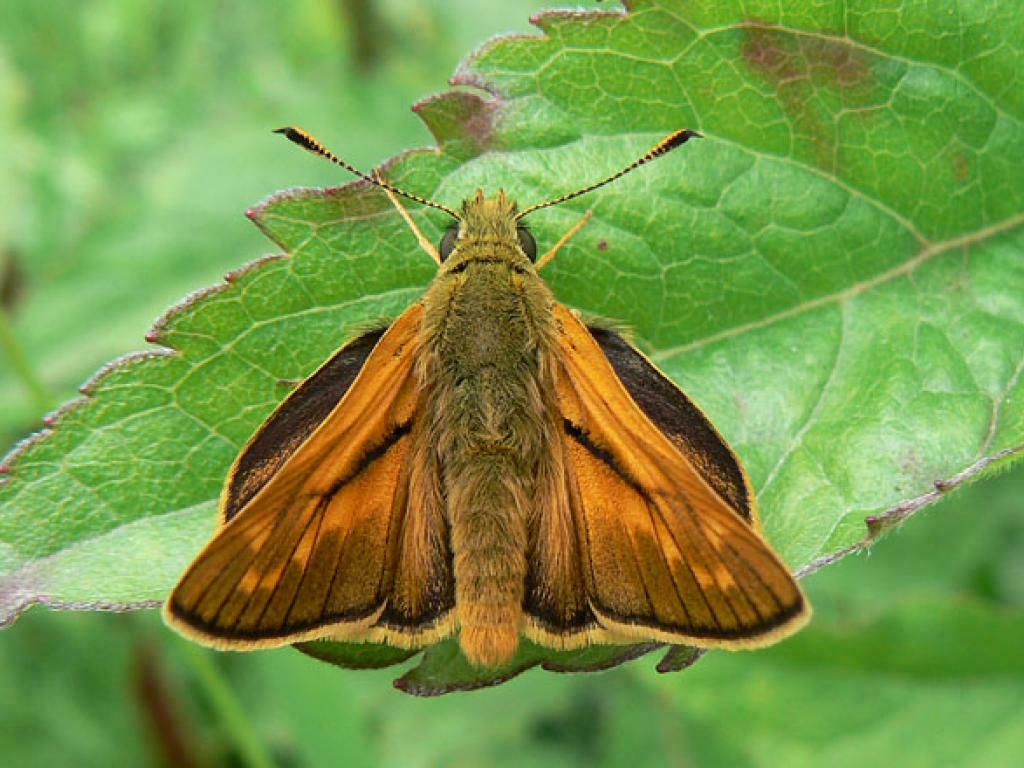
The large skipper is a medium-sized grass skipper with orange-brown wings and a greenish-yellow underside. It lives where tall wild grasses grow, especially in hedgerows, woodland edges and clearings across Europe to northern Asia. Adults appear from June to August, with one to three generations per year depending on latitude.
Source: Wikipedia
How to recognize it
The upper wings are orange-brown with a brown border and lighter spots, while the hindwing underside is greenish-yellow with sparse yellow spots.
Source: Wikipedia
Size
Wingspan ranges from 28 to 32 mm, similar to the chequered skipper. The caterpillar can grow up to about 28 mm long.
Source: Wikipedia
Where it lives
Found wherever tall wild grasses are allowed to grow. Prefers hedgerows, woodland clearings and edges.
Source: Wikipedia
What it eats
Larvae feed on many grasses such as Phalaris, Alopecurus, Calamagrostis, Deschampsia, Phragmites, Elymus and others like Festuca, wheat, Dactylis, Molinia, Holcus, Luzula.
Source: Wikipedia
Life cycle
In northern Europe there is one brood per year; in southern areas up to three broods may occur. Pupation lasts about three weeks in May to June, and adults are on the wing from June to August.
Source: Wikipedia
When you see it
It is the first grass skipper to emerge in the UK each year. Adults are active in sunny weather and are especially attracted to bramble flowers.
Source: Wikipedia
Where it comes from
Occurs from Europe across the East Palearctic region, including northern Asia, China and Japan.
Source: Wikipedia
Lookalikes
A faint chequered pattern on both wing surfaces and hooked antenna tips help separate it from orange skippers.
Source: Wikipedia
Where it is found in the US
Recorded in 1 of 51 states and DC. Most records: Maine.
Darker = more records. Counts are museum and citizen-science records, not population size.
Source: GBIF
More photos

Questions people ask
How can I tell a large skipper apart from similar butterflies?
Look for the orange-brown upper wings with a brown border, the greenish-yellow hindwing underside, and the hooked antenna tips.
Source: Wikipedia
Same family (Hesperiidae)



Sources
- Wikipedia: https://en.wikipedia.org/wiki/Large_skipper
Look it up elsewhere: GBIF · iNaturalist · BugGuide · Wikipedia
Text written 2026-10-22 from the sources above and checked sentence by sentence against them. Data fetched 2026-10-22.