 Bug FAQ
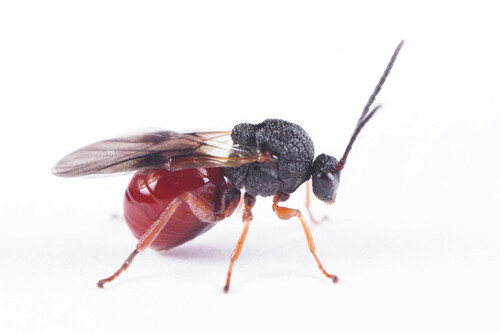
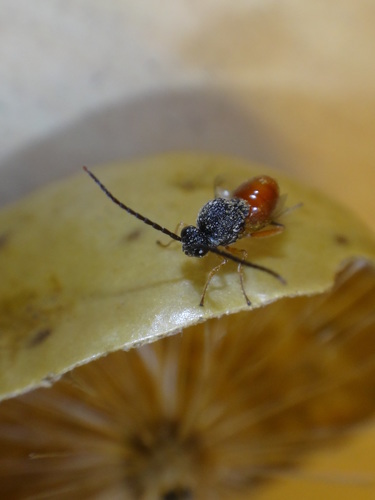
Larger Empty Oak Apple Wasp
Amphibolips quercusinanis · Order: Hymenoptera · Family: Cynipidae

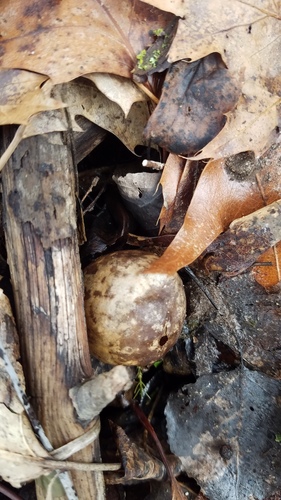
Adult wasps lay eggs in spring on red oak leaf buds, causing apple-sized galls. The galls turn brown as they mature and become brittle and empty after the wasp emerges.
Source: Wikipedia
How to recognize it
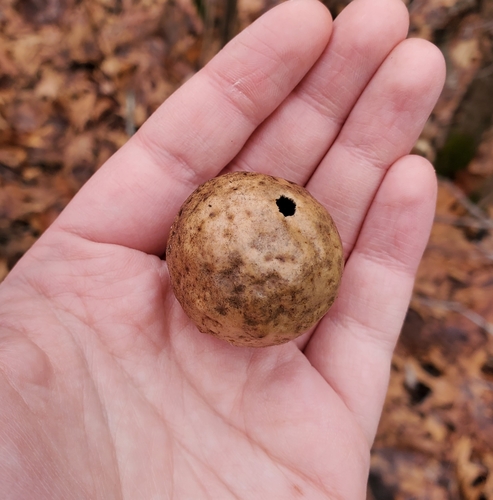
Galls are up to 2 inches wide, bumpy, hairless, and have a spotted surface.
Source: Wikipedia
Size
Each gall can reach about two inches in diameter.
Source: Wikipedia
Where it lives
The larvae induce galls on the leaves of red oaks such as scarlet oak and northern red oak.
Source: Wikipedia
What it eats
Inside the gall the larva feeds on white nutritive fibers that the oak supplies.
Source: Wikipedia
Life cycle
Galls form in spring on leaf buds, and after the adult emerges the gall dries and empties.
Source: Wikipedia
When you see it
Gall formation happens in the spring.
Source: Wikipedia
Where it comes from
It occurs across central and eastern North America.
Source: Wikipedia
Where it is found in the US
Recorded in 41 of 51 states and DC. Most records: California, Texas, New York, Massachusetts, Virginia, Pennsylvania, Ohio, Michigan.
Darker = more records. Counts are museum and citizen-science records, not population size.
Source: GBIF
Months it is reported in the US
Source: GBIF
More photos
Questions people ask
When do the galls appear?
Galls appear in spring when the wasp lays eggs on oak leaf buds.
Source: Wikipedia
Same family (Cynipidae)


Sources
- Wikipedia: https://en.wikipedia.org/wiki/Amphibolips_quercusinanis
Look it up elsewhere: GBIF · iNaturalist · BugGuide · Wikipedia
Text written 2026-10-22 from the sources above and checked sentence by sentence against them. Data fetched 2026-10-22.