 Bug FAQ
Livid Soldier Beetle
Cantharis livida · Order: Coleoptera · Family: Cantharidae
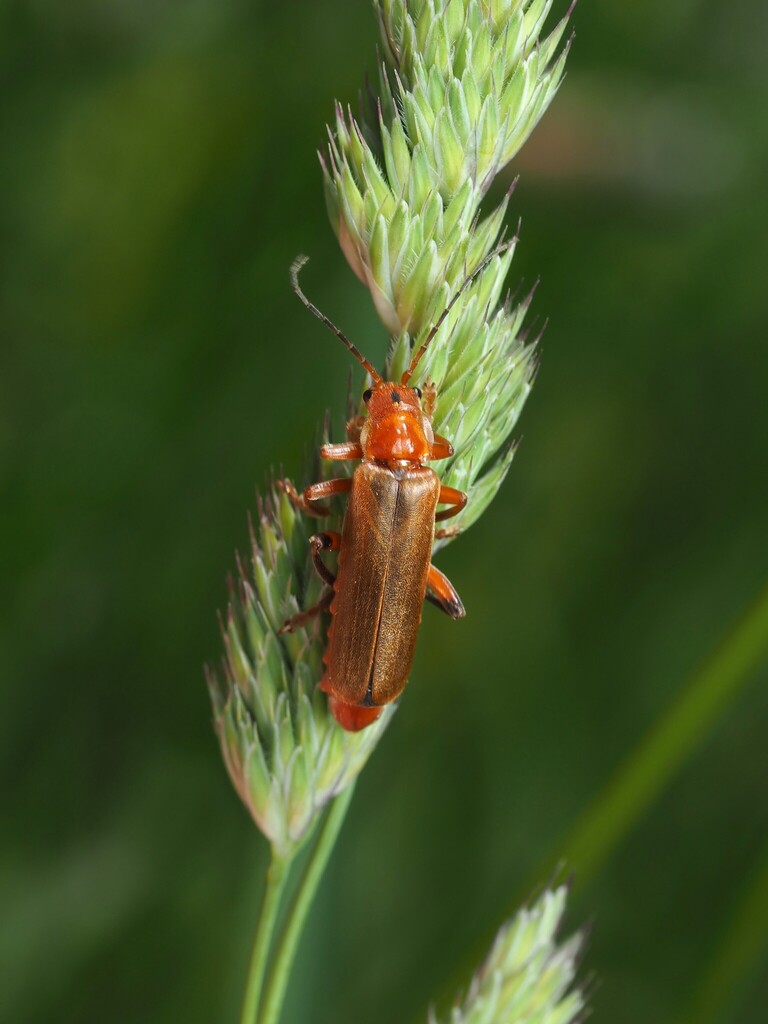
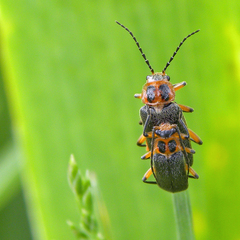
Cantharis livida is a soldier beetle about 10 to 15 mm long, with bright red or orange body parts and yellow to reddish-brown wing covers, though some subspecies have dark wing covers. It lives among bushes, forest edges and meadows across most of Europe, the eastern Palearctic, and North Africa, and can be seen on flowers and shrubs from May to July hunting small insects. Both adults and larvae are predators, with larvae feeding on snails and earthworms.
Source: Wikipedia
How to recognize it
The beetle’s head, thorax and abdomen are bright red or orange, its long antennae are reddish with darker tips, and its legs are reddish with brownish tarsi.
Source: Wikipedia
Size
Adults measure between 10 and 15 mm in length.
Source: Wikipedia
Where it lives
They are found in bushes, at forest edges and in meadow habitats.
Source: Wikipedia
What it eats
Larvae are predatory, feeding on snails and earthworms.
Source: Wikipedia
When you see it
They are most commonly seen from May through July.
Source: Wikipedia
Where it comes from
The species occurs throughout most of Europe, the eastern Palearctic region, and North Africa.
Source: Wikipedia
Where it is found in the US
Recorded in 10 of 51 states and DC. Most records: Massachusetts, Vermont, New York, Maine, New Hampshire, Wisconsin, Rhode Island, Connecticut.
Darker = more records. Counts are museum and citizen-science records, not population size.
Source: GBIF
Status: introduced in Canada. Source: iNaturalist
Months it is reported in the US
Source: GBIF
More photos
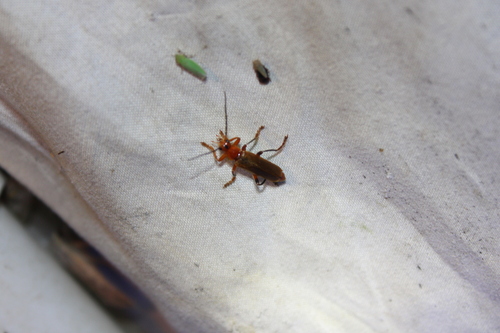
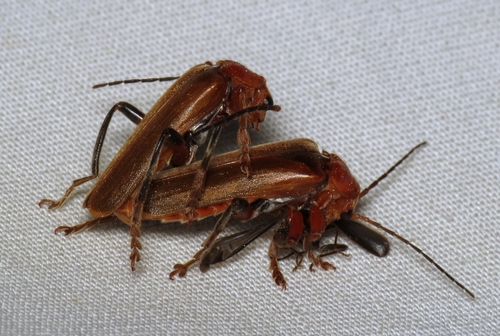
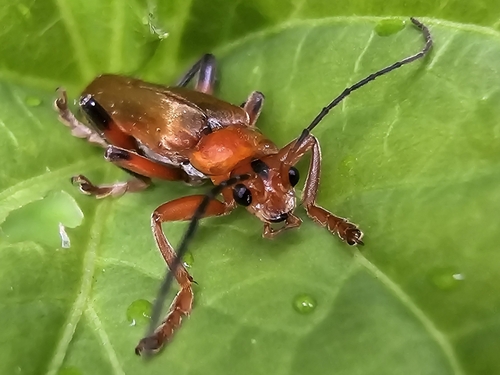
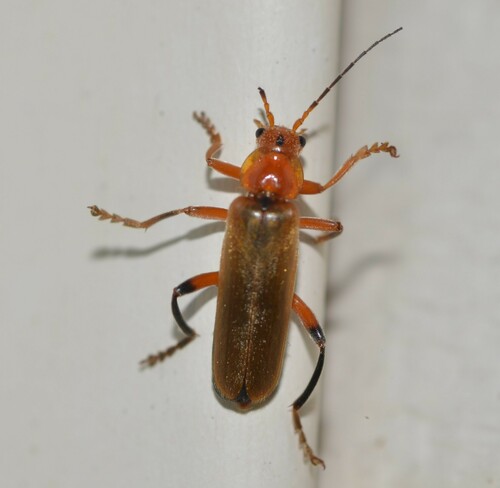
Same family (Cantharidae)
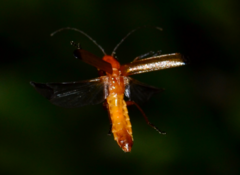
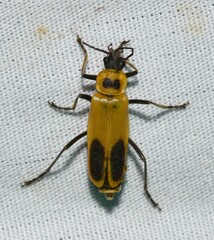


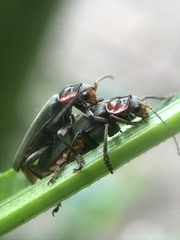
Sources
- Wikipedia: https://en.wikipedia.org/wiki/Cantharis_livida
Look it up elsewhere: GBIF · iNaturalist · BugGuide · ITIS · Wikipedia
Text written 2026-10-22 from the sources above and checked sentence by sentence against them. Data fetched 2026-10-22.