 Bug FAQ
Long-palped Ant-mimic Sac Spider
Castianeira longipalpa · Order: Araneae · Family: Corinnidae
Also called: Long-palped Ant-mimic Spider, Long-palped Antmimic Corinne Spider

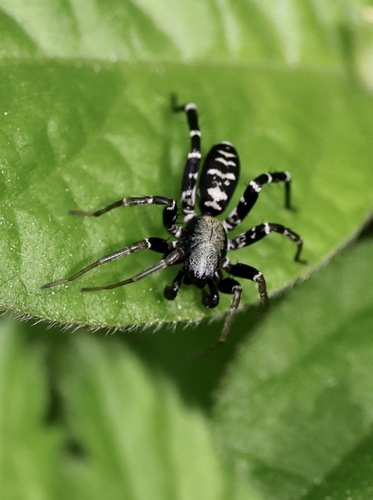
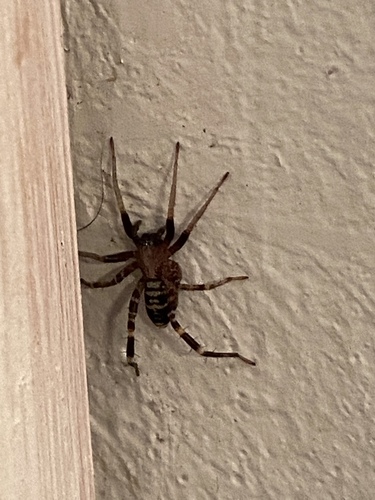
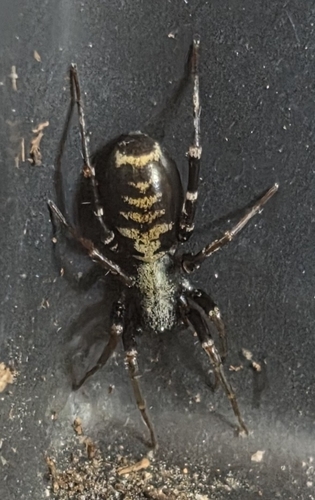
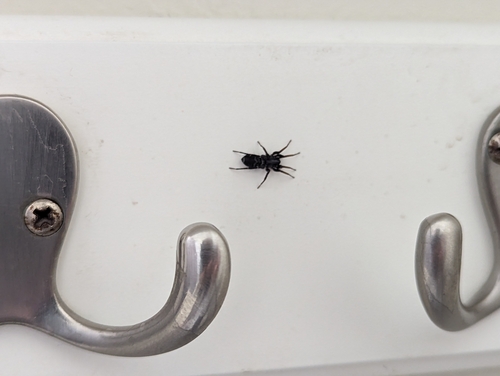
The long-palped ant-mimic sac spider is a small ground-dwelling spider found across the United States and Canada. Females measure about 7 to 9 mm and males about 5.5 to 6 mm; they are dark grey, brown or black with many transverse bands on the abdomen and are often active during daylight.
Source: Wikipedia
How to recognize it
They are dark grey, brown or black and have many crosswise bands on their abdomen.
Source: Wikipedia
When you see it
They are often active during the day.
Source: Wikipedia
Where it comes from
They are the most widespread Castianeira species in the United States and Canada.
Source: Wikipedia
Where it is found in the US
Recorded in 42 of 51 states and DC. Most records: Ohio, Texas, Illinois, Washington, Georgia, Massachusetts, Virginia, Minnesota.
Darker = more records. Counts are museum and citizen-science records, not population size.
Source: GBIF
Status: native in North America; native in Canada; native in United States. Source: iNaturalist
Months it is reported in the US
Source: GBIF
More photos
Questions people ask
What does this spider look like?
It is dark grey, brown or black with many transverse bands on the abdomen and measures about 7 to 9 mm for females and 5.5 to 6 mm for males.
Source: Wikipedia
Where is this spider found?
It is the most widespread Castianeira species across the United States and Canada, living on the ground in various habitats such as prairies and forests.
Source: Wikipedia
Same family (Corinnidae)

Sources
- Wikipedia: https://en.wikipedia.org/wiki/Castianeira_longipalpa
Look it up elsewhere: GBIF · iNaturalist · BugGuide · ITIS · Wikipedia
Text written 2026-10-24 from the sources above and checked sentence by sentence against them. Data fetched 2026-10-24.