 Bug FAQ
Macugonalia moesta
Macugonalia moesta · Order: Hemiptera · Family: Cicadellidae
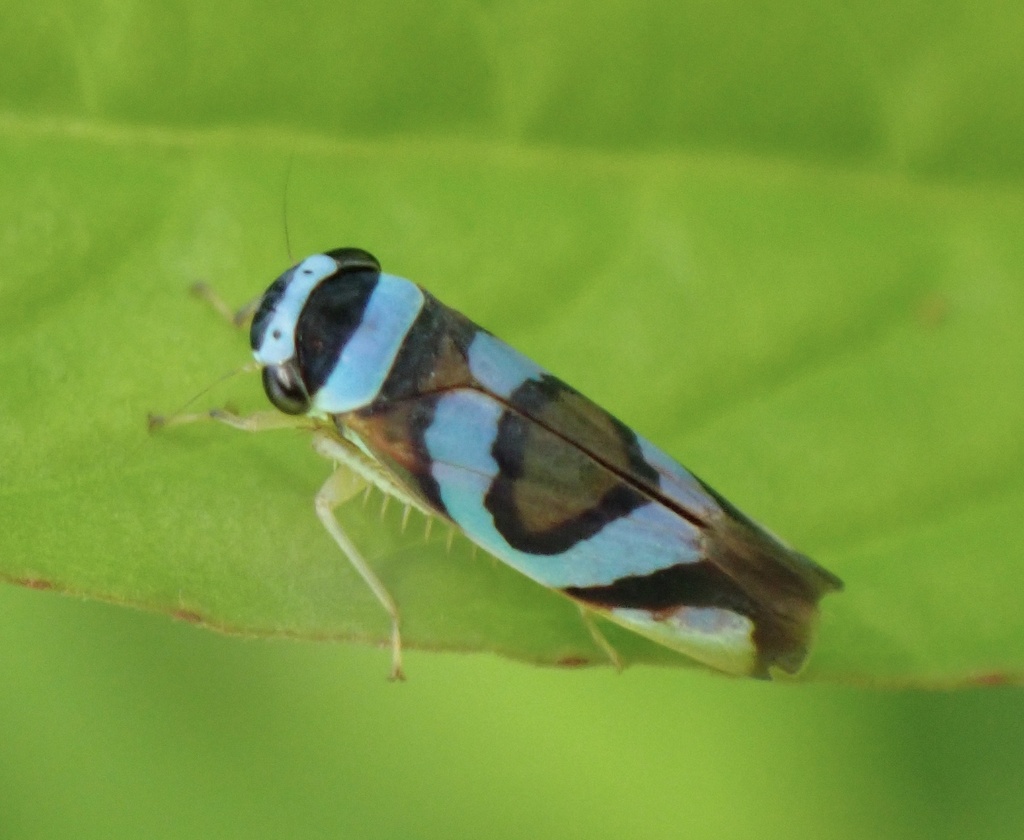
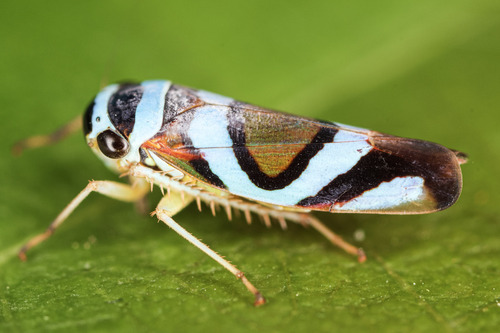
Macugonalia moesta is a small blue insect about 6.7 mm long with distinctive blue and black markings on its back and head. It is found in parts of South America, including Brazil, French Guiana, Guyana, Peru and Suriname, and feeds on several garden and wild plants.
Source: Wikipedia
How to recognize it
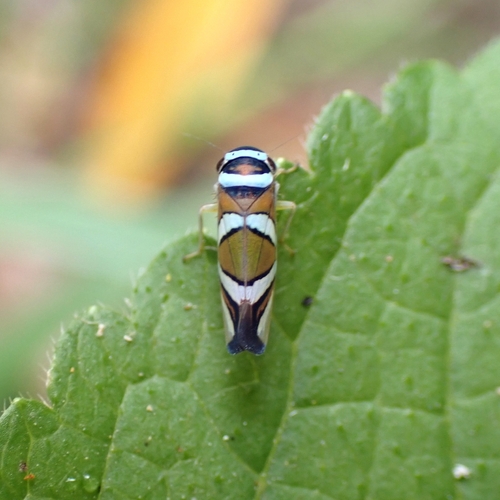
The back shows two spots that look like a central blue band flanked by black, the thorax is black with a blue band ending near the eyes, and the head has a white band between the eyes covering the ocelli.
Source: Wikipedia
Size
Adults measure about 6.7 mm in length.
Source: Wikipedia
More photos
Questions people ask
What does Macugonalia moesta look like?
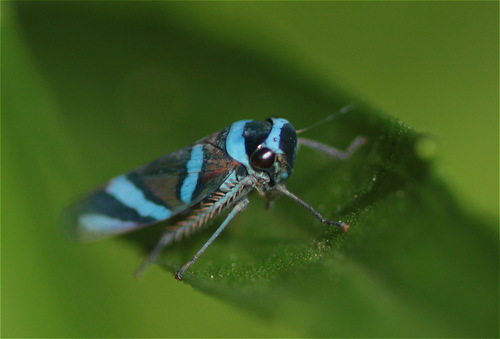
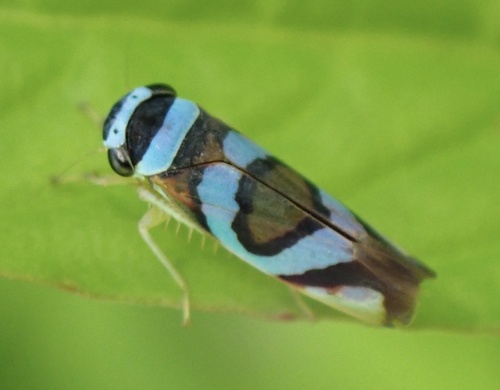
It is a tiny blue insect about 6.7 mm long, with a blue-black patterned back, a black thorax bearing a blue band near the eyes, and a white band between the eyes on the head.
Source: Wikipedia
What plants does Macugonalia moesta feed on?
It has been observed on Wedelia trilobata, Ayapana pallustrus, Heliotropium indicum, basil, Hyptis mutabilis and Aristolochia iquitensis.
Source: Wikipedia
Is Macugonalia moesta a disease vector?
It, along with Macugonalia umbrosa, has been noted as a possible vector of Xylella fastidiosa in Brazilian citrus orchards.
Source: Wikipedia
Same family (Cicadellidae)
 Red-banded LeafhopperGraphocephala coccineaDamages trees, gardens or crops
 Coppery LeafhopperJikradia olitoria
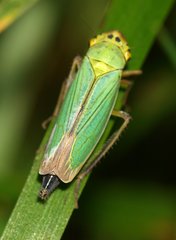 Green LeafhopperCicadella viridis
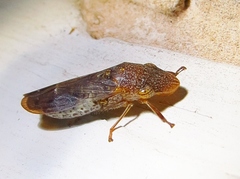 Glassy-winged SharpshooterHomalodisca vitripennisCan spread germs or disease
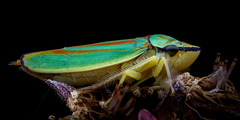 Rhododendron LeafhopperGraphocephala fennahiDamages trees, gardens or crops
 Japanese LeafhopperOrientus ishidaeCan spread germs or disease
Sources
- Wikipedia: https://en.wikipedia.org/wiki/Macugonalia_moesta
Look it up elsewhere: GBIF · iNaturalist · BugGuide · Wikipedia
Text written 2026-10-24 from the sources above and checked sentence by sentence against them. Data fetched 2026-10-23.