 Bug FAQ
Mallada signatus
Mallada signatus · Order: Neuroptera · Family: Chrysopidae
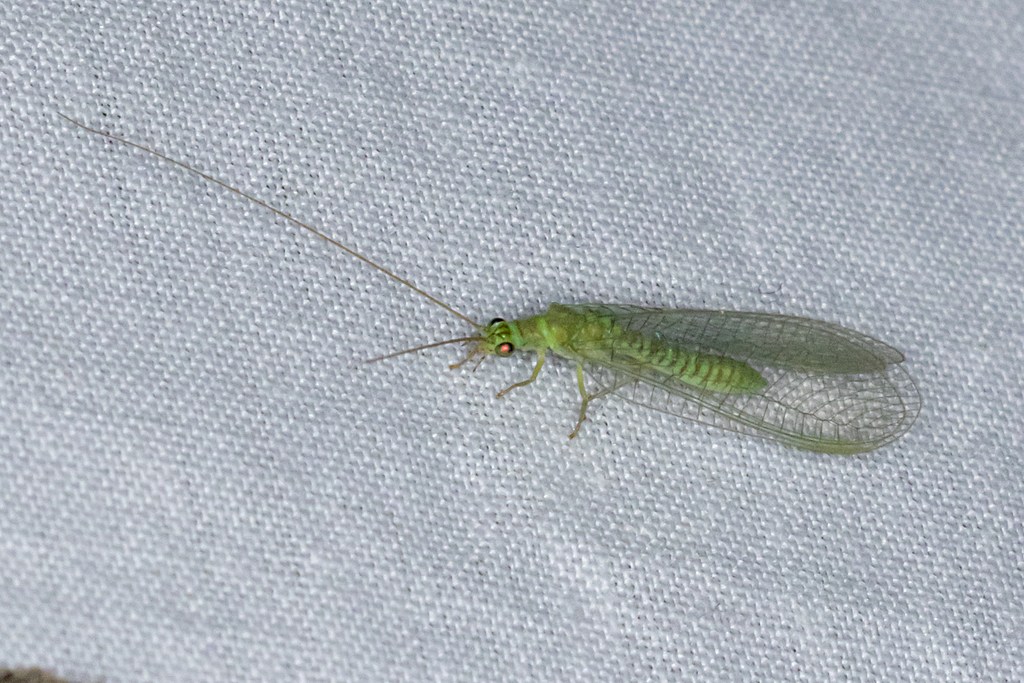
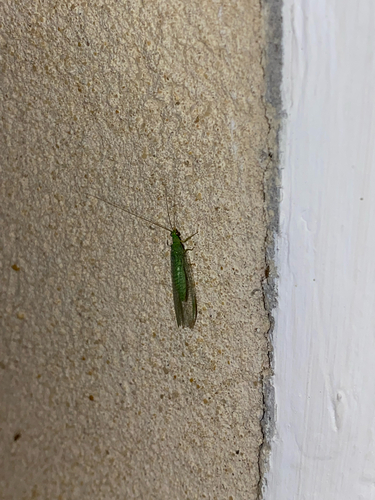
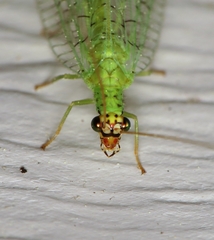
Mallada signatus adults and late-instar larvae are smaller than those of Plesiochyrsa ramburi and have only faint dark markings on the head. It resembles Plesiochyrsa ramburi but can be distinguished by its smaller size and minimal head markings.
Source: Wikipedia
How to recognize it
The adult’s head shows only minimal dark markings.
Source: Wikipedia
Size
Adults and late-instar larvae are smaller than those of Plesiochyrsa ramburi.
Source: Wikipedia
Where it lives
It is commonly found in southern Australia.
Source: Wikipedia
Where it comes from
Its range is mainly southern Australia.
Source: Wikipedia
Lookalikes
It looks a lot like Plesiochyrsa ramburi, but can be told apart by its smaller size and fewer dark head markings.
Source: Wikipedia
More photos
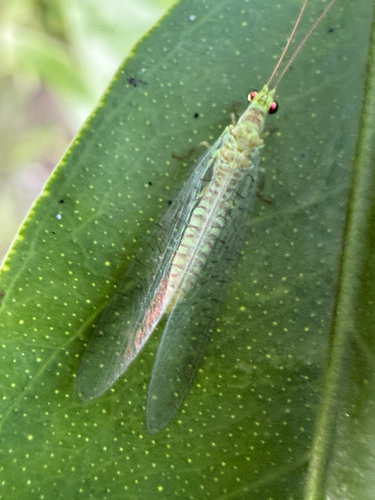
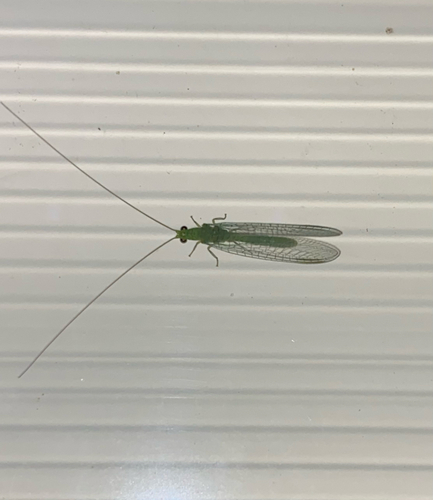
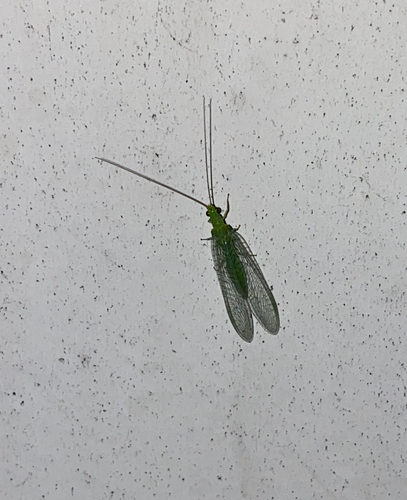
Questions people ask
How can I tell Mallada signatus apart from similar bugs?
It resembles Plesiochyrsa ramburi, yet it is smaller and the adult’s head has only minimal dark markings.
Source: Wikipedia
Same family (Chrysopidae)



Sources
- Wikipedia: https://en.wikipedia.org/wiki/Mallada_signatus
Look it up elsewhere: GBIF · iNaturalist · BugGuide · ITIS · Wikipedia
Text written 2026-10-24 from the sources above and checked sentence by sentence against them. Data fetched 2026-10-22.