 Bug FAQ
Mallophora ruficauda
Mallophora ruficauda · Order: Diptera · Family: Asilidae
Source: Wikipedia
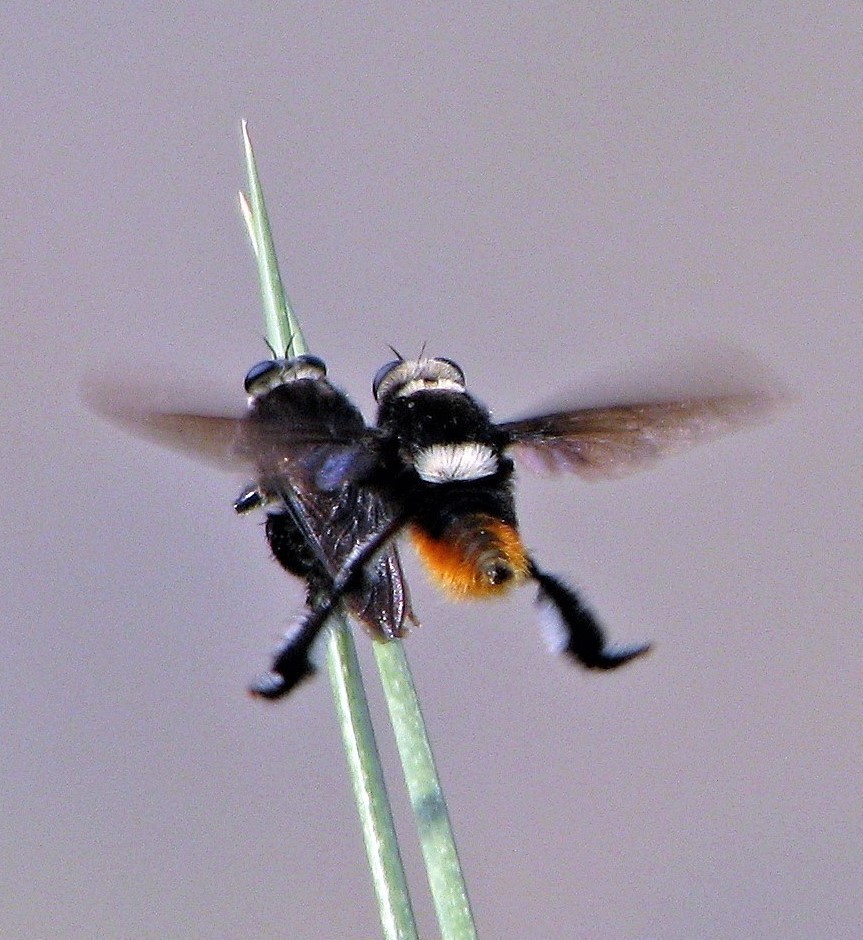
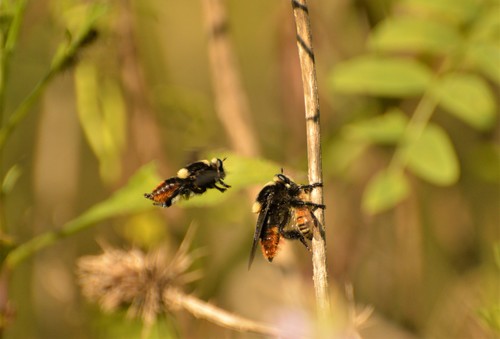
Mallophora ruficauda looks like a bumblebee but is actually a fly with dense black hair, a yellow thorax patch, and smoky brown wings that buzz in flight. Adults feed on worker honeybees, and heavy infestations can destroy up to 80% of honey yields in affected regions.
Source: Wikipedia
How to recognize it
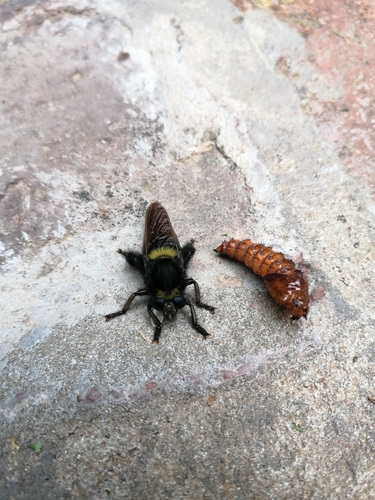
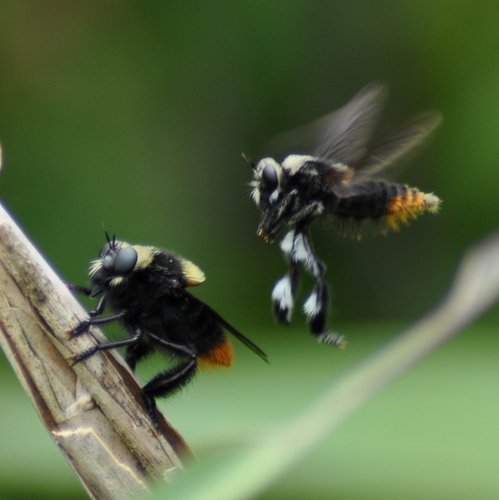
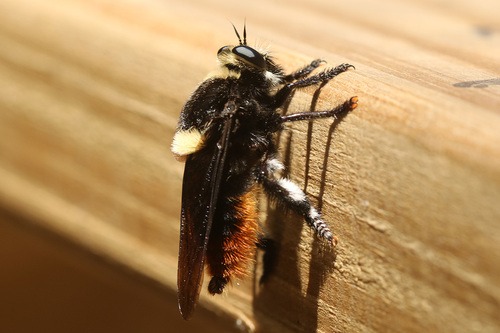
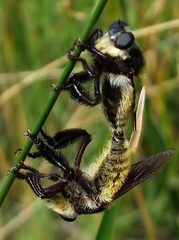
It is large, covered in dense black hair, has a yellow patch on the thorax, a pointed black abdomen with a reddish hair tip, and smoky brown wings that buzz like a bee’s.
Source: Wikipedia
Size
The larvae are tiny, about 1.35 mm long and 0.32 mm wide.
Source: Wikipedia
Is it a pest in the house?
In Argentina’s Pampas region, they are a major agricultural pest that can devastate honey farms.
Source: Wikipedia
Does it bite or sting?
They mimic bumblebees to deter predators, but they do not have a sting.
Source: Wikipedia
How to get rid of it
Beekeepers consider them a serious pest because they can cause up to 80% loss of honey production when numbers are high.
Source: Wikipedia
Where it lives
It lives in open grasslands and meadows of South and Central America, where it lays its eggs. Adults are most active on sunny, hot days in the Southern Hemisphere summer (December-May).
Source: Wikipedia
What it eats
Larvae parasitize scarab beetle grubs, helping control those root-eating pests. Adult flies feed on worker honeybees, making them a problem for beekeepers.
Source: Wikipedia
Life cycle
After hatching, larvae molt for seven days, then seek scarab grubs in the soil, killing the host before pupating. The adult emerges about two months after the eggs hatch and begins preying on bees and other insects.
Source: Wikipedia
When you see it
They are most active during the warm, sunny months of the Southern Hemisphere summer (December-May).
Source: Wikipedia
Where it comes from
Mallophora ruficauda is native to South and Central America.
Source: Wikipedia
Lookalikes
They are a classic example of Batesian mimicry, looking like a bumblebee even though they cannot sting.
Source: Wikipedia
More photos
Questions people ask
How does Mallophora ruficauda affect honey production?
Heavy infestations can destroy up to 80% of honey yields in affected areas.
Source: Wikipedia
What do the larvae of Mallophora ruficauda eat?
The larvae parasitize scarab beetle grubs in the soil.
Source: Wikipedia
Do they bite or sting people?
They mimic bumblebees for defense but do not have a sting.
Source: Wikipedia
Where is Mallophora ruficauda found?
It is native to South and Central America, especially in open grasslands and meadows.
Source: Wikipedia
Same family (Asilidae)

Sources
- Wikipedia: https://en.wikipedia.org/wiki/Mallophora_ruficauda
Look it up elsewhere: GBIF · iNaturalist · BugGuide · Wikipedia
Text written 2026-10-24 from the sources above and checked sentence by sentence against them. Data fetched 2026-10-23.