 Bug FAQ
Masked Vlei Spider
Leucauge festiva · Order: Araneae · Family: Tetragnathidae
Also called: Mask Vlei Spider
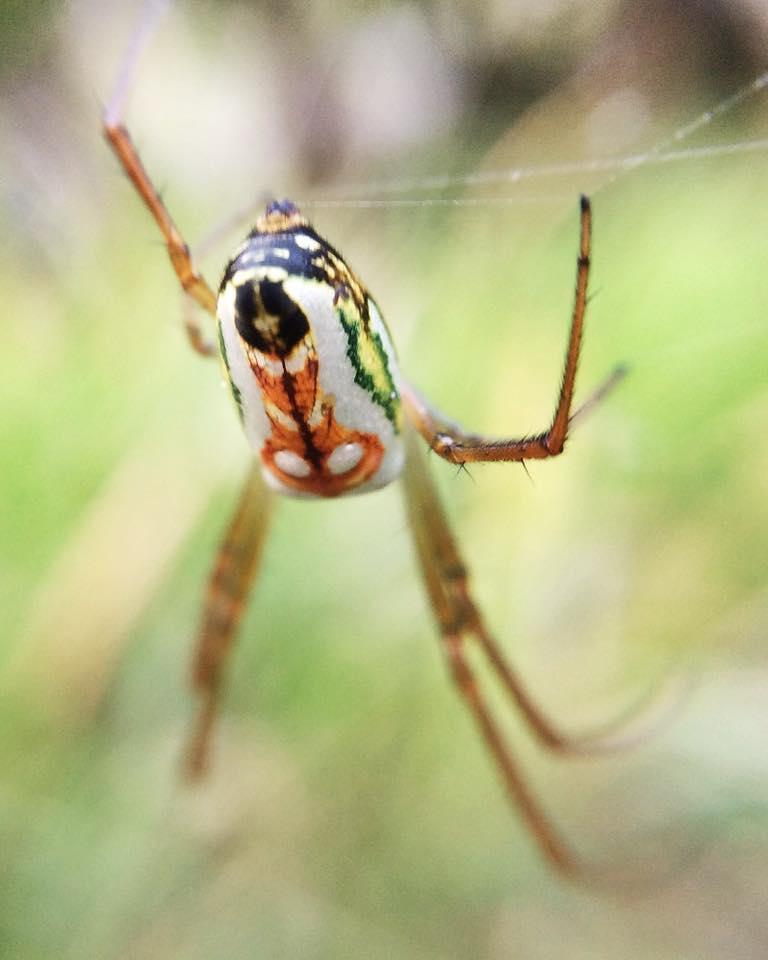
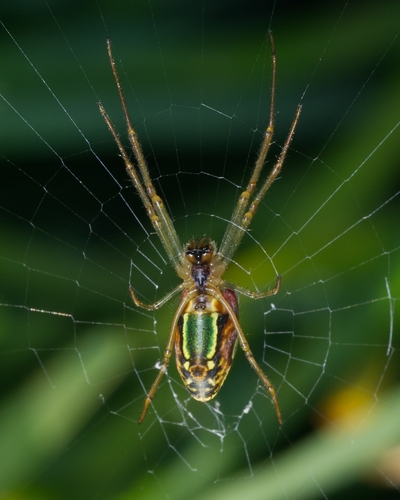
The masked Vlei spider is a medium-sized spider with an elongated abdomen that ends bluntly and shows a bright mask-like pattern. It builds orb-webs in shaded, damp places near water and hangs head-down in the web during daylight hours. Its range covers much of Africa, from Ethiopia and Sudan down to South Africa and Madagascar.
Source: Wikipedia
How to recognize it
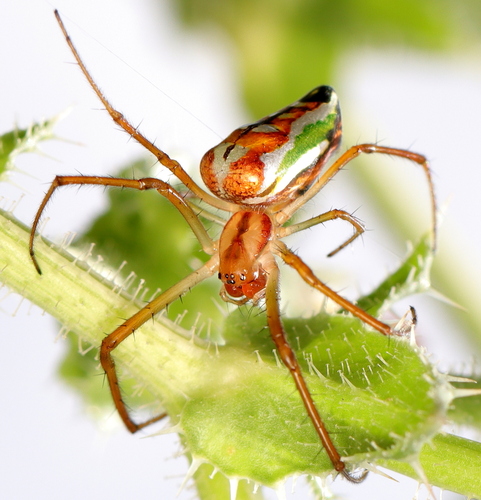
The spider’s rear end is blunt. Its abdomen bears a brightly coloured mask-like marking.
Source: Wikipedia
Size
It is medium-sized with an elongated abdomen.
Source: Wikipedia
Where it lives
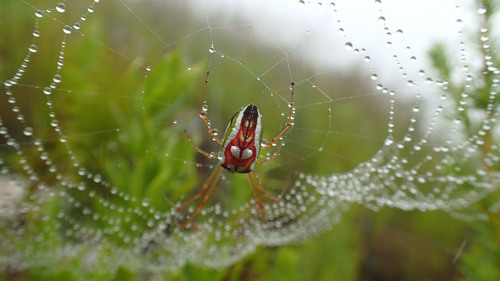
It spins orb-webs, often close to water or in damp, shaded spots. During the day it hangs head-down in its web.
Source: Wikipedia
When you see it
The spider is active in daylight hours.
Source: Wikipedia
Where it comes from
It is found widely across Africa, including Ethiopia, Sudan, Kenya, Tanzania, Namibia, South Africa, Eswatini and Madagascar.
Source: Wikipedia
More photos
Questions people ask
Where is the masked Vlei spider found?
It occurs throughout much of Africa, from Ethiopia and Sudan down to South Africa and Madagascar.
Source: Wikipedia
Same family (Tetragnathidae)



Sources
- Wikipedia: https://en.wikipedia.org/wiki/Leucauge_festiva
Look it up elsewhere: GBIF · iNaturalist · BugGuide · ITIS · Wikipedia
Text written 2026-10-24 from the sources above and checked sentence by sentence against them. Data fetched 2026-10-23.