 Bug FAQ
Notiothauma reedi
Notiothauma reedi · Order: Mecoptera · Family: Eomeropidae
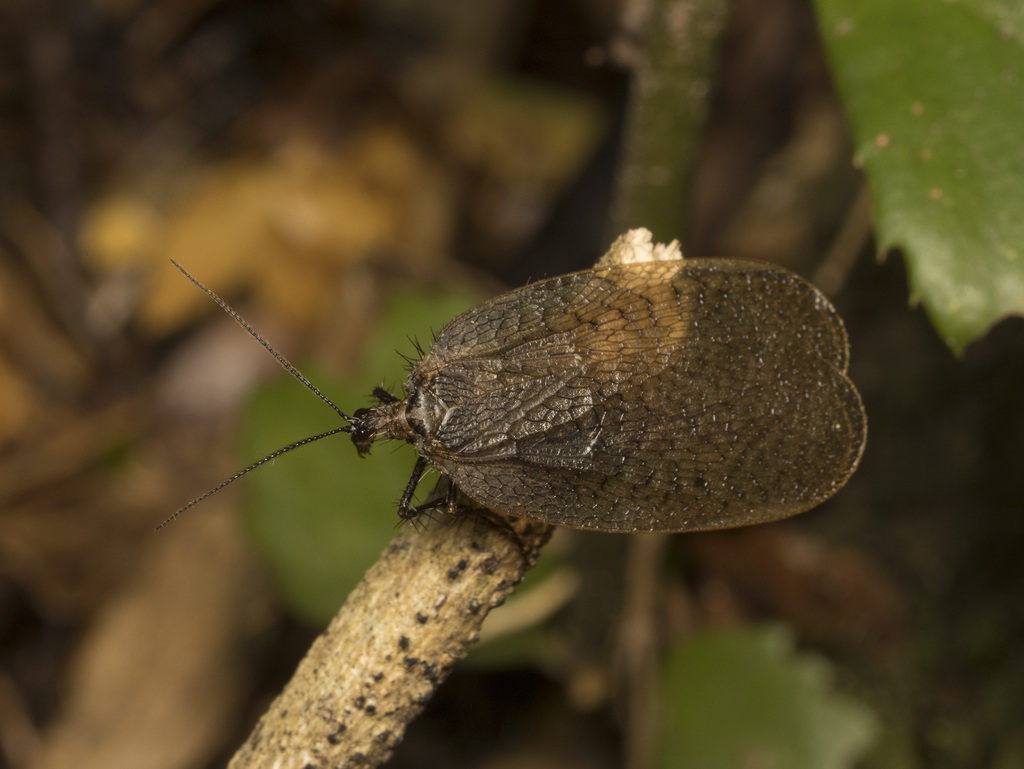
Notiothauma reedi lives on the forest floor of central Chile’s Valdivian temperate rain forests, especially where Nothofagus trees grow. Adults are nocturnal, look like flattened cockroaches, and feed on plants and decaying animals. The larval stage has not been described.
Source: Wikipedia
How to recognize it
The insect has a flattened body that resembles a cockroach.
Source: Wikipedia
Where it lives
It lives on the forest floor in forests with Nothofagus trees.
Source: Wikipedia
What it eats
Adults eat plants and decaying animals.
Source: Wikipedia
Life cycle
The larvae are still unknown.
Source: Wikipedia
When you see it
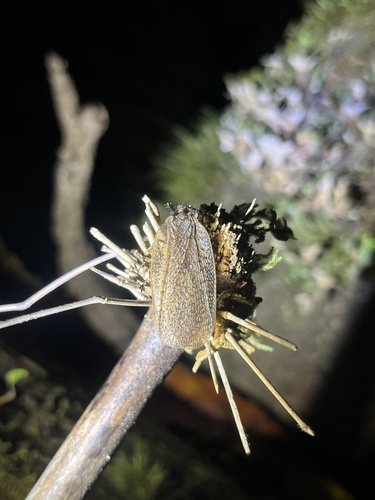
They are active at night.
Source: Wikipedia
More photos
Questions people ask
Where is Notiothauma reedi found?
It lives on the forest floor of central Chile’s Valdivian temperate rain forests, especially in Nothofagus stands.
Source: Wikipedia
Sources
- Wikipedia: https://en.wikipedia.org/wiki/Notiothauma
Look it up elsewhere: GBIF · iNaturalist · BugGuide · ITIS · Wikipedia
Text written 2026-10-24 from the sources above and checked sentence by sentence against them. Data fetched 2026-10-23.