 Bug FAQ
Oak Leafroller Moth
Archips semiferanus · Order: Lepidoptera · Family: Tortricidae
Also called: American Twist, oak leafroller
Source: Wikipedia
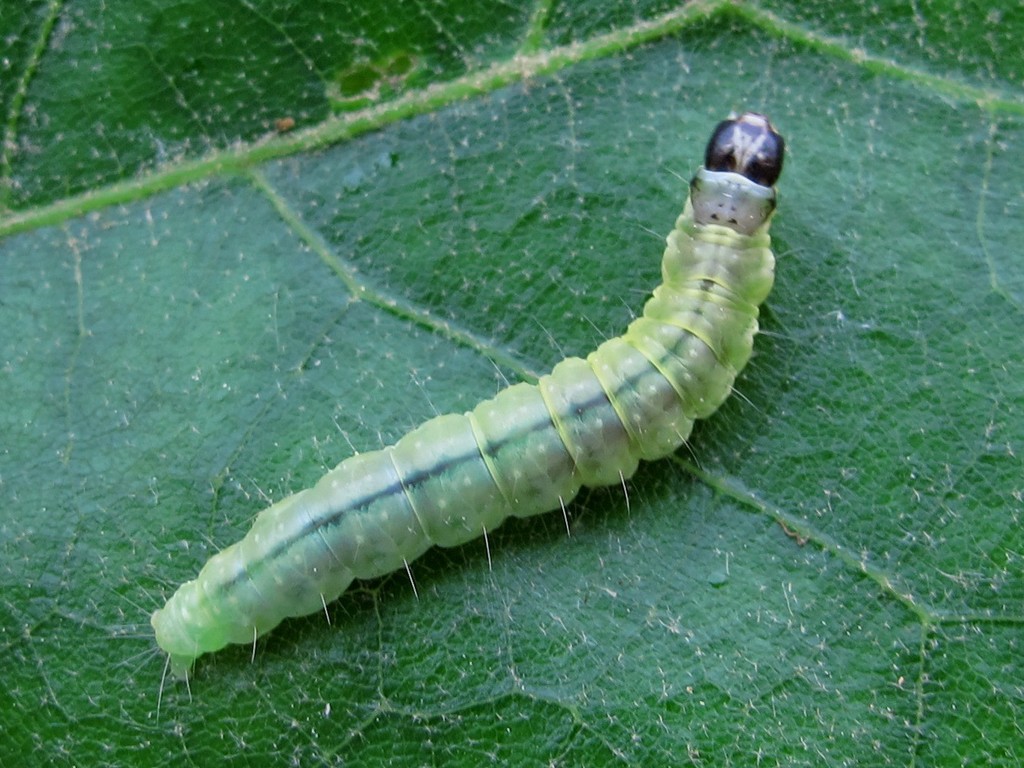
Adult moths are small, 18-22 mm wingspan, with creamy-brown and gray forewings that have an oblique darker band. Females lay 40-50 eggs on oak branches in July; the larvae hatch in spring, feed on oak leaves (and sometimes witchhazel or apple), and cause holes or stripped foliage. One generation emerges each year, with adults appearing in late June or early July.
Source: Wikipedia
How to recognize it
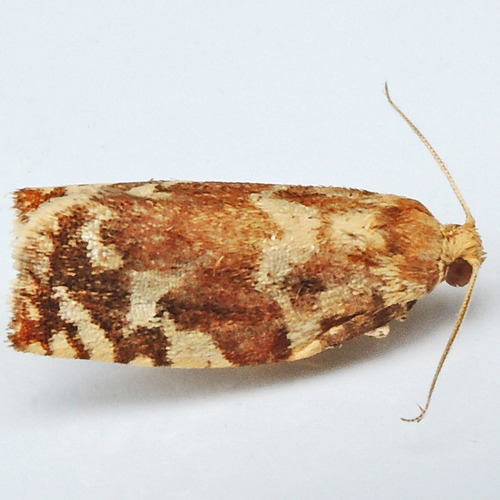
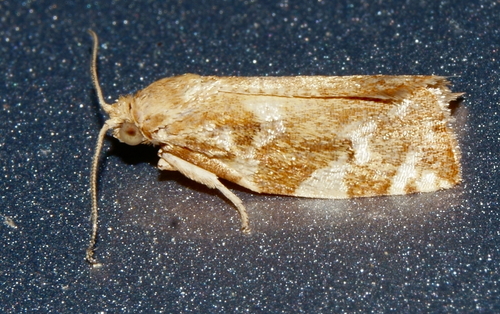
Forewings are a mix of creamy brown and gray, with gray at the tips and an oblique darker brown or gray band across them.
Source: Wikipedia
Size
Moths have a wingspan of about 18 to 22 mm. Fully grown larvae are roughly 25 to 29 mm long.
Source: Wikipedia
Is it a pest in the house?
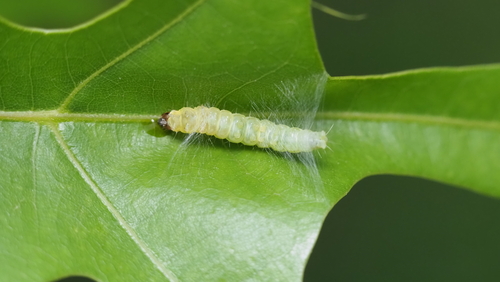
The larvae cannot harm humans, though people in Texas often avoid walking under oak trees to stay clear of them. Young larvae eat buds and either destroy developing leaves or make leaves full of holes.
Source: Wikipedia
Does it bite or sting?
The larvae cannot bite or sting people.
Source: Wikipedia
How to get rid of it
Before 1972, DDT was used to control outbreaks, but it was banned in the United States. In 1974, the Forest Service found that tiny amounts of bioethanomethrin, mexacarbate, phoxim, or pyrethrins caused 90 % mortality in larvae.
Source: Wikipedia
Where it lives
They are found in the eastern United States and nearby parts of southeastern Canada. They may also have been introduced to the United Kingdom.
Source: Wikipedia
What it eats
Larvae feed on oak leaves in their native range. They occasionally feed on witchhazel and apple trees as well.
Source: Wikipedia
Life cycle
Females lay clusters of 40-50 eggs on oak branches and rough bark in July; the eggs overwinter and hatch the following spring. The species produces only one generation each year.
Source: Wikipedia
When you see it
Adults emerge after a week or two as pupae, appearing in late June or early July. In Texas, the life-cycle stages start earlier and show some behavioral differences.
Source: Wikipedia
Where it comes from
The species is native to the eastern United States and adjoining southeastern Canada.
Source: Wikipedia
Lookalikes
About 15 moth species share the common name oak leafroller, but Archips semiferanus is considered the most important oak leafroller species.
Source: Wikipedia
Where it is found in the US
Recorded in 31 of 51 states and DC. Most records: Texas, Wisconsin, Michigan, Mississippi, New York, Pennsylvania, Connecticut, Florida.
Darker = more records. Counts are museum and citizen-science records, not population size.
Source: GBIF
Status: native in North America; native in Canada; native in United States. Source: iNaturalist
Months it is reported in the US
Source: GBIF
More photos

Questions people ask
How do I get rid of oak leafroller larvae?
Historically DDT was used, but after its ban, very low doses of bioethanomethrin, mexacarbate, phoxim, or pyrethrins have been shown to kill most larvae.
Source: Wikipedia
What trees do they damage?
They feed on oak leaves and can strip foliage, and they sometimes feed on witchhazel and apple trees.
Source: Wikipedia
When are the adult moths active?
Adults emerge in late June or early July after a short pupal stage.
Source: Wikipedia
Same family (Tortricidae)
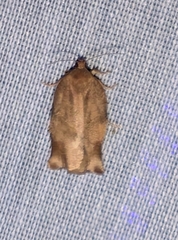 Oblique-banded Leafroller MothChoristoneura rosaceanaDamages trees, gardens or crops
 Garden TortrixClepsis peritanaDamages trees, gardens or crops
 Common MarbleSyricoris lacunanaDamages trees, gardens or crops
 Red-banded Leafroller MothArgyrotaenia velutinanaDamages trees, gardens or crops
 Light Brown Apple MothEpiphyas postvittanaDamages trees, gardens or crops
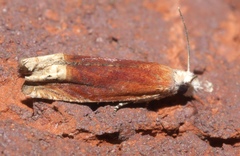 Aster and Reddish Eucosma Moths and AlliesEucosma parmatana
Sources
- Wikipedia: https://en.wikipedia.org/wiki/Archips_semiferanus
Look it up elsewhere: GBIF · iNaturalist · BugGuide · Wikipedia
Text written 2026-10-24 from the sources above and checked sentence by sentence against them. Data fetched 2026-10-24.