 Bug FAQ
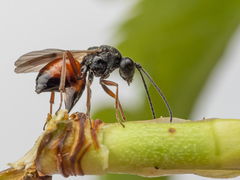
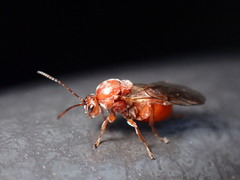
Oak Petiole Gall Wasp
Andricus quercuspetiolicola · Order: Hymenoptera · Family: Cynipidae

It lives wherever white oaks grow in the eastern half of North America.
Source: Wikipedia
Is it a pest in the house?
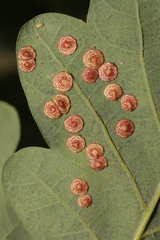
The wasp’s galls develop on white oak leaves, not on household items.
Source: Wikipedia
What it eats
Larvae feed inside the oak leaf galls they induce.
Source: Wikipedia
Life cycle
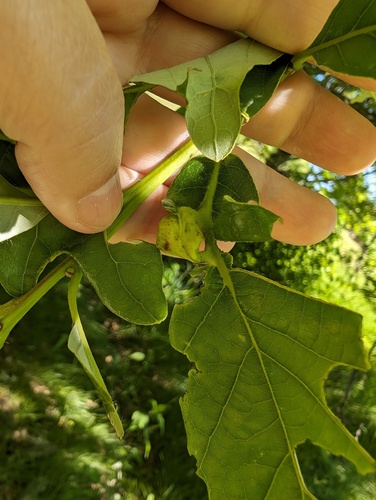
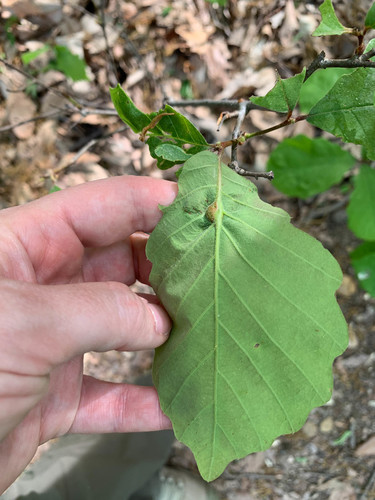
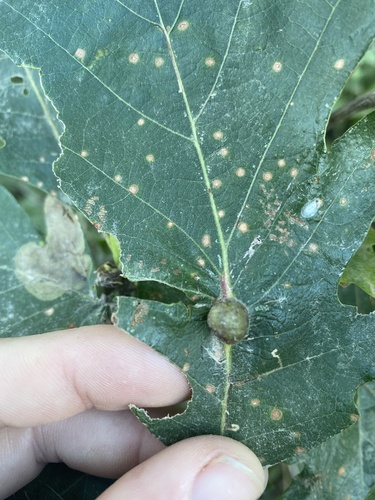
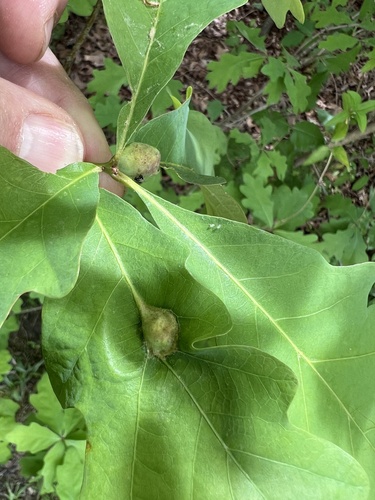
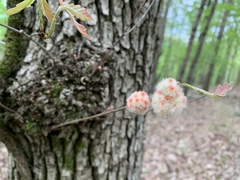
The sexual generation creates round or club-shaped galls on leaf petioles or midribs in spring, with adults emerging in late June to early July. Details about the agamic generation’s galls and timing are unknown.
Source: Wikipedia
When you see it
Adults of both sexes emerge from the galls in late June and early July.
Source: Wikipedia
Where it comes from
Its range matches the distribution of white oaks in eastern North America.
Source: Wikipedia
Lookalikes
A known parasitoid of this wasp is the crypt-keeper wasp, Euderus set.
Source: Wikipedia
Where it is found in the US
Recorded in 48 of 51 states and DC. Most records: California, Texas, Virginia, Oregon, Florida, Massachusetts, Illinois, Ohio.
Darker = more records. Counts are museum and citizen-science records, not population size.
Source: GBIF
Status: native in North America; native in United States. Source: iNaturalist
Months it is reported in the US
Source: GBIF
More photos
Questions people ask
When do the adult wasps appear?
Adults emerge from the galls in late June to early July.
Source: Wikipedia
What is a natural enemy of this wasp?
The crypt-keeper wasp (Euderus set) parasitizes it.
Source: Wikipedia
Same family (Cynipidae)


Sources
- Wikipedia: https://en.wikipedia.org/wiki/Andricus_quercuspetiolicola
Look it up elsewhere: GBIF · iNaturalist · BugGuide · Wikipedia
Text written 2026-10-23 from the sources above and checked sentence by sentence against them. Data fetched 2026-10-22.