 Bug FAQ
Oak Wart Gall Wasp
Callirhytis quercusfutilis
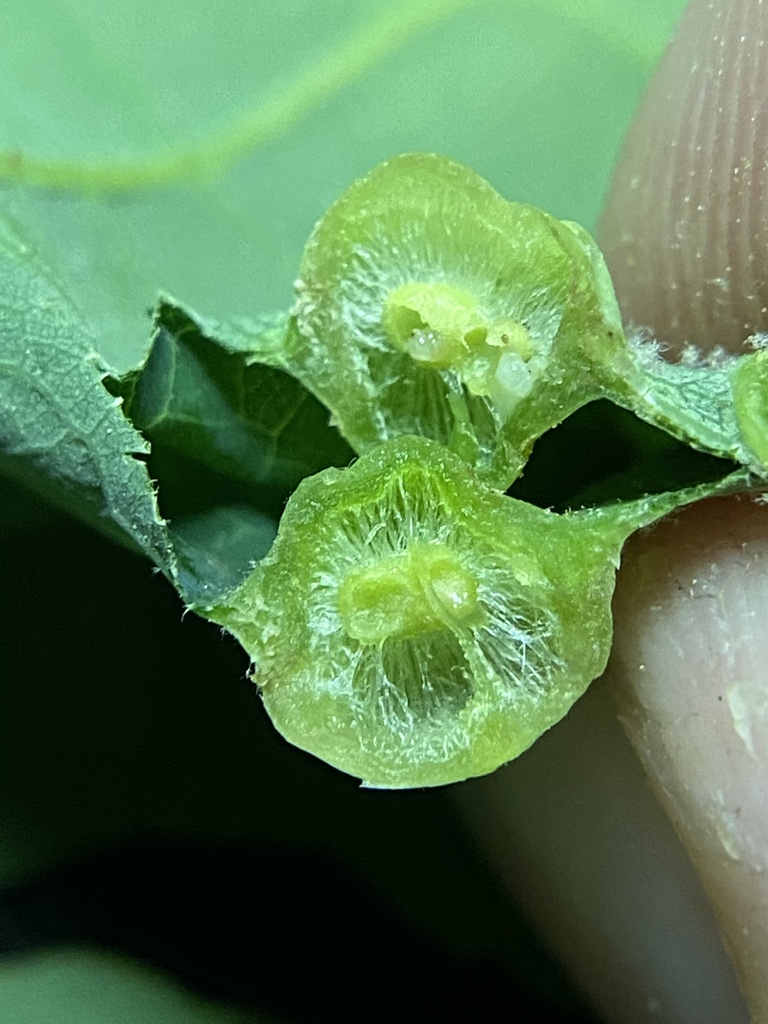
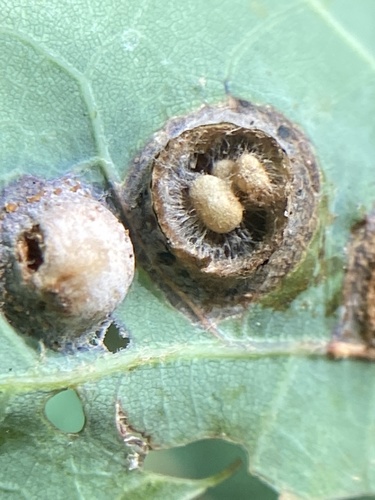
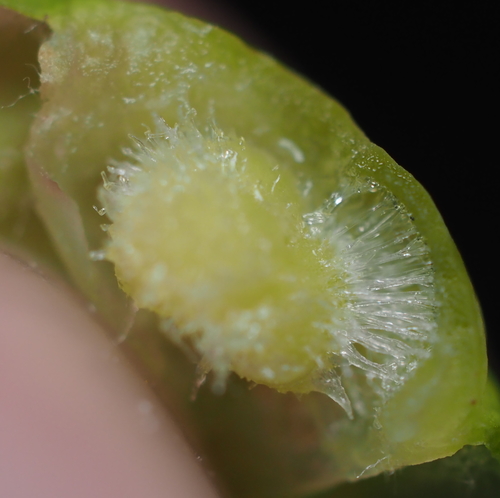
The oak wart gall wasp has two generations: an agamic generation that lives in the scurfy bark of white oak roots or trunk bases, and a sexual generation that makes small galls on the undersides and uppersides of white oak leaves between the veins. These galls are formed by the wasp larvae, which receive nutrients through thin radiating fibers that connect the larval chamber to the gall wall.
Source: Wikipedia
Is it a pest in the house?
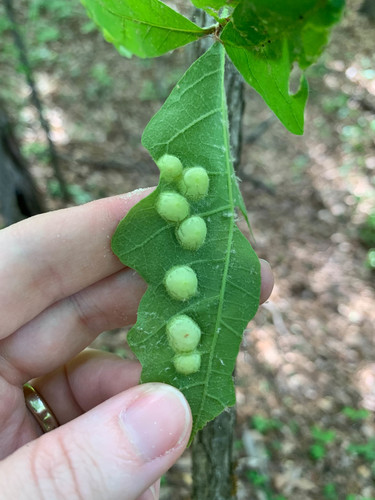
The sexual generation makes leaf galls that protrude slightly on both sides of the leaf. The agamic generation lives in bark galls at the tree’s base.
Source: Wikipedia
Where it lives
The sexual generation creates galls on white oak leaves, positioned between leaf veins and slightly raised on both leaf surfaces.
Source: Wikipedia
Life cycle
The wasp reproduces asexually in bark-dwelling galls (agamic generation) and sexually in leaf galls (sexual generation). Larvae inside the galls are fed through thin fibers that draw nutrients from the host oak.
Source: Wikipedia
Where it comes from
It is found in central and eastern North America.
Source: Wikipedia
Where it is found in the US
Recorded in 33 of 51 states and DC. Most records: Virginia, Ohio, Massachusetts, Pennsylvania, Maryland, New Jersey, North Carolina, Illinois.
Darker = more records. Counts are museum and citizen-science records, not population size.
Source: GBIF
Months it is reported in the US
Source: GBIF
More photos
Questions people ask
What kind of damage does the oak wart gall wasp cause?
It induces galls on white oak leaves and in the bark at the tree’s base, but the evidence does not state any further damage to the tree.
Source: Wikipedia
Where is the oak wart gall wasp found?
It occurs in central and eastern parts of North America.
Source: Wikipedia
Sources
- Wikipedia: https://en.wikipedia.org/wiki/Callirhytis_quercusfutilis
Look it up elsewhere: iNaturalist · BugGuide · Wikipedia
Text written 2026-10-24 from the sources above and checked sentence by sentence against them. Data fetched 2026-10-24.