 Bug FAQ
Oblong Running Spider
Tibellus oblongus · Order: Araneae · Family: Philodromidae
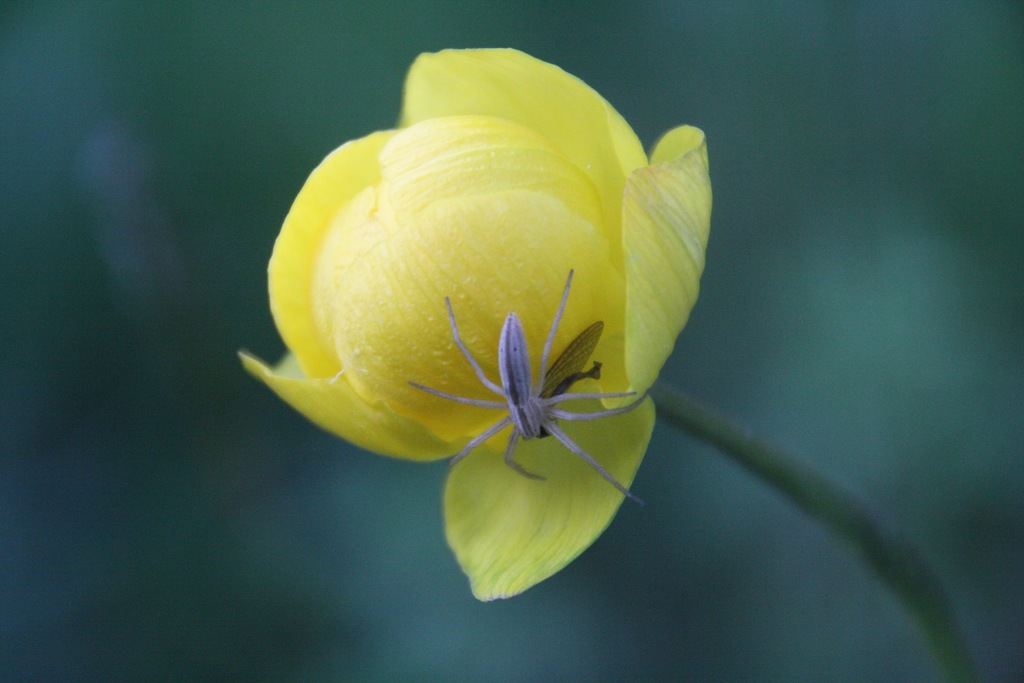
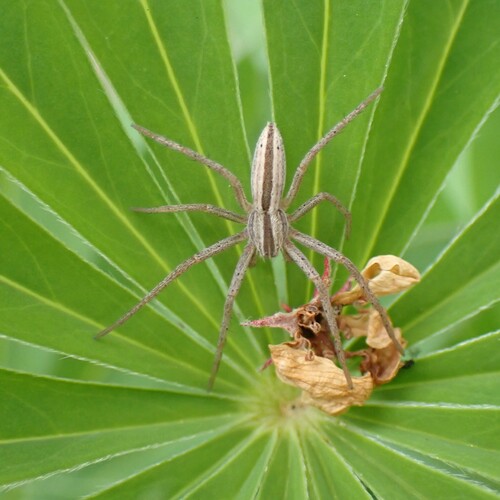
The oblong running spider (Tibellus oblongus) is a slender crab spider with a Holarctic range. It lives in grassy areas and hunts small insects without using a web, killing them with venom. Larger spiders such as wolf spiders can prey on it.
Source: Wikipedia
Where it lives
It is found in grassy habitats.
Source: Wikipedia
What it eats
It does not spin webs; instead it actively hunts small insects and kills them with venom.
Source: Wikipedia
Where it comes from
It has a Holarctic distribution, occurring across North America and other northern regions.
Source: Wikipedia
Where it is found in the US
Recorded in 36 of 51 states and DC. Most records: Colorado, Washington, Maine, California, Nebraska, Wyoming, Minnesota, Illinois.
Darker = more records. Counts are museum and citizen-science records, not population size.
Source: GBIF
Status: native in North America; native in United States; native in Canada. Source: iNaturalist
Months it is reported in the US
Source: GBIF
More photos
Questions people ask
What does the oblong running spider eat?
It hunts and eats small insects, using venom to subdue them.
Source: Wikipedia
What larger predators can eat this spider?
Larger spiders such as wolf spiders (e.g., Hogna baltimoriana) may prey on it.
Source: Wikipedia
Same family (Philodromidae)

Sources
- Wikipedia: https://en.wikipedia.org/wiki/Tibellus_oblongus
Look it up elsewhere: GBIF · iNaturalist · BugGuide · ITIS · Wikipedia
Text written 2026-10-23 from the sources above and checked sentence by sentence against them. Data fetched 2026-10-23.