 Bug FAQ
Parent Bug
Elasmucha grisea · Order: Hemiptera · Family: Acanthosomatidae
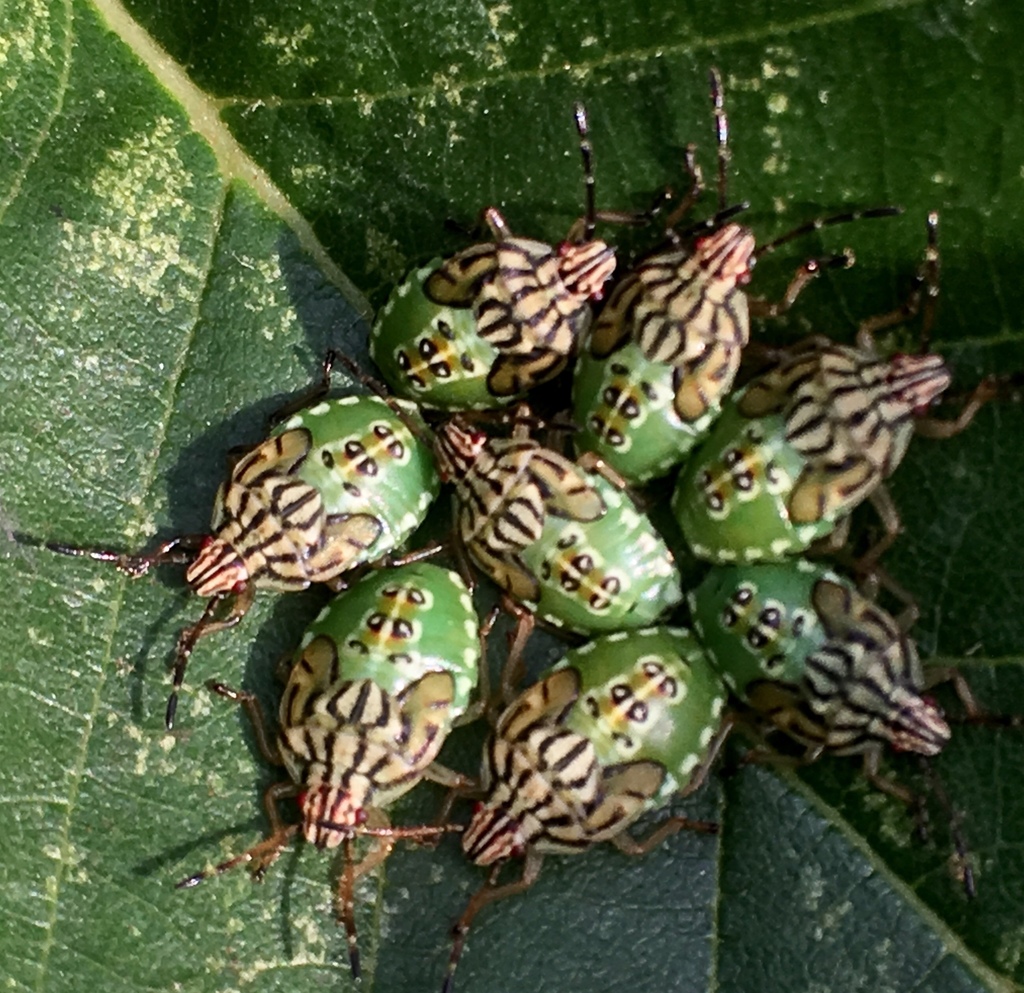
Parent bugs are medium-sized shield bugs that measure about 6.5 to 8.8 mm, with females larger than males. They are common across most of Europe, live on a variety of woody plants such as birch, alder and spruce, and can be seen all year because adults overwinter.
Source: Wikipedia
How to recognize it
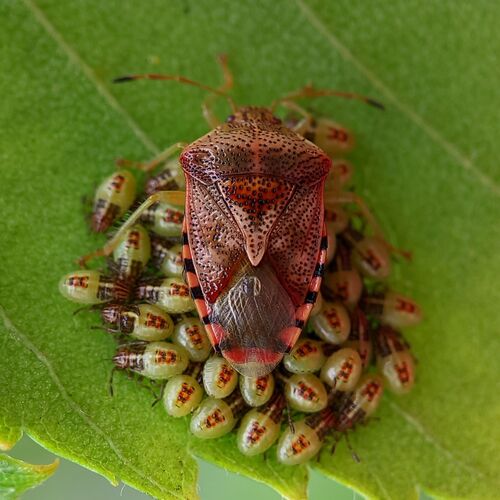
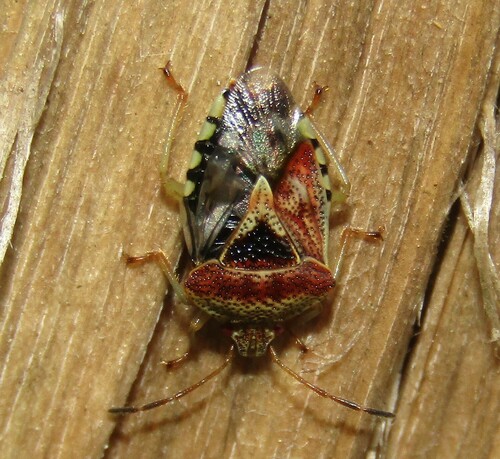
They are usually brown-reddish, but gray and green-brown forms also exist; the edge of the abdomen is black and white, the back has dark dots, and the scutellum often shows a black patch.
Source: Wikipedia
Size
Adults range from about 6.5 mm to 8.8 mm in length, with females being the larger sex.
Source: Wikipedia
Where it lives
Parent bugs are widespread and common throughout most of Europe, where they live on many woody plants. They feed on a range of trees and shrubs, especially birch, but also alder, beech, holly, spruce and similar species.
Source: Wikipedia
What it eats
Both adults and nymphs eat developing seeds and are often found on plants with many young catkins. Their diet includes a variety of woody plants such as birch, alder, beech, holly and spruce.
Source: Wikipedia
Life cycle
Adults are present throughout the year because they overwinter as adults. Mating takes place in spring and new adults appear in August.
Source: Wikipedia
When you see it
Adults can be found all year round, overwintering as mature insects. Reproduction starts in spring, with fresh adults emerging by August.
Source: Wikipedia
Where it comes from
The species is native to and widely distributed across Europe.
Source: Wikipedia
Lookalikes
Other species in the genus Elasmucha and some members of the family Acanthosomatidae are also called parent bugs and may be confused with this one.
Source: Wikipedia
More photos
Questions people ask
How big are parent bugs?
They measure roughly 6.5 to 8.8 mm, with females larger than males.
Source: Wikipedia
What do parent bugs look like?
They are usually brown-reddish, sometimes gray or green-brown, with black-white edges on the abdomen, dark dots on the back, and a black patch on the scutellum.
Source: Wikipedia
When are parent bugs active?
Adults are present all year because they overwinter as adults; they mate in spring and new adults appear in August.
Source: Wikipedia
What plants do parent bugs feed on?
They feed on developing seeds of many woody plants, especially birch, but also alder, beech, holly, spruce and similar species.
Source: Wikipedia
Same family (Acanthosomatidae)



Sources
- Wikipedia: https://en.wikipedia.org/wiki/Parent_bug
Look it up elsewhere: GBIF · iNaturalist · BugGuide · ITIS · Wikipedia
Text written 2026-10-24 from the sources above and checked sentence by sentence against them. Data fetched 2026-10-22.