 Bug FAQ
Phrynus exsul
Phrynus exsul · Order: Amblypygi · Family: Phrynidae
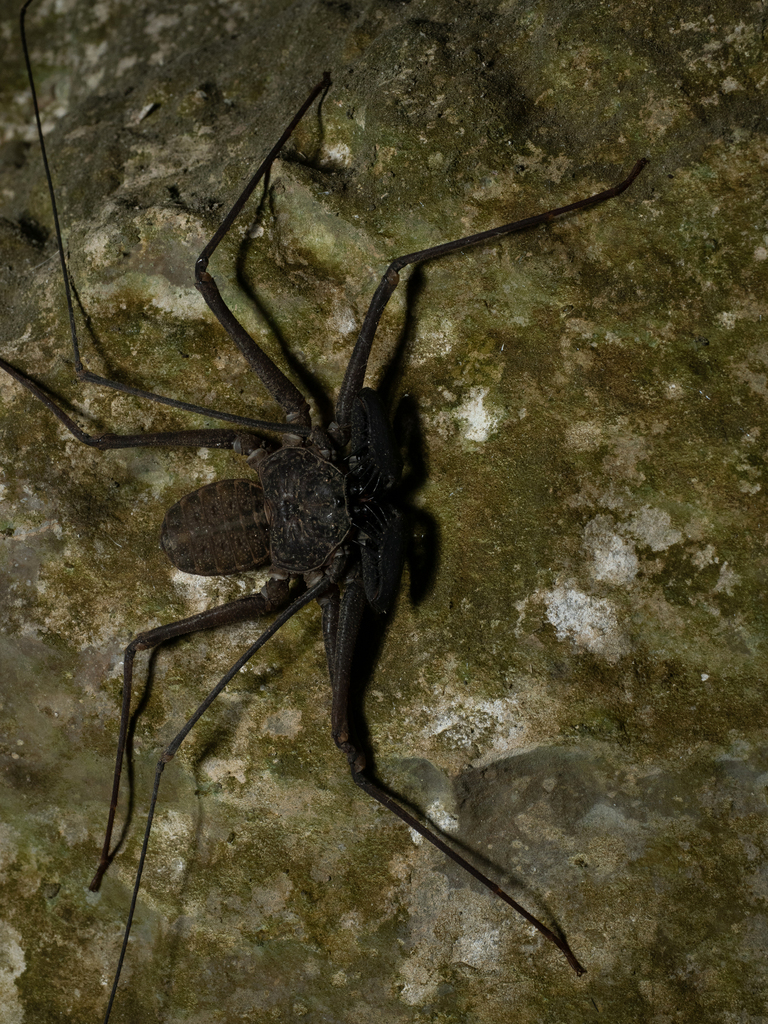
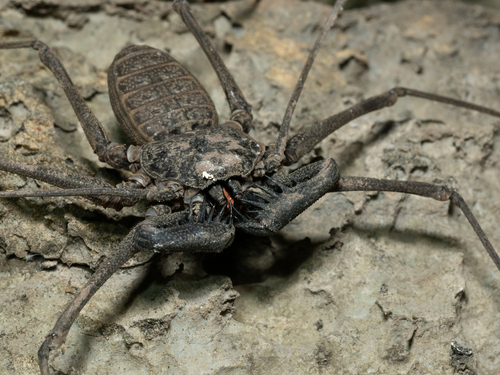
Phrynus exsul is a large whipspider found in Indonesia, living in caves and forests. Adults are blackish, while young nymphs start white with black pedipalps and develop dark spots as they grow.
Source: Wikipedia
How to recognize it
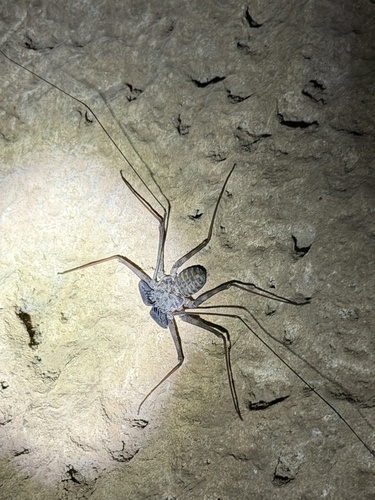
Adults are overall blackish; early nymphs are mostly white with black pedipalps, gaining dark spots from the fourth instar onward.
Source: Wikipedia
Size
Males can reach about 38 mm in body length, with one antenniform leg extending up to 252 mm.
Source: Wikipedia
Where it lives
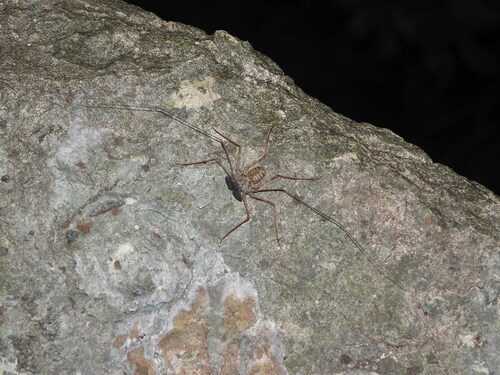
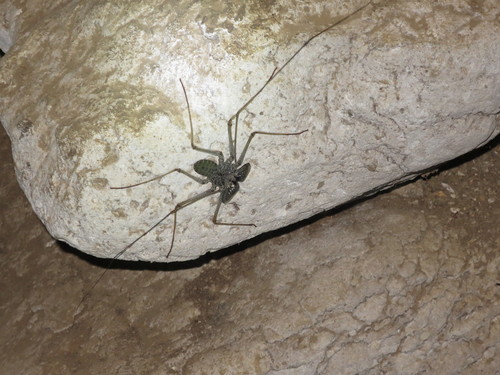
It inhabits both caves and forest environments.
Source: Wikipedia
Life cycle
In captivity, males court females by rhythmically moving their antenniform legs and tapping the female. Egg sacs develop for about four months before the young hatch.
Source: Wikipedia
Where it comes from
The species is native to Indonesia in Southeast Asia. Its presence there may be due to rare rafting across the Pacific or human introduction, as no broader historic range is known.
Source: Wikipedia
Lookalikes
It resembles other phrynid species but has more trichobothria on the walking-leg distitibia, a key distinguishing feature. Its white-spotted nymph coloration is unique among phrynids, shared only with the Arabian Phrynichus dhofarensis.
Source: Wikipedia
More photos
Questions people ask
How big does Phrynus exsul get?
Males can be about 38 mm long, with one long antenniform leg reaching roughly 252 mm.
Source: Wikipedia
What does a Phrynus exsul look like at different ages?
Adults are blackish; young nymphs start mostly white with black pedipalps and develop dark spots as they mature.
Source: Wikipedia
Where is Phrynus exsul found?
It lives in caves and forests of Indonesia in Southeast Asia.
Source: Wikipedia
How can I tell Phrynus exsul apart from similar whipspiders?
It has more trichobothria on the walking-leg distitibia than other phrynids, and its nymphs have a distinctive white-spotted coloration.
Source: Wikipedia
Same family (Phrynidae)
Sources
- Wikipedia: https://en.wikipedia.org/wiki/Phrynus_exsul
Look it up elsewhere: GBIF · iNaturalist · BugGuide · ITIS · Wikipedia
Text written 2026-10-24 from the sources above and checked sentence by sentence against them. Data fetched 2026-10-23.