 Bug FAQ
Pleasing Fungus Beetle
Megalodacne heros · Order: Coleoptera · Family: Erotylidae

The beetle measures about 10 to 23 mm long and 6.5 to 9 mm wide as an adult. It is the largest pleasing fungus beetle in its family across its range. It lives in eastern North America.
Source: Wikipedia
How to recognize it
It can be confused with M. fasciata, but M. heros is usually over 20 mm and has a nearly rectangular pronotum without the flared sides and extensive shoulder blotches seen in M. fasciata.
Source: Wikipedia
Size
Adults are 10 to 23 mm long and 6.5 to 9 mm wide. By family standards it is a very large beetle and the biggest pleasing fungus beetle in its range.
Source: Wikipedia
Where it lives
It is found in eastern North America.
Source: Wikipedia
Where it comes from
Its native range is eastern North America.
Source: Wikipedia
Where it is found in the US
Recorded in 33 of 51 states and DC. Most records: Pennsylvania, Tennessee, North Carolina, Ohio, Virginia, New York, Maryland, West Virginia.
Darker = more records. Counts are museum and citizen-science records, not population size.
Source: GBIF
Status: native in North America; native in Canada; native in United States. Source: iNaturalist
Months it is reported in the US
Source: GBIF
More photos

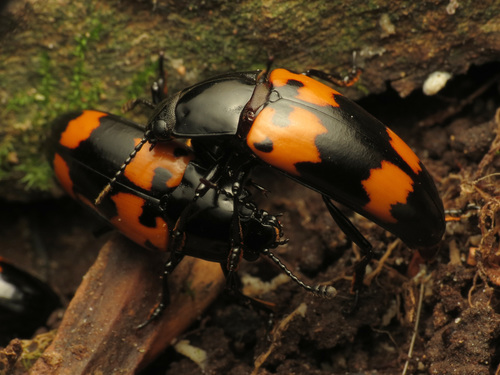
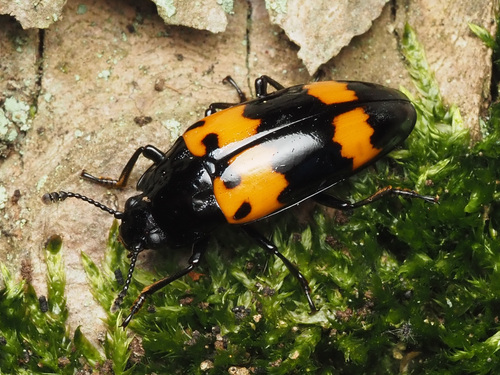
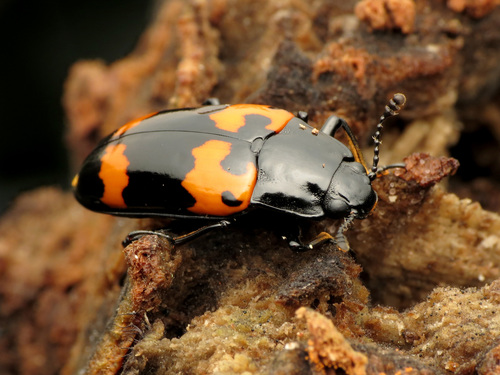
Questions people ask
How can I tell Megalodacne heros apart from similar beetles?
M. heros is usually larger than 20 mm and has an almost rectangular pronotum, while the similar M. fasciata is under 20 mm, has flared side margins on the pronotum, and less extensive shoulder blotches.
Source: Wikipedia
How big does Megalodacne heros get?
Adults range from 10 to 23 mm in length and 6.5 to 9 mm in width.
Source: Wikipedia
Same family (Erotylidae)


Sources
- Wikipedia: https://en.wikipedia.org/wiki/Megalodacne_heros
Look it up elsewhere: GBIF · iNaturalist · BugGuide · ITIS · Wikipedia
Text written 2026-10-22 from the sources above and checked sentence by sentence against them. Data fetched 2026-10-22.