 Bug FAQ
Plum Curculio
Conotrachelus nenuphar · Order: Coleoptera · Family: Curculionidae
Source: Wikipedia
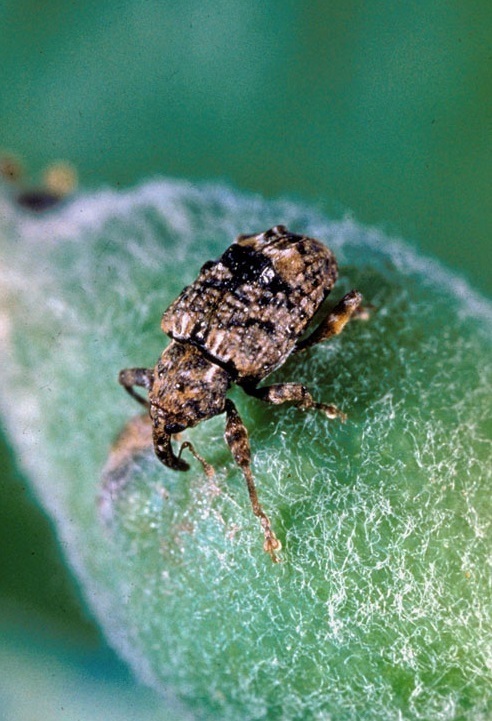
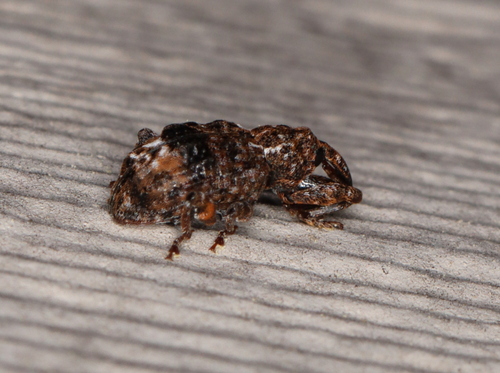
Adult plum curculio are small beetles about 4 to 6 mm long with a rough, speckled snout; larvae grow to 6 to 9 mm before pupating. They lay eggs in a variety of stone and pome fruits, and the feeding larvae can cause irreparable damage to fruit harvests.
Source: Wikipedia
How to recognize it
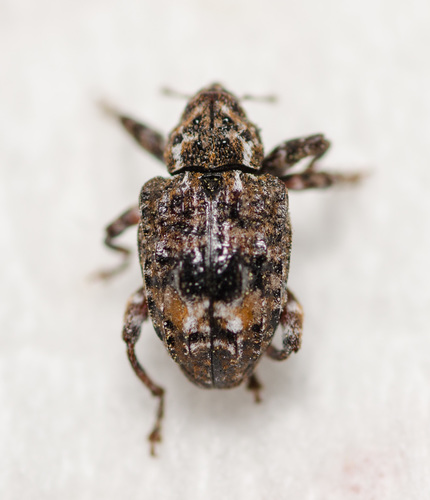
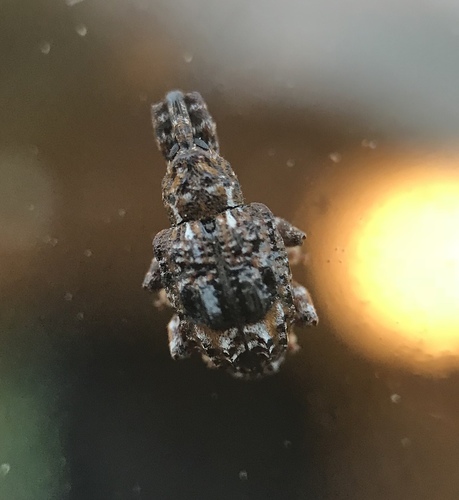
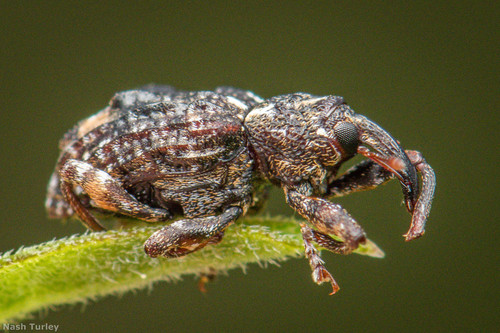
Adults have a small, rough snout with black, gray and brown specks. Their wing covers show four pairs of ridges, but the middle humps make them look like they have only two ridges.
Source: Wikipedia
Size
Adults measure about 4 to 6 mm in length. Fully grown larvae are 6 to 9 mm long, and pupae are about 5 to 7 mm.
Source: Wikipedia
How to get rid of it
Benzaldehyde-baited traps can be used to monitor their presence in orchards.
Source: Wikipedia
Where it lives
They are often seen on heavily leaved trees and overwinter in woods.
Source: Wikipedia
What it eats
Females lay eggs in plums, peaches, apples, pears, other pome and stone fruits, and also blueberries.
Source: Wikipedia
Life cycle
There are northern (univoltine) and southern (multivoltine) strains that are largely reproductively incompatible because of different Wolbachia infections.
Source: Wikipedia
When you see it
Adults are active from mid-July through August before they go into overwintering.
Source: Wikipedia
Where it is found in the US
Recorded in 38 of 51 states and DC. Most records: Texas, Maryland, New York, Virginia, Massachusetts, Pennsylvania, Kentucky, Kansas.
Darker = more records. Counts are museum and citizen-science records, not population size.
Source: GBIF
Status: native in North America; native in Canada. Source: iNaturalist
Months it is reported in the US
Source: GBIF
More photos
Questions people ask
What fruits does plum curculio damage?
It attacks plums, peaches, apples, pears, other pome and stone fruits, and also blueberries, causing serious damage to the harvest.
Source: Wikipedia
When are adult plum curculio active?
Adults emerge in mid-July to August and remain active until they go into overwintering.
Source: Wikipedia
Same family (Curculionidae)
 Green Immigrant Leaf WeevilPolydrusus formosusDamages trees, gardens or crops
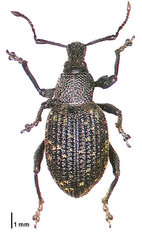 Black Vine WeevilOtiorhynchus sulcatusDamages trees, gardens or crops
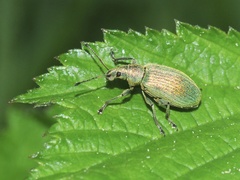 Nettle weevilPhyllobius pomaceusDamages trees, gardens or crops
 Asian Oak WeevilCyrtepistomus castaneusDamages trees, gardens or crops
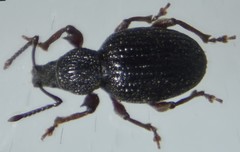 Strawberry Root WeevilOtiorhynchus ovatusDamages trees, gardens or crops
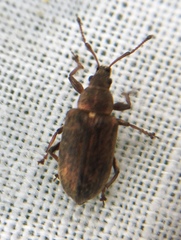 Common Leaf WeevilPhyllobius pyriDamages trees, gardens or crops
Sources
- Wikipedia: https://en.wikipedia.org/wiki/Plum_curculio
Look it up elsewhere: GBIF · iNaturalist · BugGuide · ITIS · Wikipedia
Text written 2026-10-24 from the sources above and checked sentence by sentence against them. Data fetched 2026-10-24.