 Bug FAQ
Porter's Wool-carder Bee
Anthidium porterae · Order: Hymenoptera · Family: Megachilidae
Also called: Porter's Carder Bee
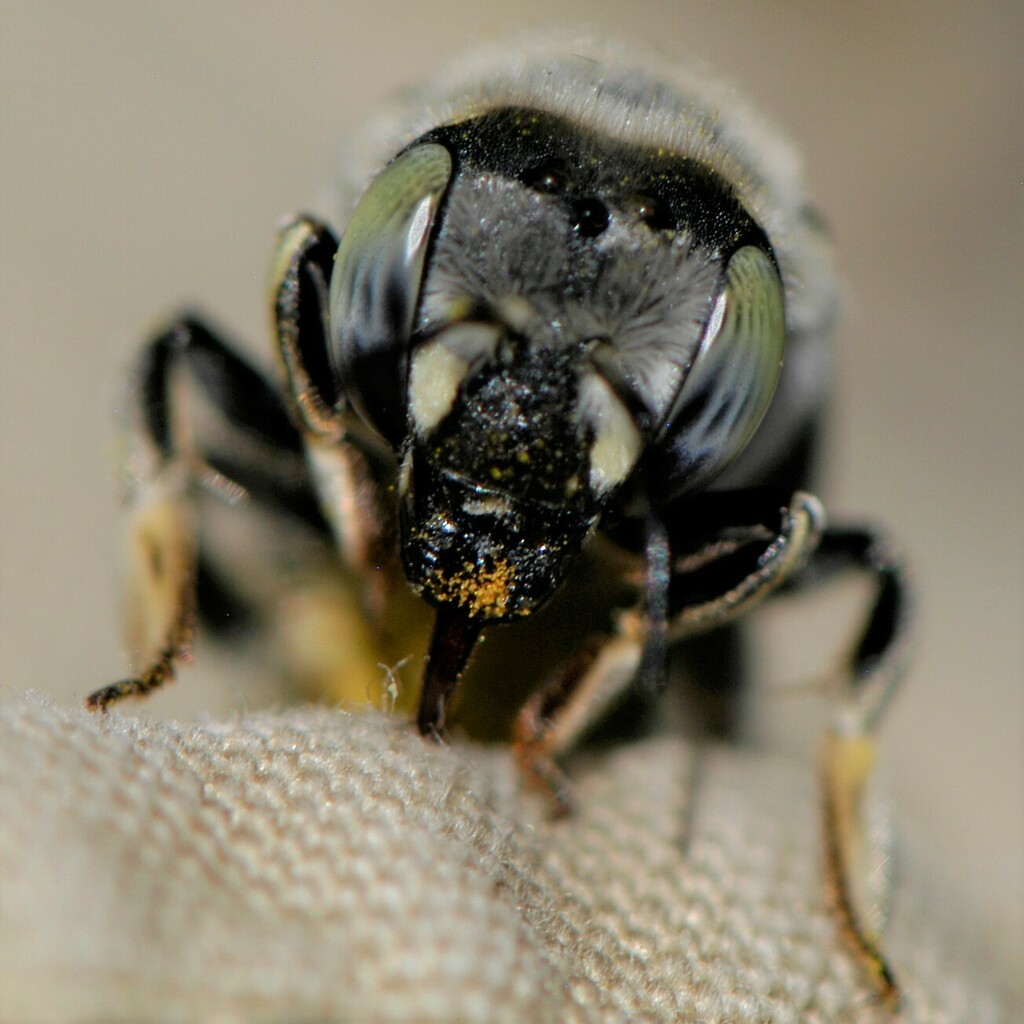
Porter's Wool-carder Bee was named to honor Wilmatte Porter Cockerell. It occurs in Middle America and North America.
Source: Wikipedia
How to recognize it
The species name commemorates Wilmatte Porter Cockerell.
Source: Wikipedia
Where it lives
It lives in habitats across Middle America and North America.
Source: Wikipedia
Where it comes from
Its native range includes Middle America and North America.
Source: Wikipedia
Lookalikes
Synonyms that may cause confusion are Anthidium porterae var. amabile and Anthidium porterae personulatum.
Source: Wikipedia
Where it is found in the US
Recorded in 11 of 51 states and DC. Most records: Colorado, New Mexico, Arizona, Kansas, South Dakota, Oklahoma, Texas, Nebraska.
Darker = more records. Counts are museum and citizen-science records, not population size.
Source: GBIF
Status: native in North America; native in Canada; native in United States. Source: iNaturalist
Months it is reported in the US
Source: GBIF
More photos
Questions people ask
Why is it called Porter's Wool-carder Bee?
The name honors Wilmatte Porter Cockerell.
Source: Wikipedia
What other names does this bee have?
It has been called Anthidium porterae var. amabile and Anthidium porterae personulatum.
Source: Wikipedia
Same family (Megachilidae)

Sources
- Wikipedia: https://en.wikipedia.org/wiki/Anthidium_porterae
Look it up elsewhere: GBIF · iNaturalist · BugGuide · ITIS · Wikipedia
Text written 2026-10-24 from the sources above and checked sentence by sentence against them. Data fetched 2026-10-24.