 Bug FAQ
Red-headed Ground Beetle
Amphasia interstitialis · Order: Coleoptera · Family: Carabidae
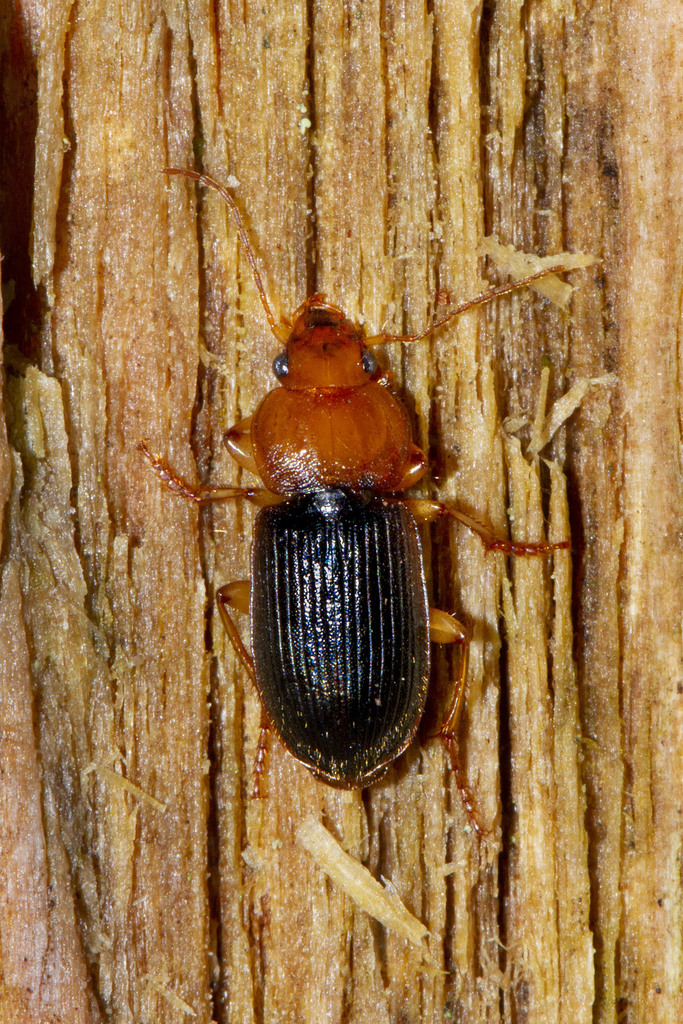
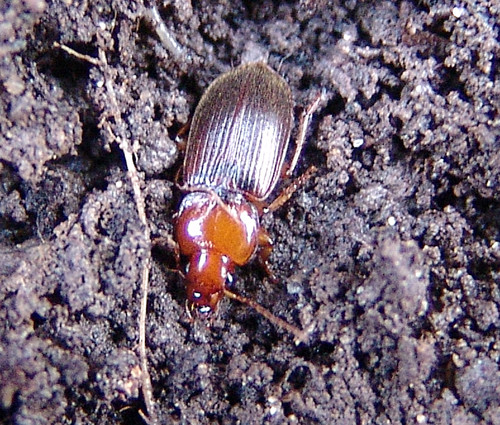
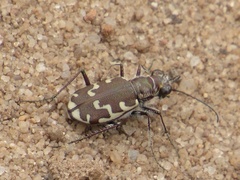
The red-headed ground beetle is about 8.5 to 10.2 mm long (0.33 to 0.40 in). It has dark wing covers, an orange head and pronotum, pale orange legs, and a dark underside with orange on the rear. It lives in leaf litter, under stones and logs in deciduous forests, as well as in wetlands and other moist lowland areas, and it is native to North America.
Source: Wikipedia
How to recognize it
The beetle’s elytra are dark, while the head and pronotum are orange; its legs are pale orange and the underside is dark with orange on the rear.
Source: Wikipedia
Size
Adults measure between 8.5 and 10.2 mm in length (about a third of an inch).
Source: Wikipedia
Where it lives
It also occurs in low-lying wet or mesic habitats like wetlands.
Source: Wikipedia
Where it comes from
The species is native to North America.
Source: Wikipedia
Where it is found in the US
Recorded in 33 of 51 states and DC. Most records: New York, Pennsylvania, Virginia, Ohio, Tennessee, Kansas, Massachusetts, Michigan.
Darker = more records. Counts are museum and citizen-science records, not population size.
Source: GBIF
Status: native in North America; native in Canada. Source: iNaturalist
Months it is reported in the US
Source: GBIF
More photos
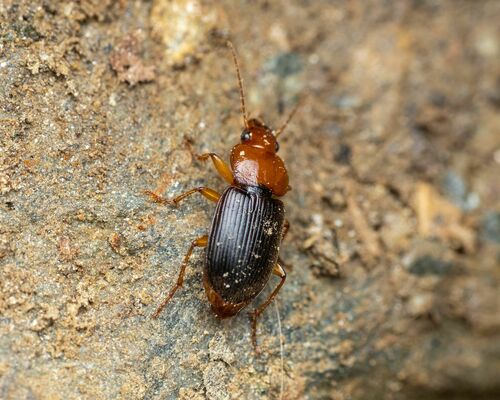
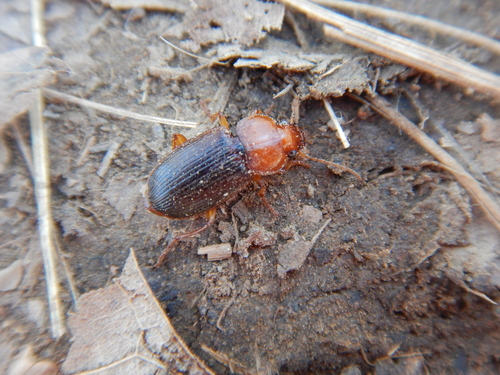
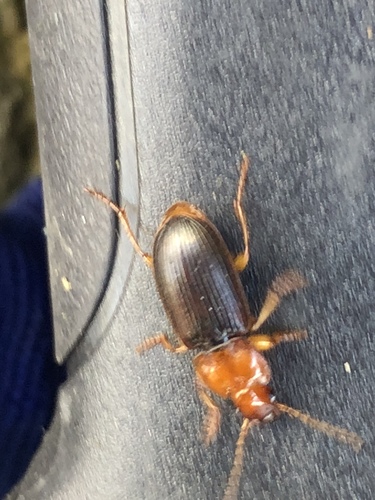
Same family (Carabidae)


Sources
- Wikipedia: https://en.wikipedia.org/wiki/Amphasia_interstitialis
Look it up elsewhere: GBIF · iNaturalist · BugGuide · ITIS · Wikipedia
Text written 2026-10-24 from the sources above and checked sentence by sentence against them. Data fetched 2026-10-24.