 Bug FAQ
Red Malachite Beetle
Anthocomus rufus · Order: Coleoptera · Family: Melyridae
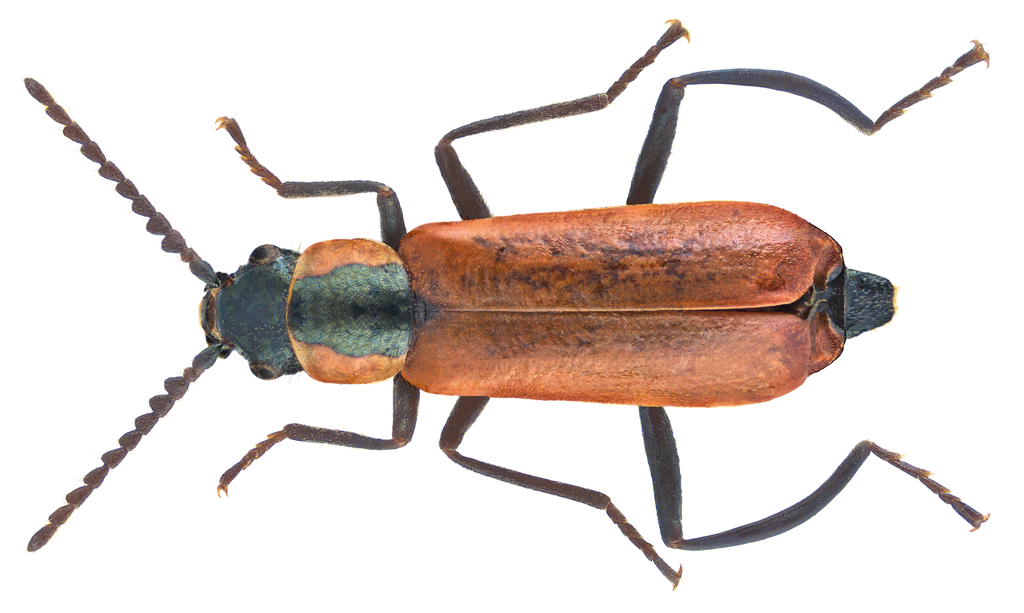
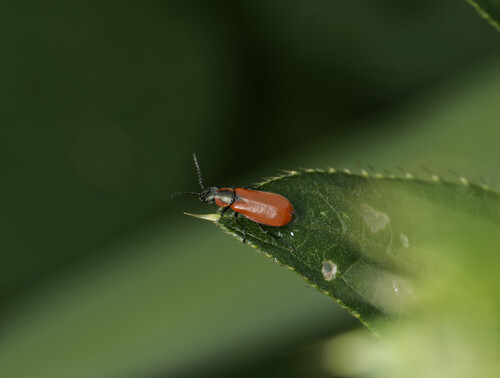
The red malachite beetle is a tiny, sparsely hairy insect about five millimetres long with a black head tilted slightly downward and a pronotum that blends red and black colours. It lives in Europe, is active in sunny daylight, gathers in large numbers on reeds where it eats pollen and dead insects.
Source: Wikipedia
How to recognize it
The head is elongate, black and points a little downward. The pronotum is wider than long, with a smooth transition between red sides and a central black stripe, or the reverse, without sharp borders.
Source: Wikipedia
Size
Adults are just under five millimetres long and have sparse hairs.
Source: Wikipedia
Where it lives
They are day-active and love warm, sunny spots. Large groups gather on their host reed plant, where they also mate.
Source: Wikipedia
What it eats
They feed on pollen from common reeds (Phragmites communis). They also scavenge dead insects, especially those caught by reed spiders.
Source: Wikipedia
When you see it
They are active during daylight hours and prefer warm conditions.
Source: Wikipedia
Where it comes from
The species is native to Europe.
Source: Wikipedia
More photos
Questions people ask
What do red malachite beetles eat?
They eat pollen from reeds and also consume dead insects, especially those caught by reed spiders.
Source: Wikipedia
When are red malachite beetles active?
They are active during the day and prefer sunny, warm conditions.
Source: Wikipedia
How big are red malachite beetles?
Adults are just under five millimetres long and have sparse hairs.
Source: Wikipedia
Same family (Melyridae)



Sources
- Wikipedia: https://en.wikipedia.org/wiki/Anthocomus_rufus
Look it up elsewhere: GBIF · iNaturalist · BugGuide · Wikipedia
Text written 2026-10-24 from the sources above and checked sentence by sentence against them. Data fetched 2026-10-22.