 Bug FAQ
Round-tipped Conehead
Neoconocephalus retusus · Order: Orthoptera · Family: Tettigoniidae
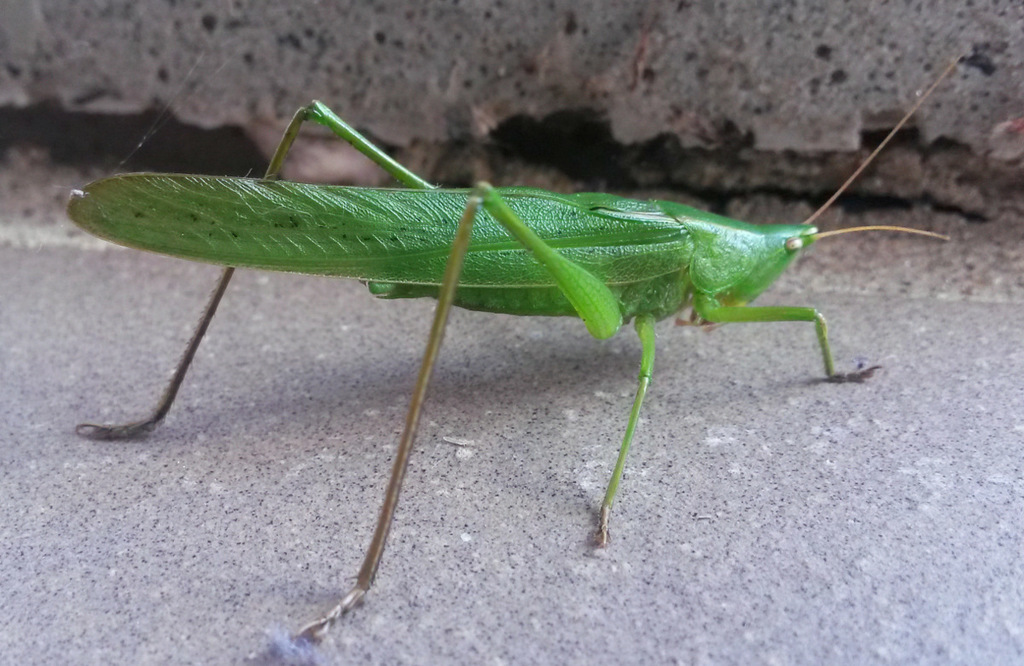
Adult round-tipped coneheads are about 37 to 52 mm long. They are most often seen in wet grassy or weedy places during August through October.
Source: Wikipedia
How to recognize it
Neoconocephalus retusus, the round-tipped conehead, belongs to the katydid family Tettigoniidae.
Source: Wikipedia
Size
Adults measure between 37 and 52 mm in length.
Source: Wikipedia
Where it lives
They live in wet, grassy and weedy habitats.
Source: Wikipedia
When you see it
You will find them most often in August, September and October.
Source: Wikipedia
Where it comes from
They are native to the eastern United States and southern Canada.
Source: Wikipedia
Where it is found in the US
Recorded in 33 of 51 states and DC. Most records: Massachusetts, Maryland, Ohio, Pennsylvania, New York, Illinois, Virginia, Iowa.
Darker = more records. Counts are museum and citizen-science records, not population size.
Source: GBIF
Status: native in North America; native in Canada. Source: iNaturalist
Months it is reported in the US
Source: GBIF
More photos
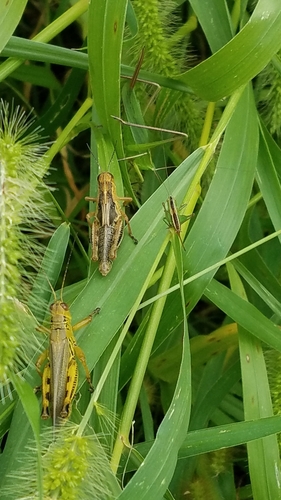
Questions people ask
When are round-tipped coneheads active?
They are most active from August through October.
Source: Wikipedia
Same family (Tettigoniidae)
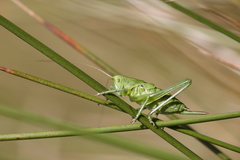 Great Green Bush-cricketTettigonia viridissimaCan bite
 Dark Bush-cricketPholidoptera griseoaptera
 Mediterranean KatydidPhaneroptera nanaDamages trees, gardens or crops
 Fork-tailed Bush KatydidScudderia furcataDamages trees, gardens or crops
 Speckled Bush-cricketLeptophyes punctatissima
 Roesel's Bush-cricketRoeseliana roeselii
Sources
- Wikipedia: https://en.wikipedia.org/wiki/Neoconocephalus_retusus
Look it up elsewhere: GBIF · iNaturalist · BugGuide · ITIS · Wikipedia
Text written 2026-10-24 from the sources above and checked sentence by sentence against them. Data fetched 2026-10-24.