 Bug FAQ
Saddleback Caterpillar Moth
Acharia stimulea · Order: Lepidoptera · Family: Limacodidae
Also called: saddleback caterpillar
Source: Wikipedia, hgic.clemson.edu
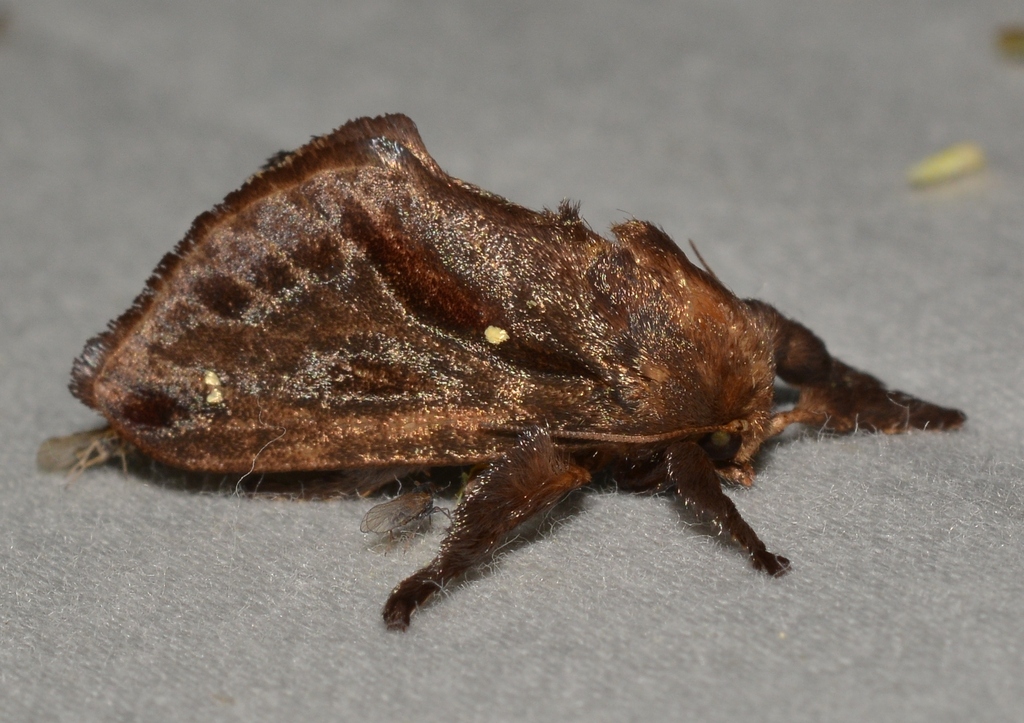
Its spines release an irritating toxin that can cause intense burning pain, swelling, rash, and occasional nausea in humans.
Source: Wikipedia, hgic.clemson.edu
How to recognize it
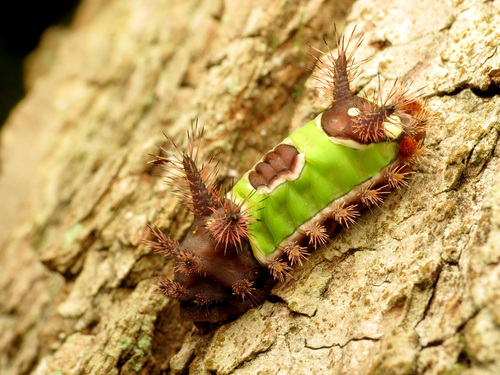
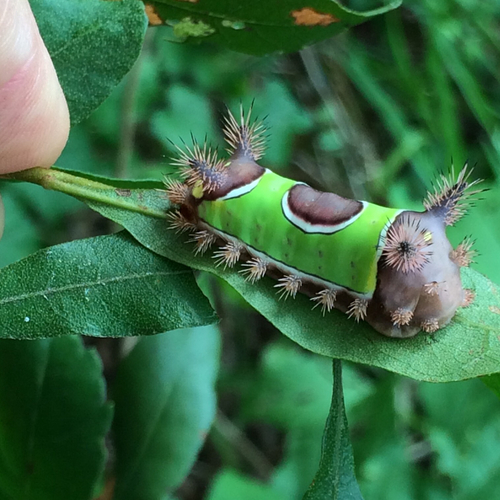
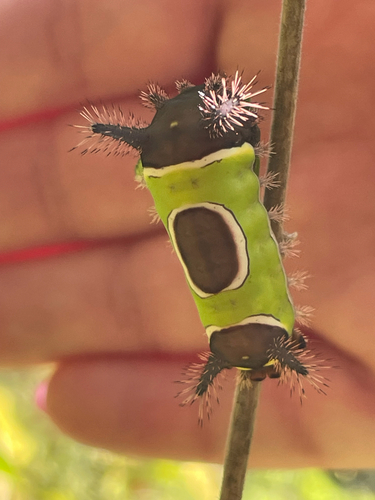
The caterpillar is mainly green with brown ends and a white-ringed brown dot in the centre that looks like a saddle. The top of its body is a more opaque green with a black dot surrounded by a white oval and black outline.
Source: Wikipedia
Size
At this stage the larvae are about 5 to 8 mm long.
Source: Wikipedia
Is it a pest in the house?
Gardeners are at risk because the caterpillar’s spines release a toxin that causes acute urticaria. It is common in late summer and early fall on many garden and ornamental plants.
Source: Wikipedia, hgic.clemson.edu
Does it bite or sting?
Contact with its urticating hairs causes painful, swollen rash and sometimes nausea. The sting can feel like intense burning pain that may last several hours.
Source: Wikipedia, hgic.clemson.edu
How to get rid of it
Wear long sleeves, pants and gloves, or use a stick to avoid direct contact. If stung, remove spines with adhesive tape, using a fresh piece each time. Symptoms vary from mild to severe and may be treated with medication as needed.
Source: hgic.clemson.edu, Wikipedia
Where it lives
It lives in warmer parts of North America such as the Yucatán and also in cooler eastern U.S. regions. It feeds on many plants but prefers palms.
Source: Wikipedia
Life cycle
During the second to fourth molt the larva develops its characteristic saddle markings. When it pupates, the cocoon is a light brown sphere with black veins inside silk webbing.
Source: Wikipedia
When you see it
Adult moths fly in warm months, year-round in the south and mainly July-August in the U.S.
Source: Wikipedia
Where it comes from
The species is native to eastern North America. It is also found in Mexico.
Source: Wikipedia
Lookalikes
The packsaddle caterpillar is the larval stage of the slug moth Acharia stimulea. It is about 1 inch long, bright green with a brown-purple spot on its back.
Source: hgic.clemson.edu
Where it is found in the US
Recorded in 31 of 51 states and DC. Most records: North Carolina, Virginia, Maryland, Ohio, Georgia, Pennsylvania, Florida, Tennessee.
Darker = more records. Counts are museum and citizen-science records, not population size.
Source: GBIF
Status: native in North America; native in Canada; native in United States. Source: iNaturalist
Months it is reported in the US
Source: GBIF
More photos
Questions people ask
How can I avoid being stung by saddleback caterpillars?
Wear protective clothing such as long sleeves, pants and gloves, and use a stick to move them instead of handling them directly.
Source: hgic.clemson.edu
What should I do if I get stung?
Remove the spines with adhesive tape, changing the tape each time, and seek medication if the reaction is severe.
Source: Wikipedia
When are adult saddleback moths active?
Adults fly during warm months, year-round in the southern range and mainly July to August in most of the United States.
Source: Wikipedia
Same family (Limacodidae)
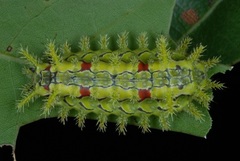 Spiny Oak-slug MothEuclea delphiniiVenomous
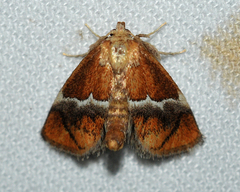 Yellow-shouldered Slug MothLithacodes fasciolaDamages trees, gardens or crops
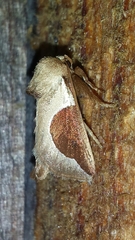 Skiff MothProlimacodes badiaDamages trees, gardens or crops
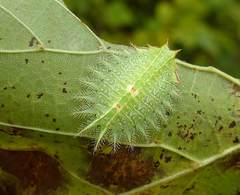 Crowned Slug MothIsa textulaDamages trees, gardens or crops
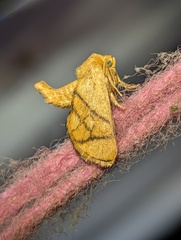 Yellow-collared Slug MothApoda y-inversaDamages trees, gardens or crops
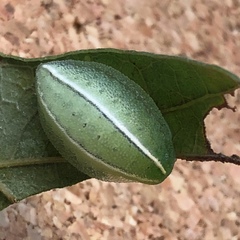 Shagreened Slug MothApoda biguttataDamages trees, gardens or crops
Sources
- Wikipedia: https://en.wikipedia.org/wiki/Saddleback_caterpillar
- hgic.clemson.edu: https://hgic.clemson.edu/ouch-poisonous-packsaddle-caterpillars/
Look it up elsewhere: GBIF · iNaturalist · BugGuide · Wikipedia
Text written 2026-10-23 from the sources above and checked sentence by sentence against them. Data fetched 2026-10-23.