 Bug FAQ
Slender Reedling
Indolestes tenuissimus · Order: Odonata · Family: Lestidae
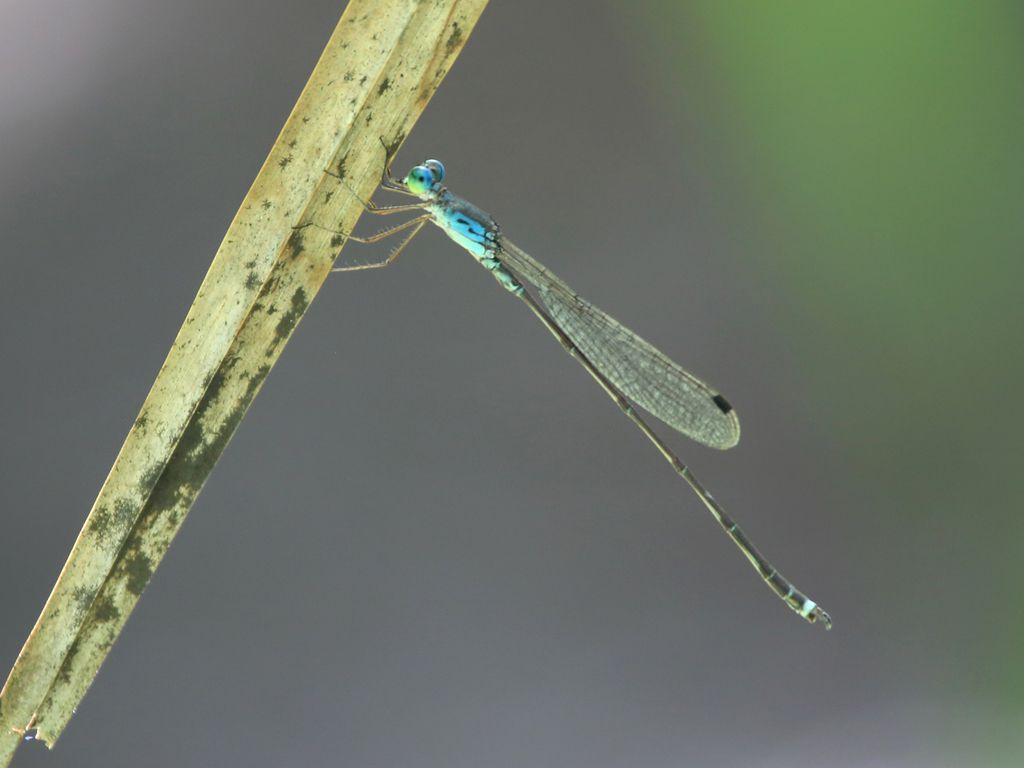
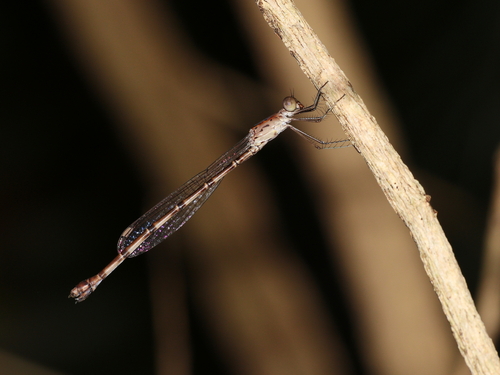
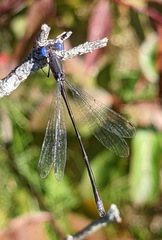
The Slender Reedling is a medium-sized damselfly about 45 mm long with a 50 mm wingspan. It has a pale blue thorax with darker patches, a grey abdomen that is darker on top and lighter underneath, and a pale band on the last segment. It lives in freshwater swamps, ponds and pools in north-eastern Australia from Cape York to central Queensland, as well as in New Guinea and the Aru Islands.
Source: Wikipedia
How to recognize it
The thorax is mainly pale blue with darker patches.
Source: Wikipedia
Size
Adults measure about 45 mm in length with a wingspan of roughly 50 mm.
Source: Wikipedia
Where it lives
It inhabits freshwater swamps, ponds and pools.
Source: Wikipedia
Where it comes from
In Australia it occurs in suitable habitats of north-eastern Queensland, from Cape York Peninsula down to central Queensland. It is also native to New Guinea and the Aru Islands.
Source: Wikipedia
More photos
Questions people ask
Where is the Slender Reedling found?
It lives in freshwater swamps, ponds and pools in north-eastern Australia from Cape York to central Queensland, as well as in New Guinea and the Aru Islands.
Source: Wikipedia
What does the Slender Reedling look like?
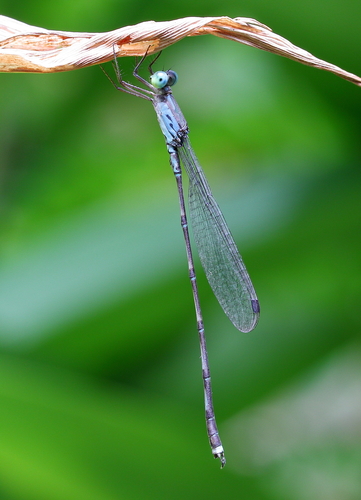
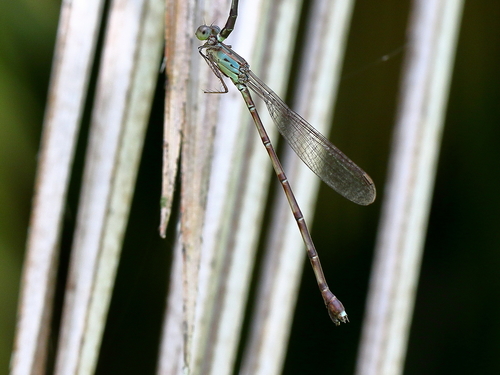
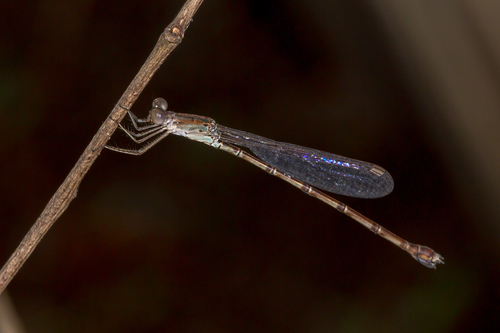
It is a medium-sized damselfly with a pale blue thorax marked by darker patches, a grey abdomen that is darker on top and lighter underneath, and a pale band on the last abdominal segment.
Source: Wikipedia
Same family (Lestidae)

Sources
- Wikipedia: https://en.wikipedia.org/wiki/Indolestes_tenuissimus
Look it up elsewhere: GBIF · iNaturalist · BugGuide · Wikipedia
Text written 2026-10-24 from the sources above and checked sentence by sentence against them. Data fetched 2026-10-23.